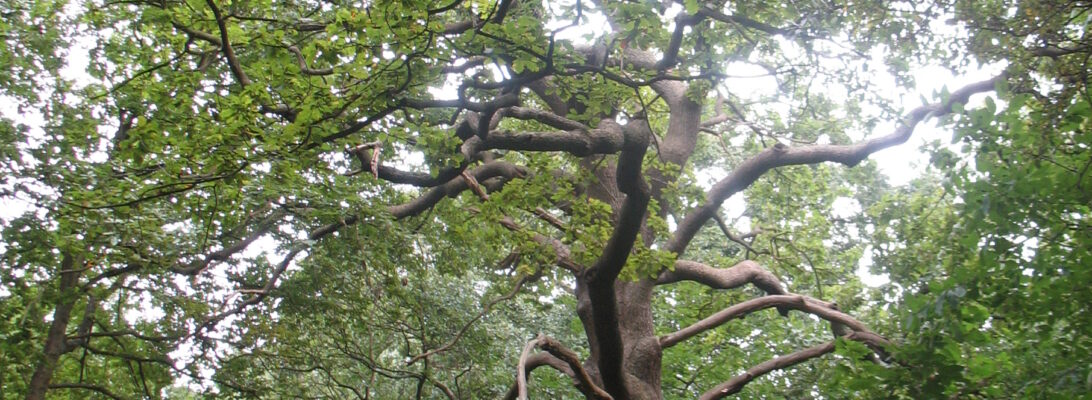
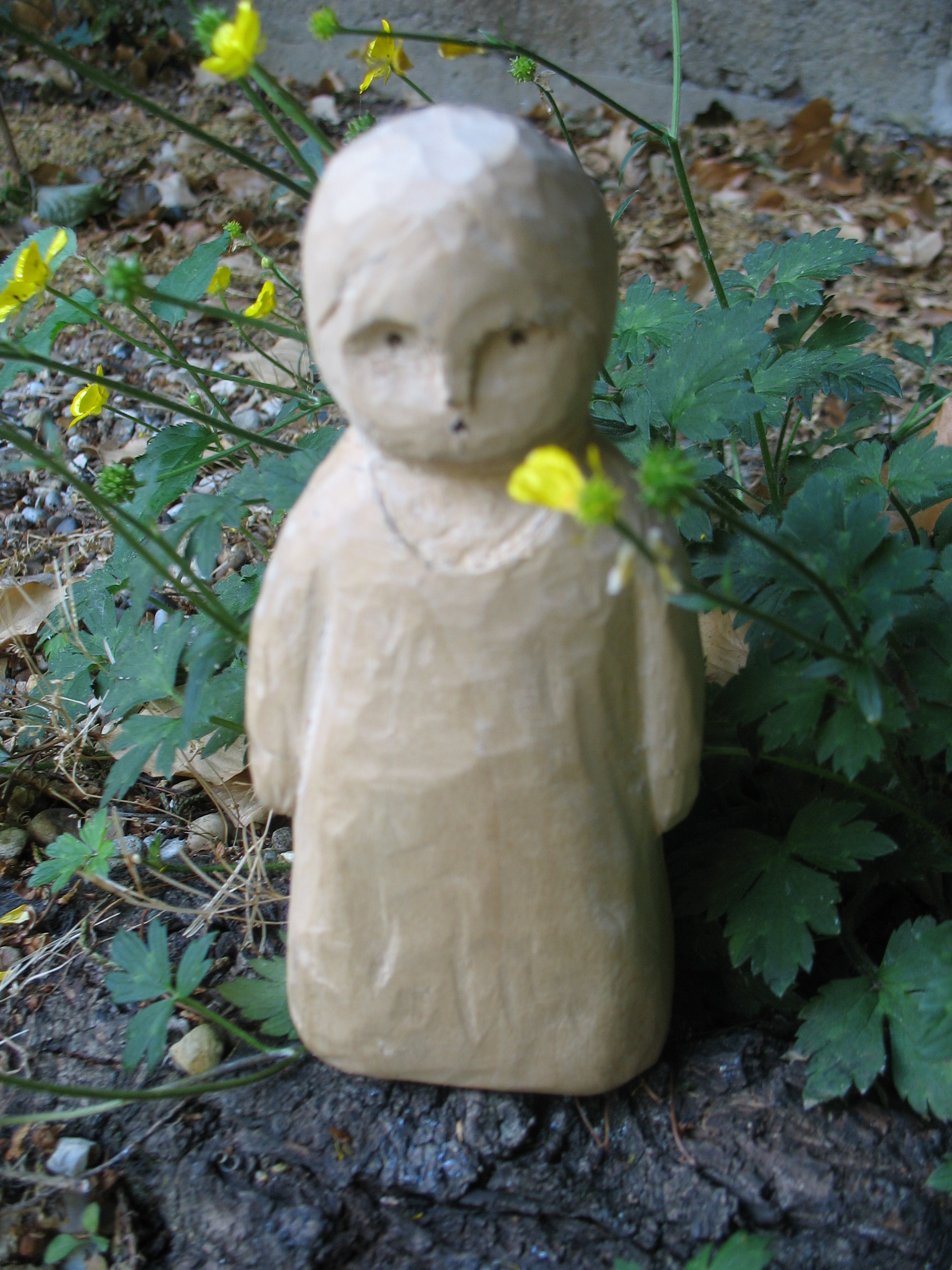
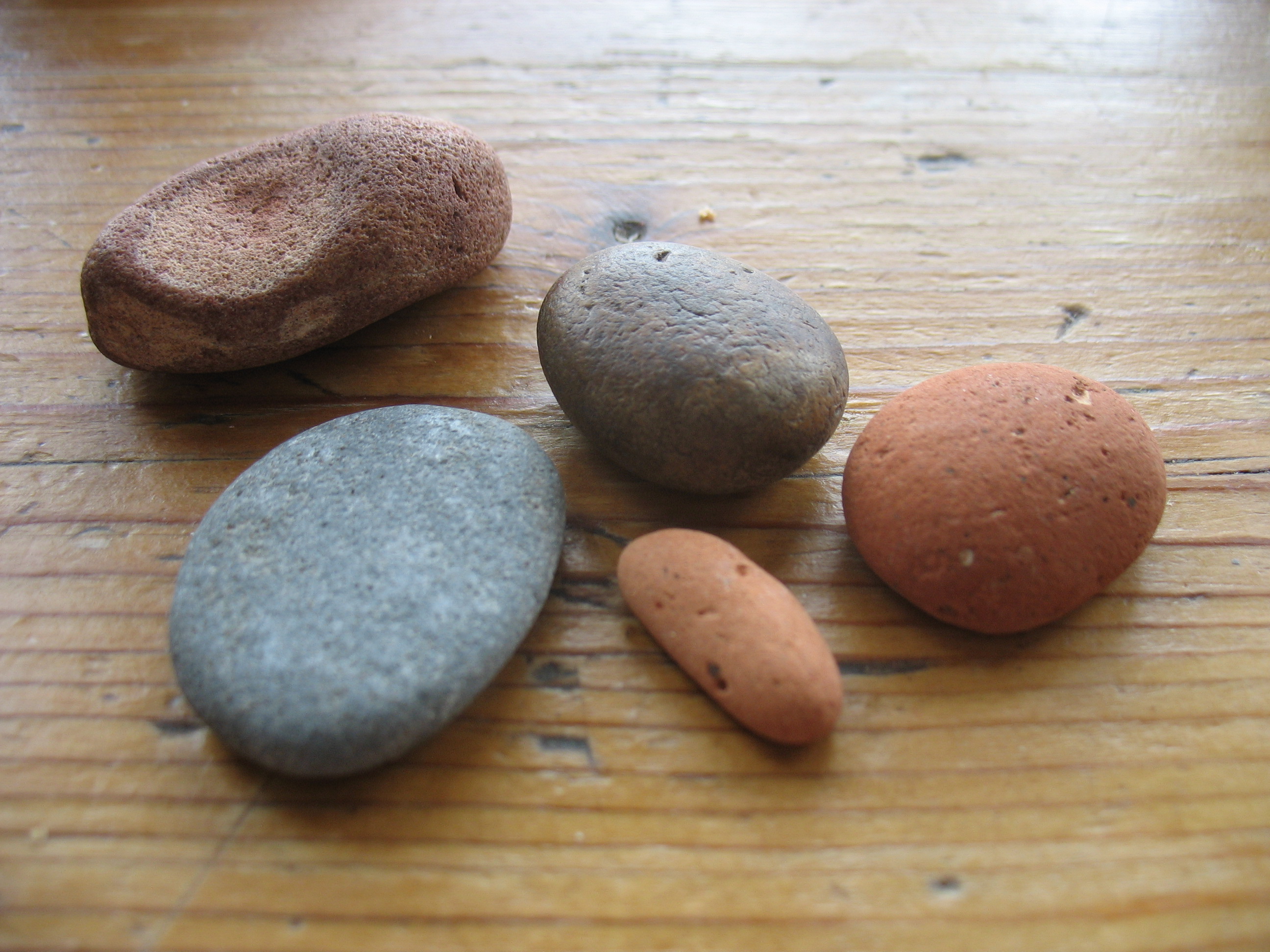
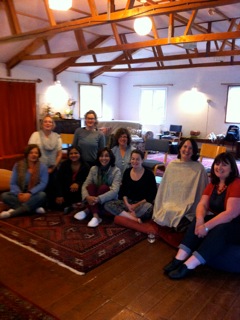
We went walking in Oxleas Woods, parents and children from my daughter’s school, some younger brothers and sisters, babies, a little dog. When it was time to rest, we shared biscuits and fruit; a dad made giant bubbles that wobbled and floated off glinting among the great trees. I told the story of Stone Soup, my one prop a favourite stone.
The beautiful woods created the perfect hush as the little old woman came hunched and small and hungry, searching for a village where she might ask for food…
During our walk through the woods I’d asked the children to find one object to add to the ‘cooking pot’. When it came to their turn, they made fantastic villagers, gleefully dropping acorn pumpkins, leaf carrots and pebble onions into the soup! They slipped easily into the world of the story, the transition between real and imagined seeming effortless to them!
Getting back into the routine of term-time, the holidays are now long behind us. At the time they yawned wide and frighteningly empty, a void demanding to be filled, especially with a young child to amuse. But what happens when the pressure to go out, to fill up with sights, to exhaust them (and ourselves!) is resisted?
We have had many lazy uneventful days this summer, muddling around at home, doing very little, growing bored and frustrated with each other, but it is on just such days that we were most productive, possessed at the end of such seemingly wasted hours by a genuine need to create- sometimes the most random objects!
In the banal crisis of boredom… is it not, indeed revealing, what the child’s boredom evokes in the adults? Heard as a demand, sometimes as accusation of failure or disappointment, it is rarely agreed to, simply acknowledged. How often… the child’s boredom is met by that most perplexing form of disapproval, the adult’s wish to distract him – as though the adults have decided that the child’s life must be, or seen to be, endlessly interesting. It is one of the most oppressive demands of adults that the child should be interested, rather than take time to find what interests him. Boredom is integral to the process of taking one’s time.
Adam Phillips ‘On Tickling, Kissing And Being Bored’
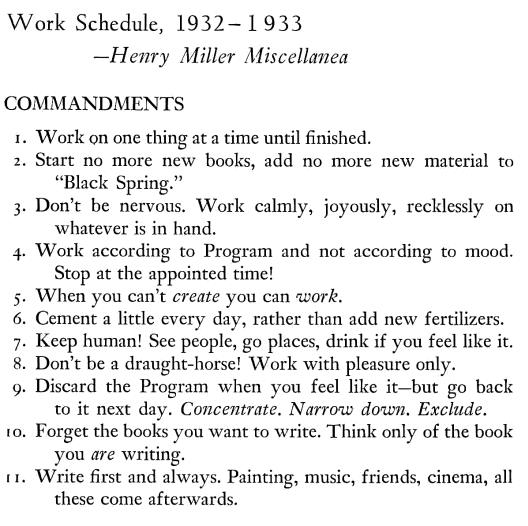
Keep human! See people, go places, drink if you feel like it.
no.7 of Henry Miller’s 11 Commandments for good writing
Often, what might seem like distractions can be vital to the work of story making! So much is learnt from other people, and so much of what you feel and experience can inspire, inform or enrich a story of your own.
Don’t be a draught-horse! Work with pleasure only.
no.8 of Henry Miller’s 11 Commandments for good writing
The Commandments in full (courtesy of www.brainpickings.org):
a moment of inspiration – Three Colours: Blue (dir. Kieslowski)
“Of course not all stories are successful. There are good stories and mediocre stories and downright bad stories. …a story must be judged according to whether it makes sense…
A story that makes sense is one that stirs the senses from their slumber, one that opens the eyes and the ears to their real surroundings, tuning the tongue to the actual tastes in the air and sending chills of recognition along the surface of the skin. To make sense is to release the body from the constraints imposed by outworn ways of speaking, and hence to renew and rejuvenate one’s felt awareness of the world.”
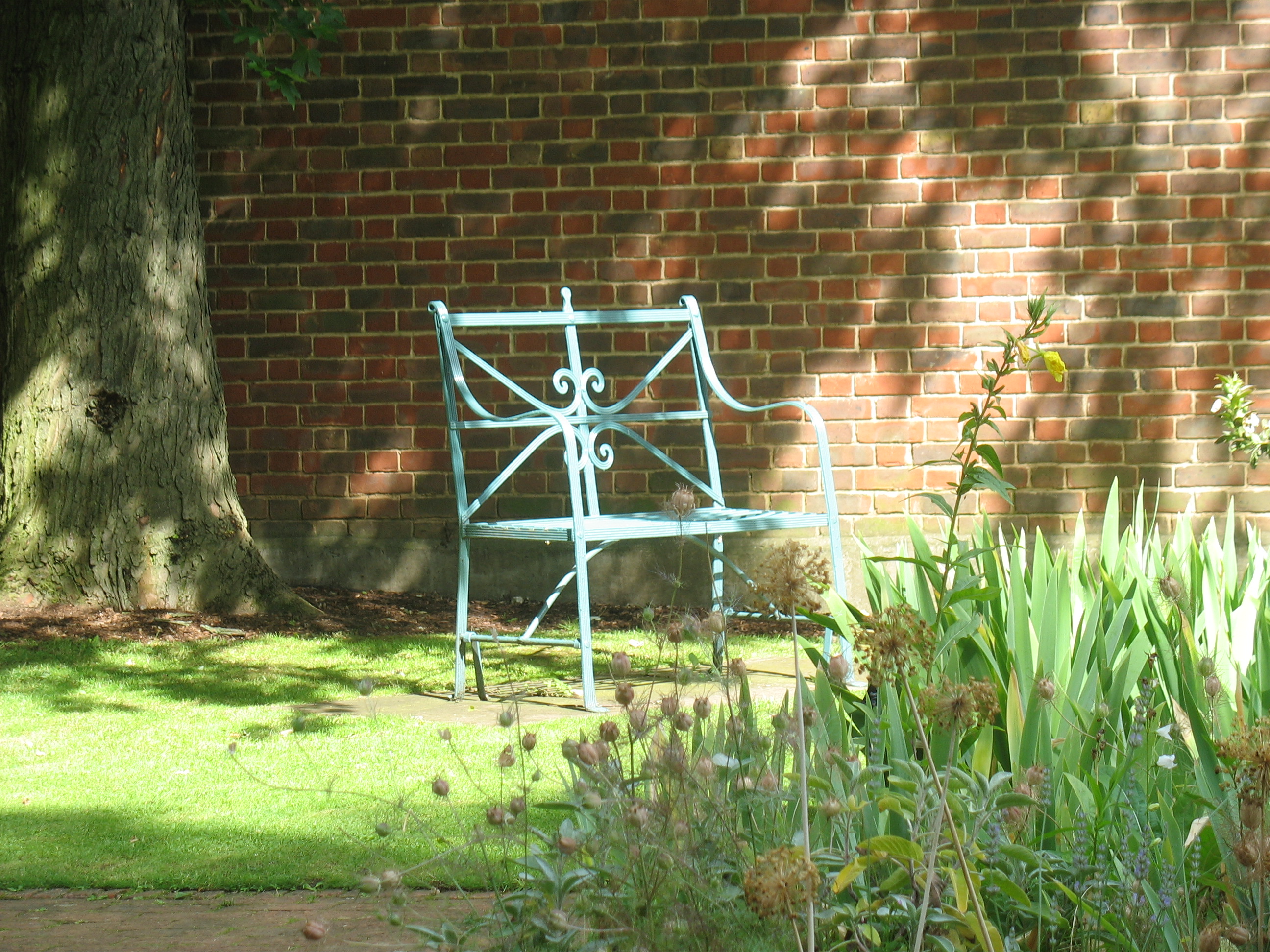
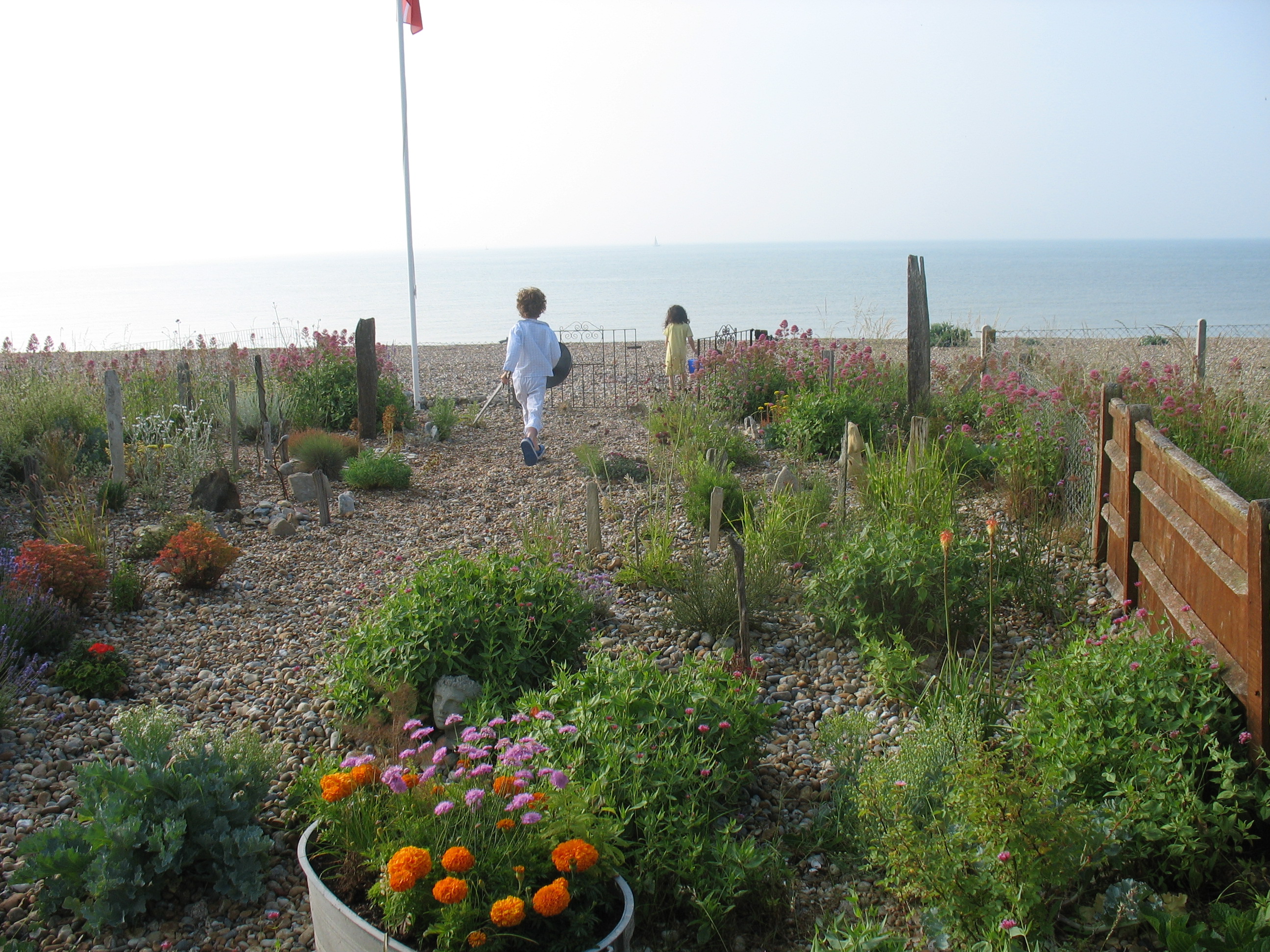
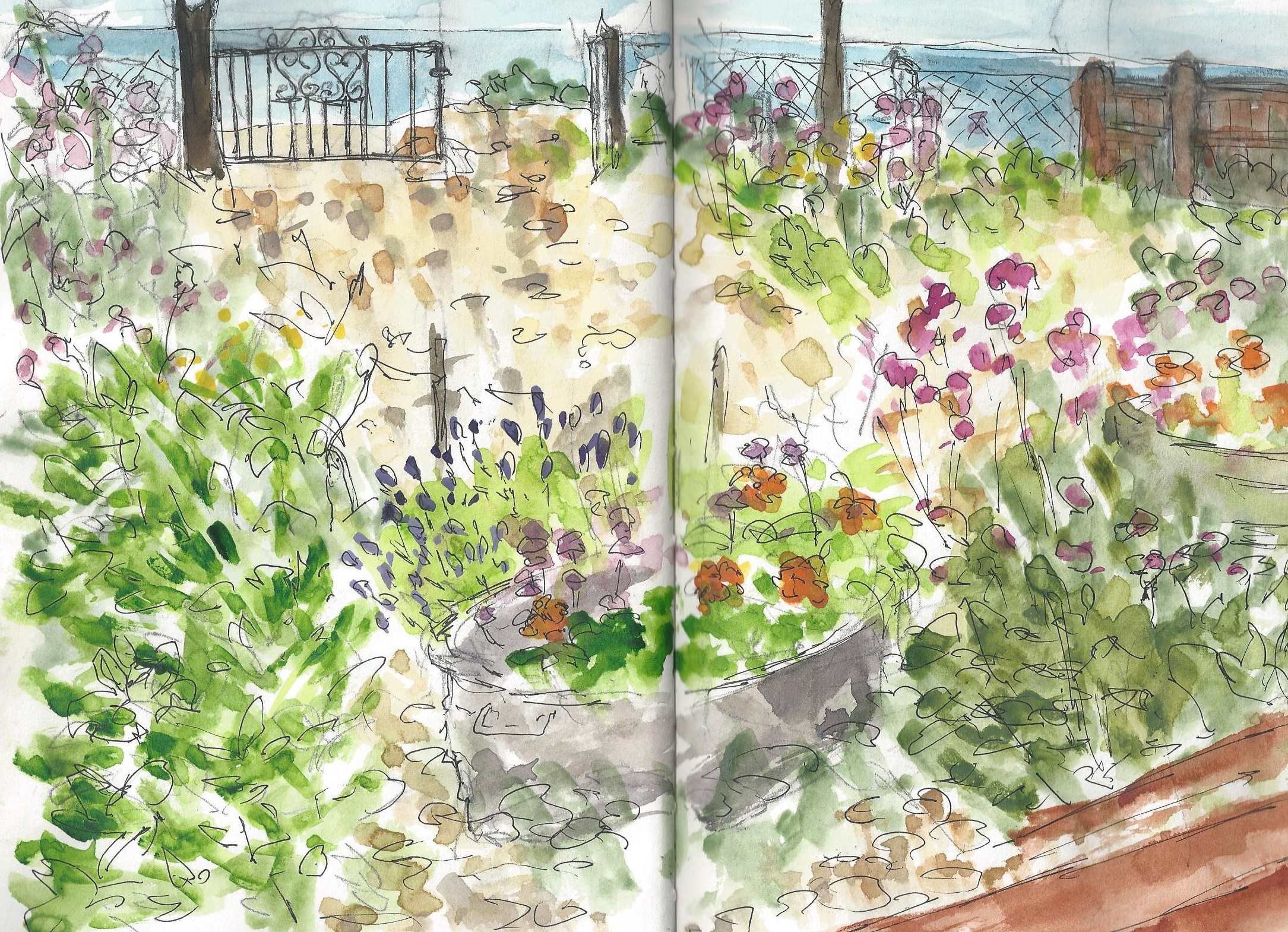
Early morning fierce sun, soft winds, blue sea against a pale pebble beach; old friends chatting on the terrace sipping tea, the children playing, distant, released: the perfect lull.
“Jonna had a happy habit of waking each morning as if to a new life, which stretched before her straight through to evening, clean untouched, rarely shadowed by yesterday’s worries and mistakes.”
from ‘Fair Play’ Tove Jansson
After weeks of trying to create, to improve, to begin, to complete, it feels good just to stop and give in, to simply sit back and see.
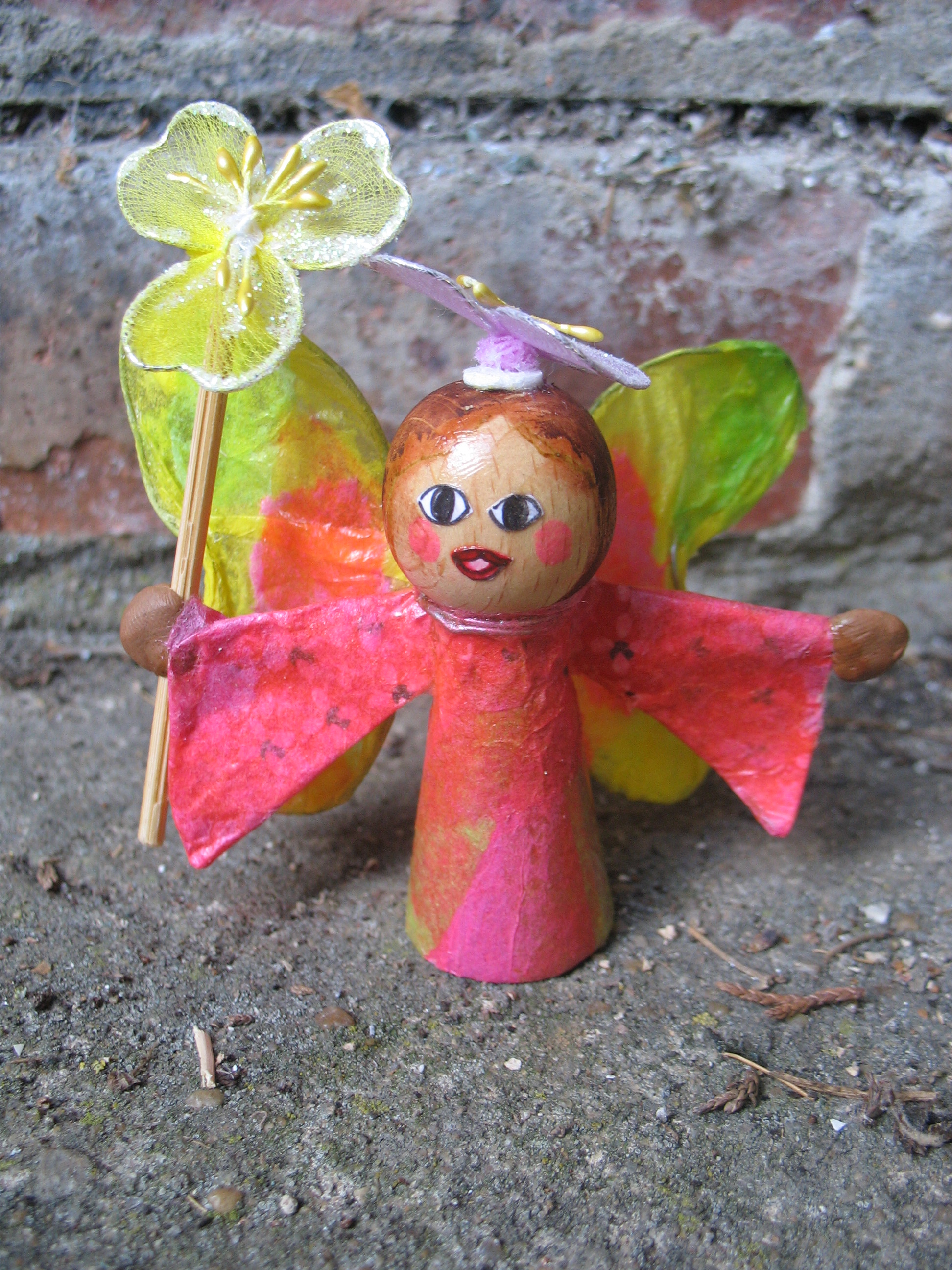
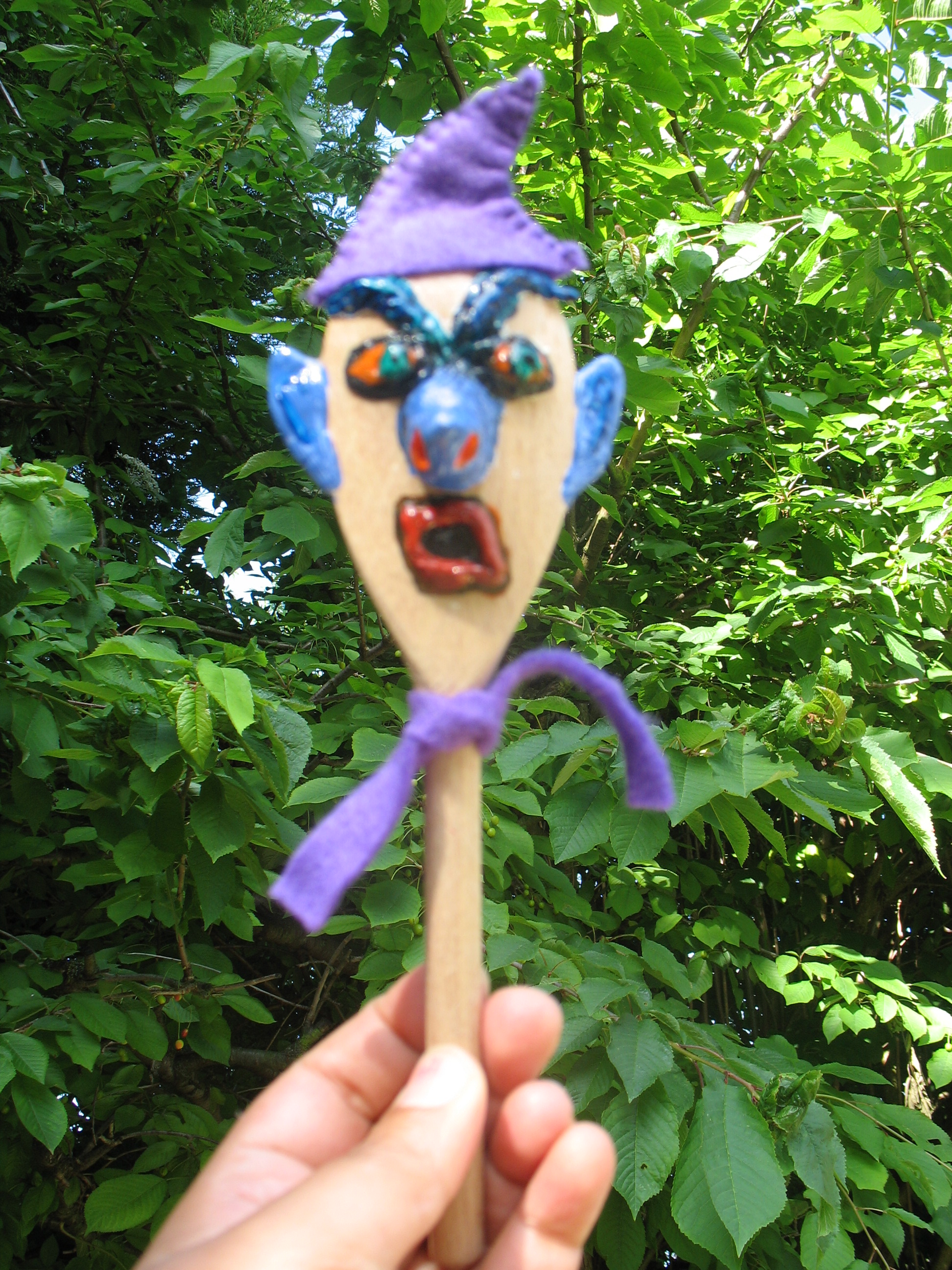
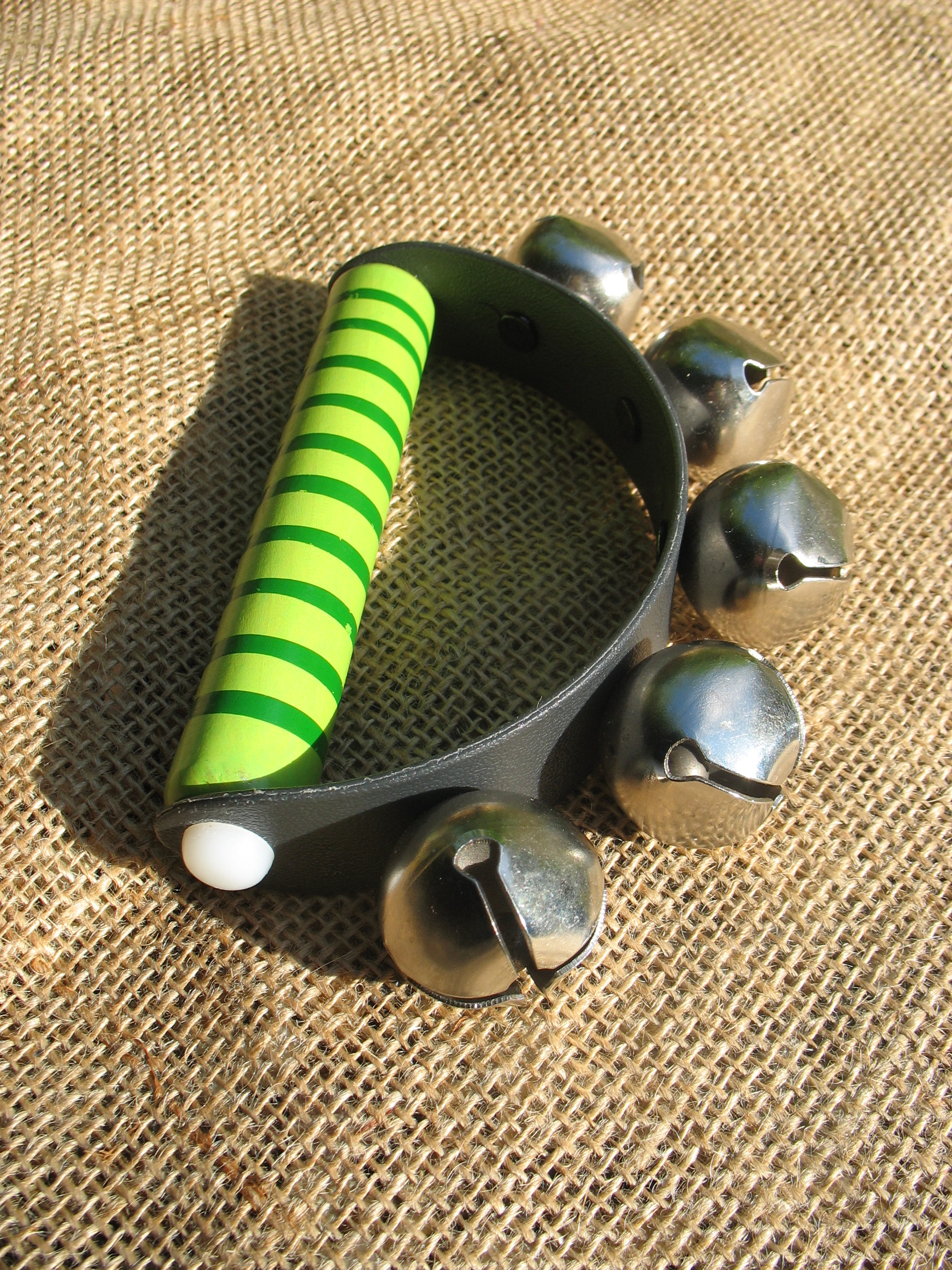
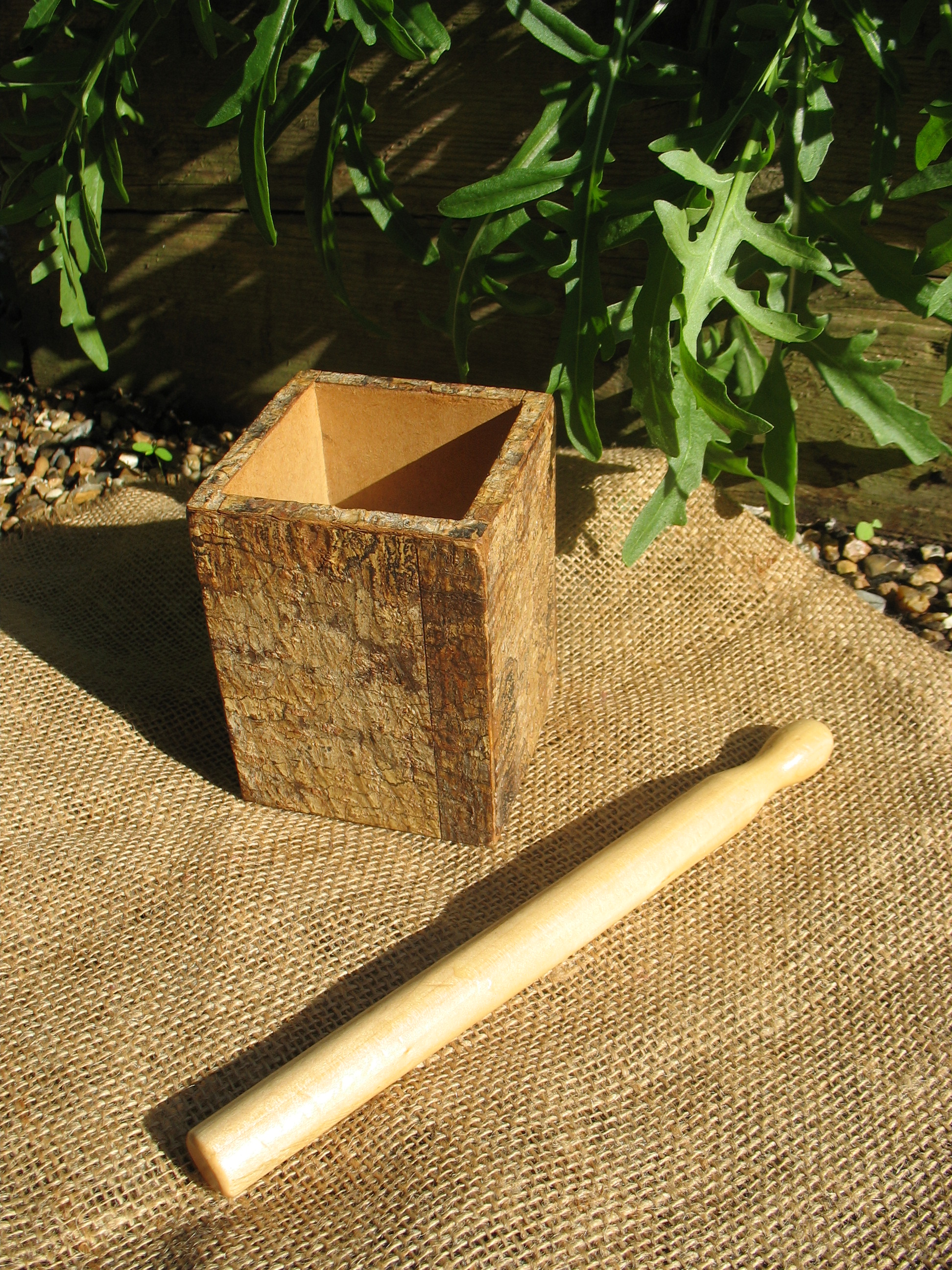
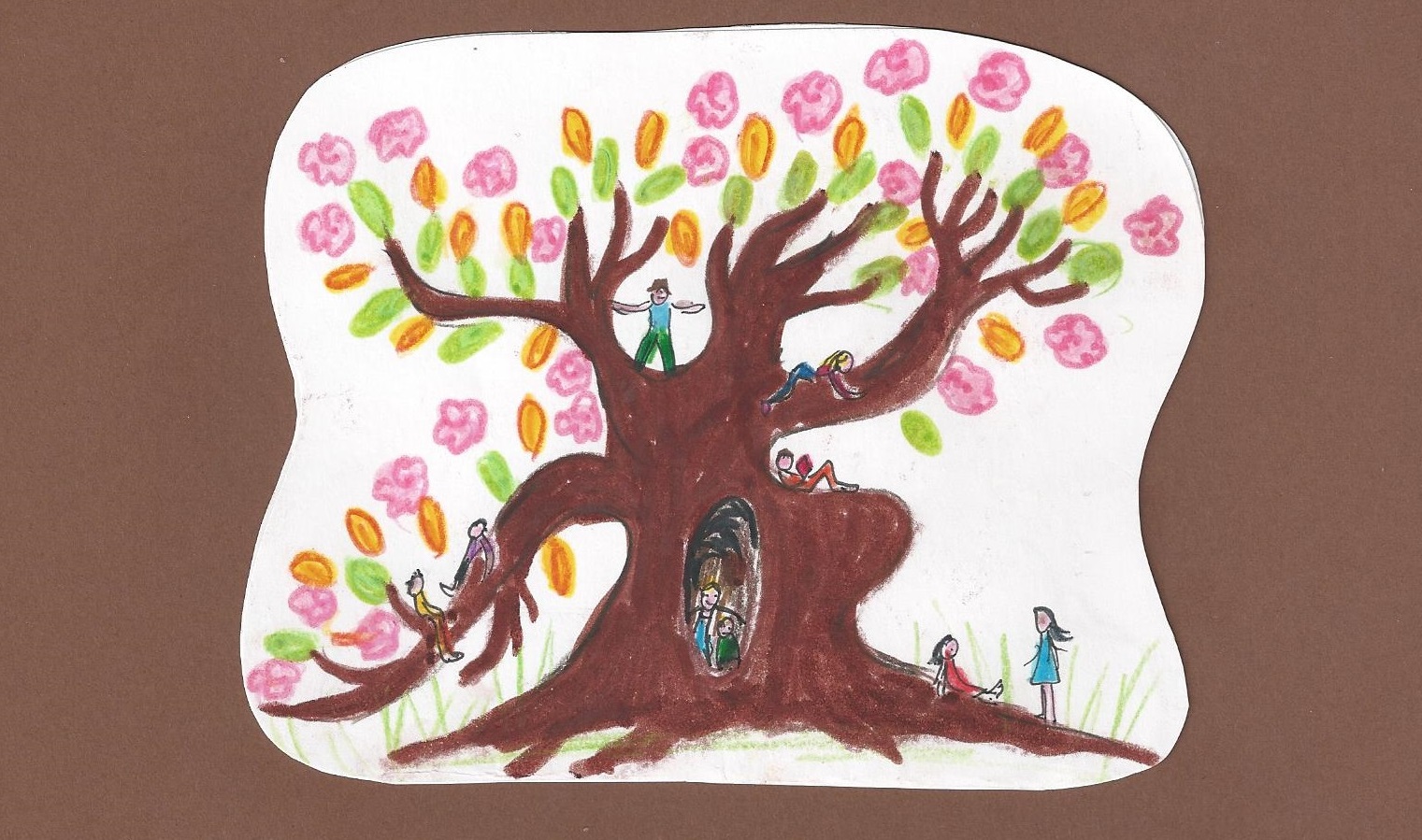
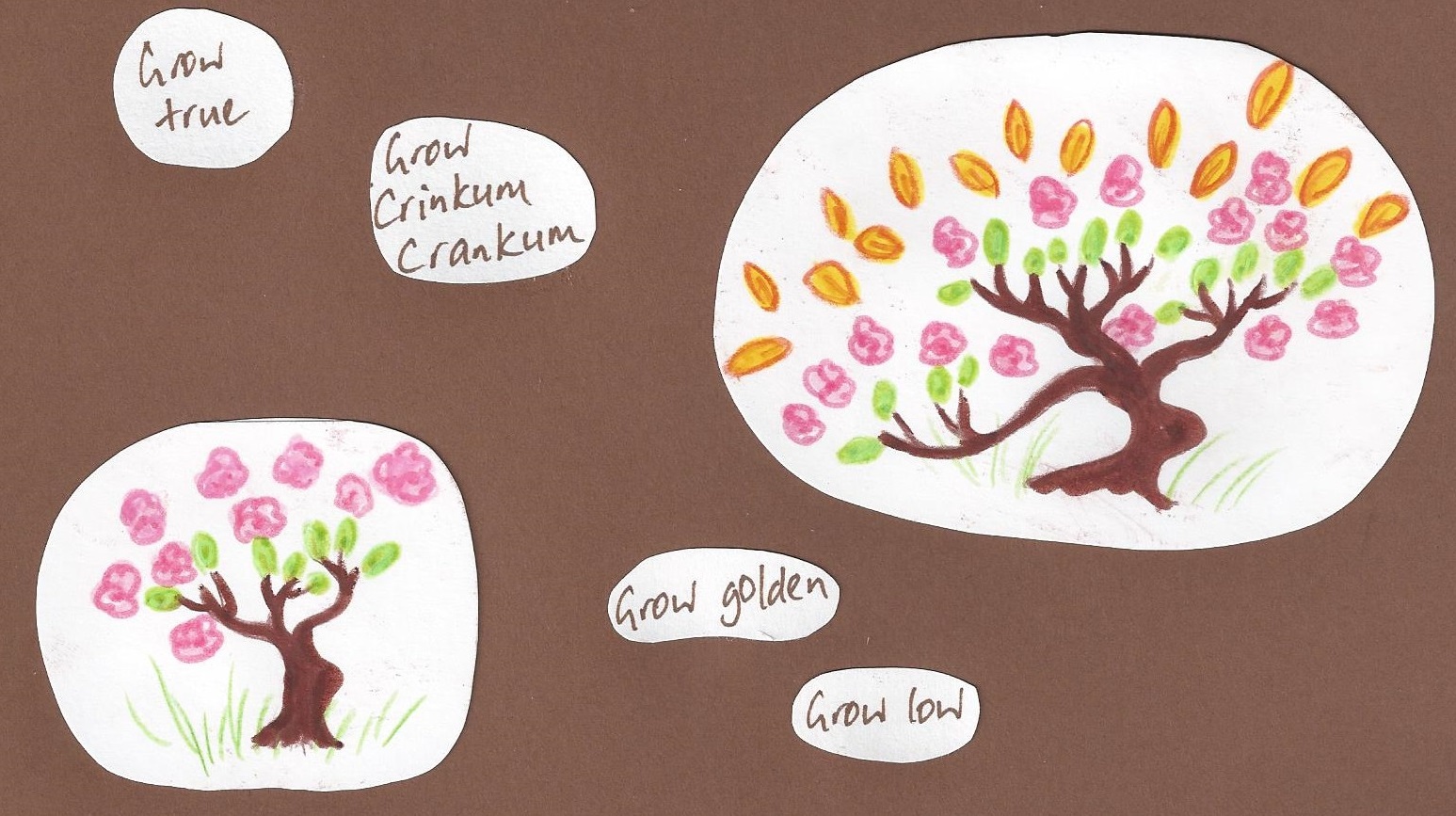
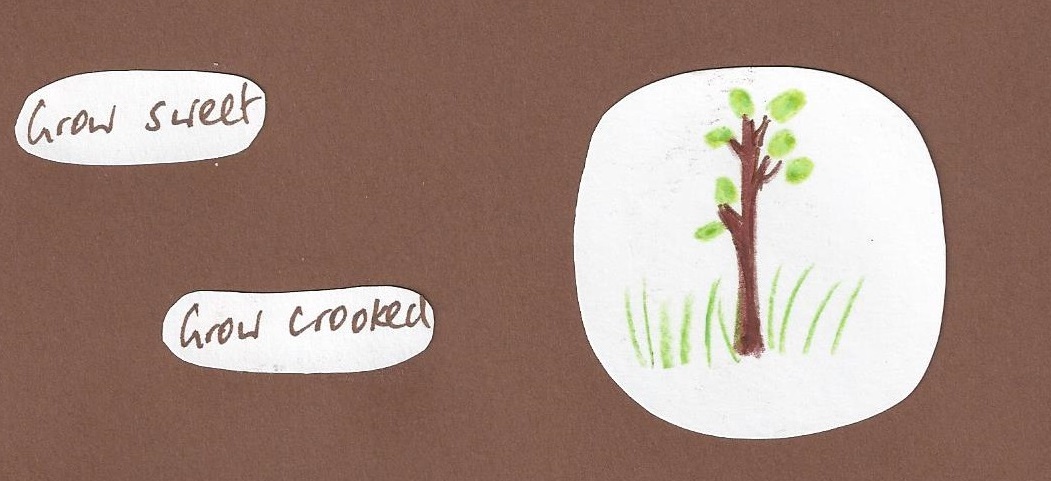
Re-telling the tale of The Crinkum Crankum Tree to a group of 5-8 year olds: a tree, a loving fairy, a naughty imp who makes the tree grow crooked and low and crinkum crankum; bells for when the fairy appears, a drumstick rattled in a pencil tidy for the imp, and a girl who goes walking in the woods and finds… the perfect tree for climbing!
Learning about storytelling for children with the amazing Danyah Miller at the School of Storytelling, we learned songs and rhymes and simple games. When I returned home I coaxed my daughter and husband to play.
Andy, spandy, sugardy-candy,
Where’s my little stone gone?
Pooh!
(A stone is concealed in cupped hands and moved in time to the rhyme, the others copying the actions and singing the rhyme with you. Then the clenched fists are held out to the person next to you who must guess which hand the stone is in. When they guess correctly the stone passes to them and the game continues.)
I was surprised by my daughter’s instant delight in this little game. It was immediate, there was a sudden quickening of interest, a smile, an eagerness to join in. So satisfying!
Sometimes it’s hard to trust that something so simple, so easy to do can make someone happy; to know to pick up your stone and start to sing!
It was my first time on a storytelling course. My first time at Emerson College.
“I don’t mean to be rude,” the taxi driver said. “But they’re all weird there.”
But oh for such weirdness! Every day of my life! Such playfulness and kindness and warmth for each other. And for stories.
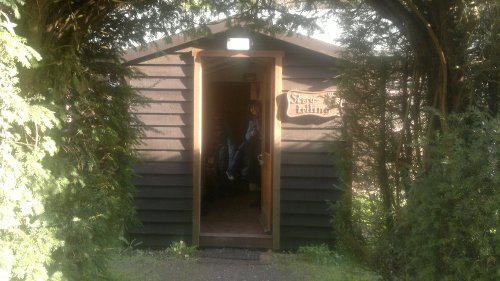
In the magical Story Hut, hidden behind a green archway in the garden, we learnt to embrace the bones of a story, to cherish it and be emboldened by it to draw on our responses and experiences to make its flesh. Old spent feelings were transformed in their fresh disguises, reaching out in surprising new ways. The story I learned to tell, I am still learning from: The Crinkum Crankum Tree, a tale of growth and change and self-acceptance.
“You don’t seem to be a success as a story-teller,” said the bachelor suddenly from his corner.
The aunt bristled in instant defence at this unexpected attack.
“It’s a very difficult thing to tell stories that children can both understand and appreciate,” she said stiffly.
“I don’t agree with you,” said the bachelor.
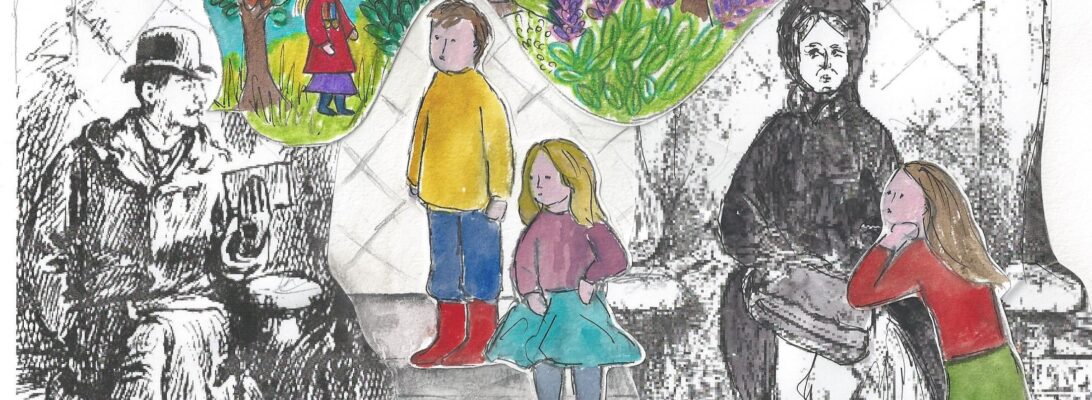
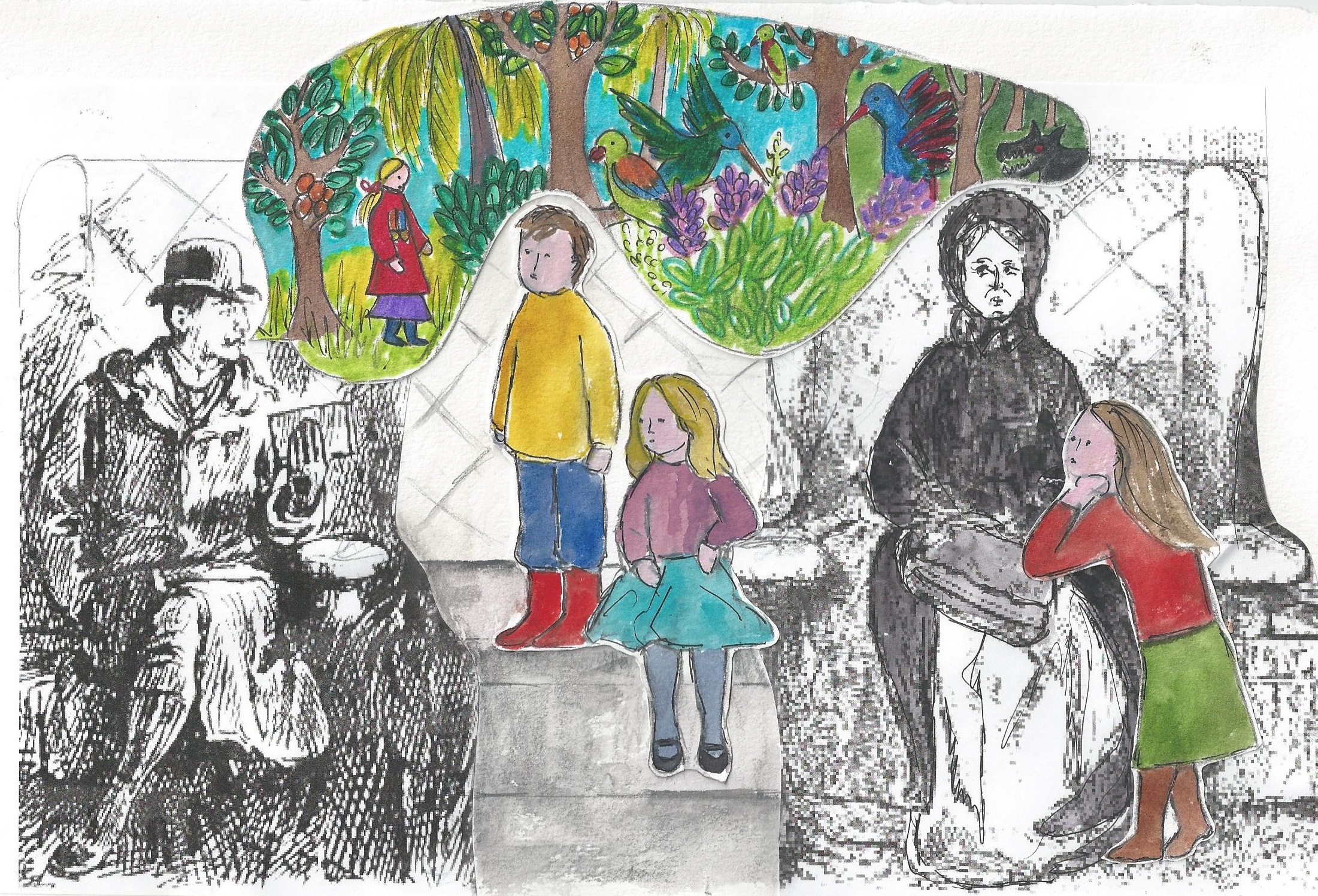
There are some essential tips for storytelling contained in this short funny story about a passenger in a train carriage forced to endure three bored, noisy children. He does so by making up a story that is far more engaging than the story made for them by their harassed and weary aunt! The following can be learnt from the tale:
1.Be original but never moral:
“Was she pretty?” asked the bigger of the small girls.
“Not as pretty as any of you,” said the bachelor, “but she was horribly good.”
There was a wave of reaction in favour of the story; the word horrible in connection with goodness was a novelty that commended itself. It seemed to introduce a ring of truth that was absent from the aunt’s tales.
2.Be aware of your listener’s reactions; allow them time to absorb the details of your story and to create its world for themselves:
The storyteller paused to let a full idea of the park’s treasures sink into the children’s imaginations.
3.Introduce a dramatic event to hook your listeners:
Just then an enormous wolf came prowling into the park…
“What colour was it?” asked the children, amid an immediate quickening of interest.
4. Find an unusual or unexpected ending (Saki was the master at this!):
[The wolf] dashed into the bush, his pale grey eyes gleaming with ferocity and triumph, and dragged Bertha out and devoured her to the last morsel. All that was left of her were her shoes, bits of clothing, and the three medals for goodness. …
“The story began badly,” said the smaller of the small girls, “but it had a beautiful ending.”
5. Don’t expect everyone to love your story:
“A most improper story to tell to young children! You have undermined the effect of years of careful teaching, [said the aunt].”