I am dreaming of stories from my new home in the mountains of southern Spain, currently finishing work on my second novel and hoping that we can make art and stories together very soon!
In the meantime…
If you are interested in reading my first novel BEAUTIFUL PLACE you can read a preview and buy it here:
SHORT STORIES ON THE BBC:
Two short stories commissioned for BBC Radio4 are currently available to listen to here:
Crinkum Crankum by Amanthi Harris. Inspired by the tale of the Crinkum Crankum tree. Anya goes on a course to learn the art of oral storytelling.
Writer and artist Amanthi Harris was born in Sri Lanka and grew up in Colombo, before moving to London. Her novella Lantern Evening won the Gatehouse Press New Fictions Prize in 2016. Her novel, Beautiful Place, was published in 2019.
Writer: Amanthi Harris Reader: Aiysha Hart Producer: Jeremy Osborne
A Sweet Talk production for BBC Radio 4
Dance of the Wild In the Alpujarras – while her daughter is at school – Anya visits a house sometimes stayed in by Gerald Brenan, who used to live in this remote mountainous region, receiving Bloomsbury guests. Once, he was visited by Virginia Woolf.
Writer and artist Amanthi Harris was born in Sri Lanka and grew up in Colombo, before moving to London. Her novella Lantern Evening won the Gatehouse Press New Fictions Prize in 2016. Her novel, Beautiful Place, was published in 2019.
Writer: Amanthi Harris Reader: Aiysha Hart Producer: Jeremy Osborne
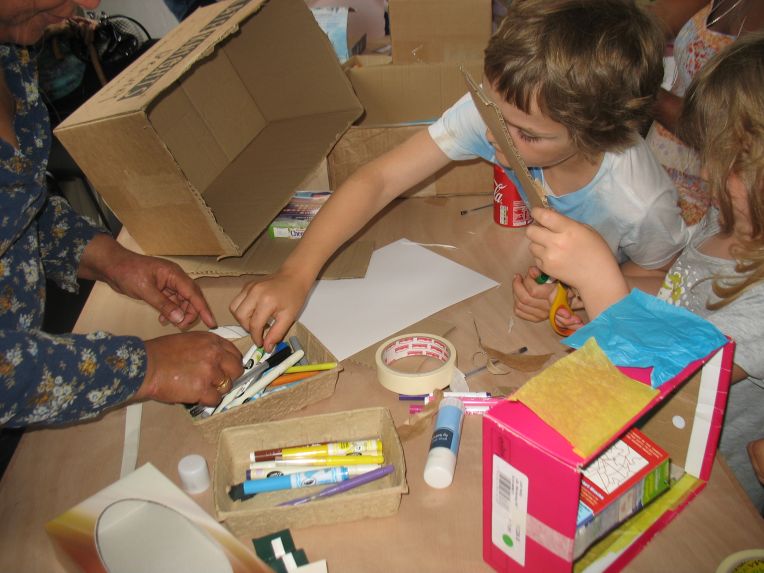
Simple craft activities can be a way of inspiring new stories and encouraging creativity in play. Sometimes a way in is needed to great ideas, an indirect unconscious pathway into the secret nooks of the imagination, to stories quietly waiting to be found and brought into the open.
Unique wonderful worlds can arise from cardboard and glue and Lego and any small toys – worlds that once initiated will be intricately put together for hours, played with for days, weeks…
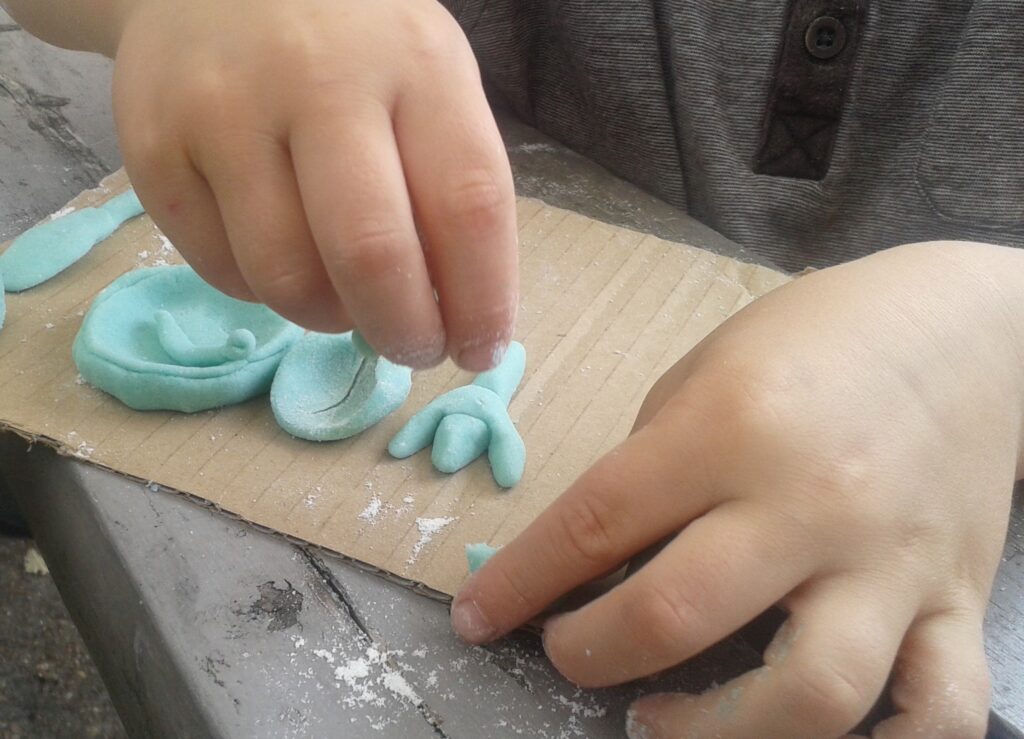
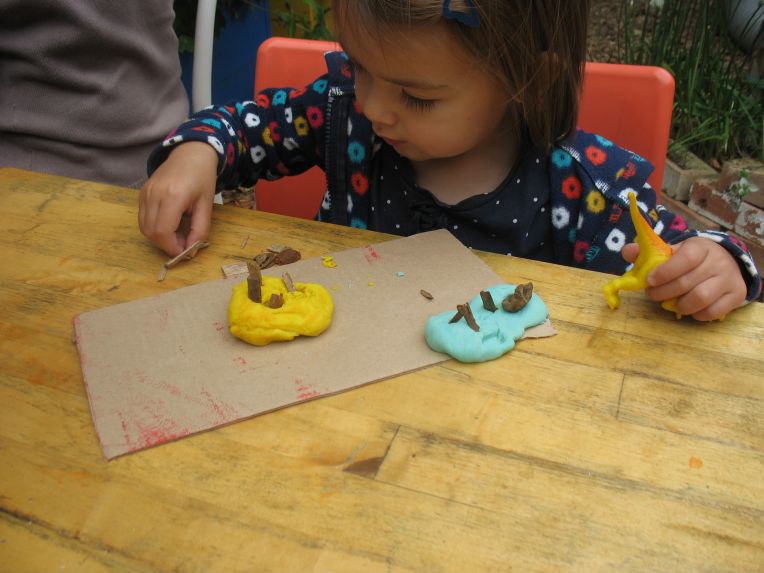
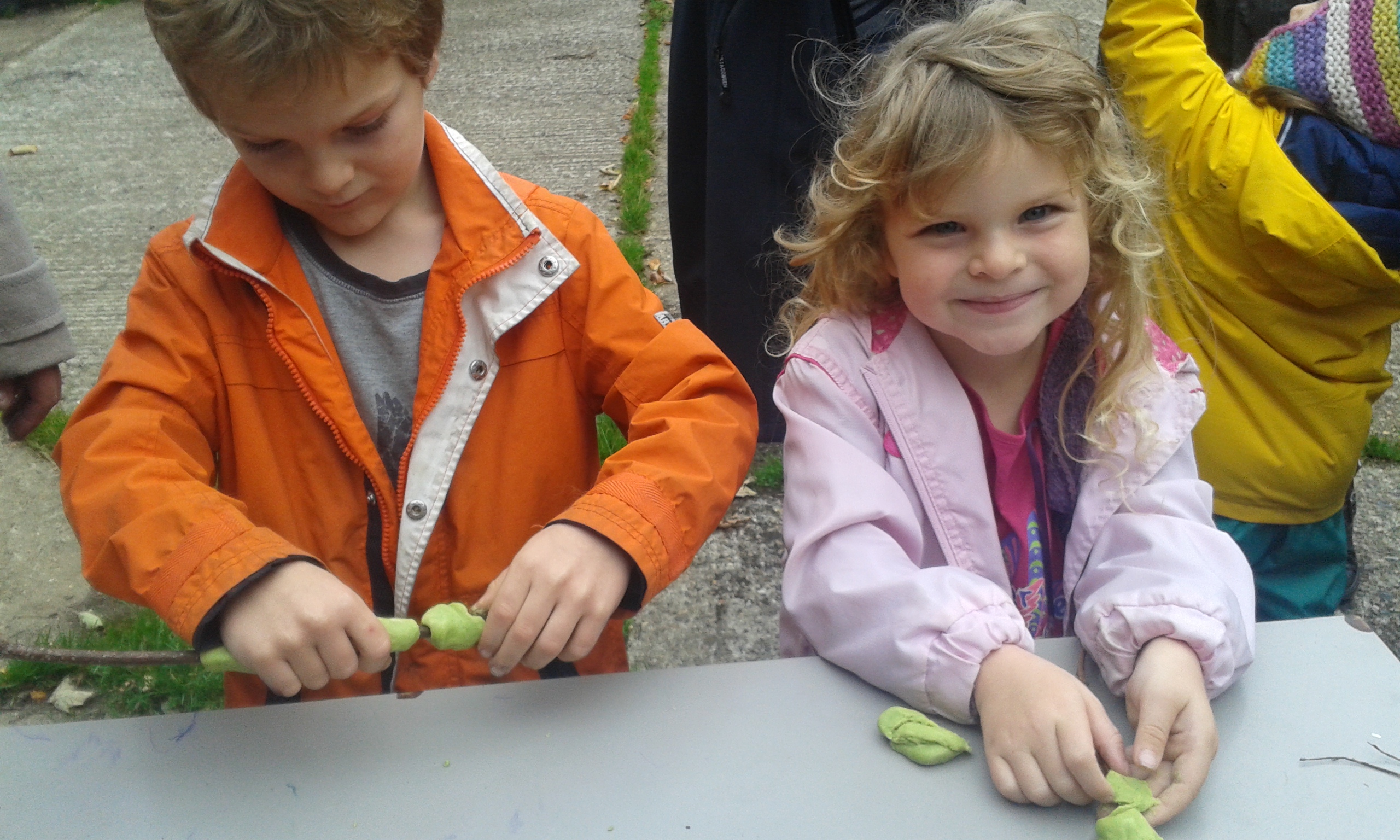
A favourite material at StoryHug workshops is safe, cheap, incredibly tactile SALT DOUGH!Making with our hands: holding, breaking, cutting, choosing, colouring-in even the most simple creations can bring about the magic of inspiration, a sudden burst of vision, a new story idea to coax into shape.
In the workshops I asked the children to make items for our puppet show later – here it was: ‘something nice to eat’! The instructions provided a focus which inspired a vast array of fantastical creations, for creativity really does thrive on restrictions and constraints (as discussed in this intriguing Ted Talk here).
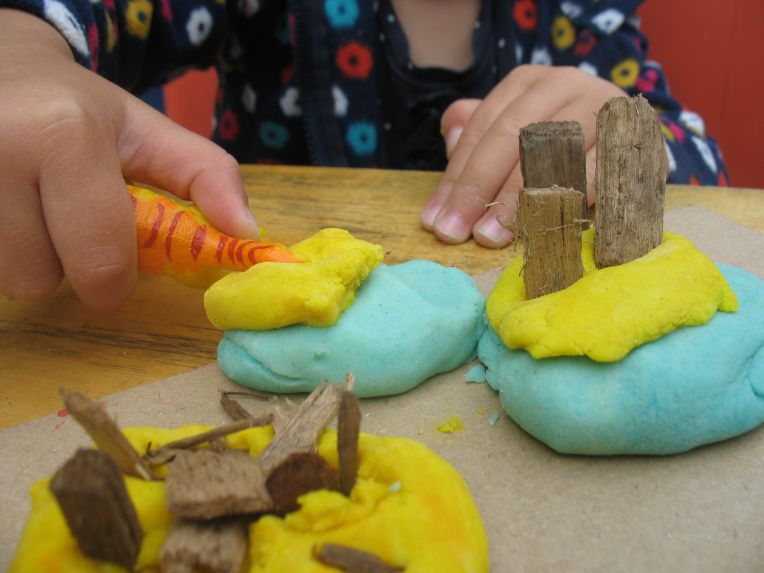
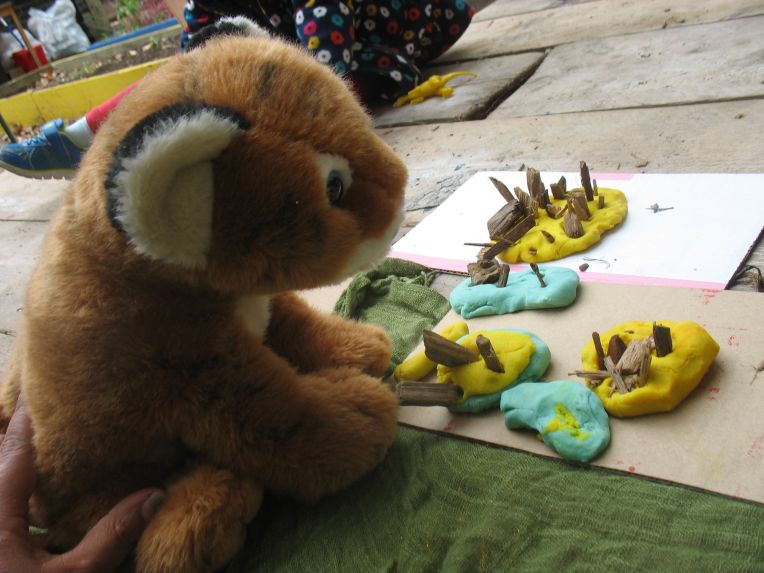
Later, for the puppet show, I had a rapt and delighted audience when the children’s creations made their appearance on the tabletop puppet stage, and even helped to appease a hungry tiger!
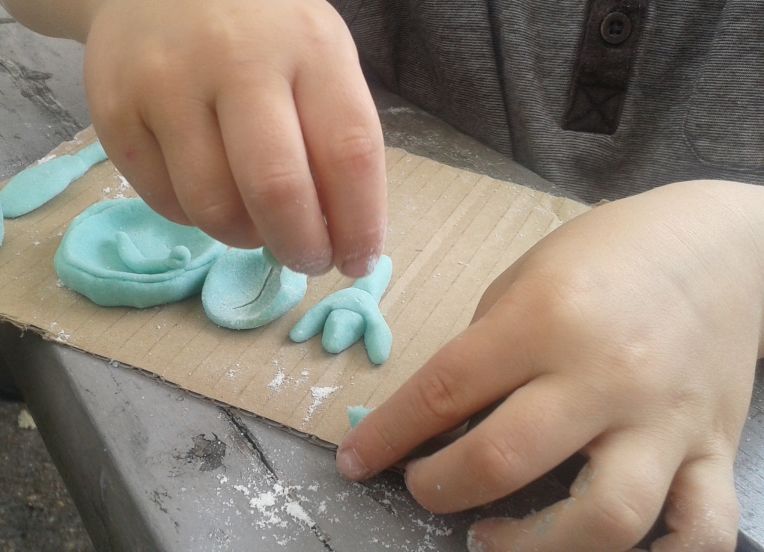
Salt dough is so soft and pliant and mouldable, it warms in your hands… it appeals also to older children who linger longer, making more detailed creations…
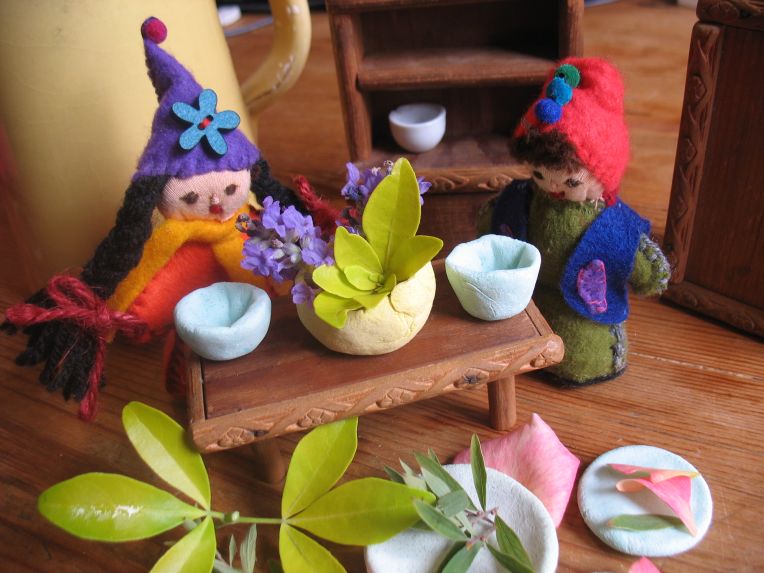
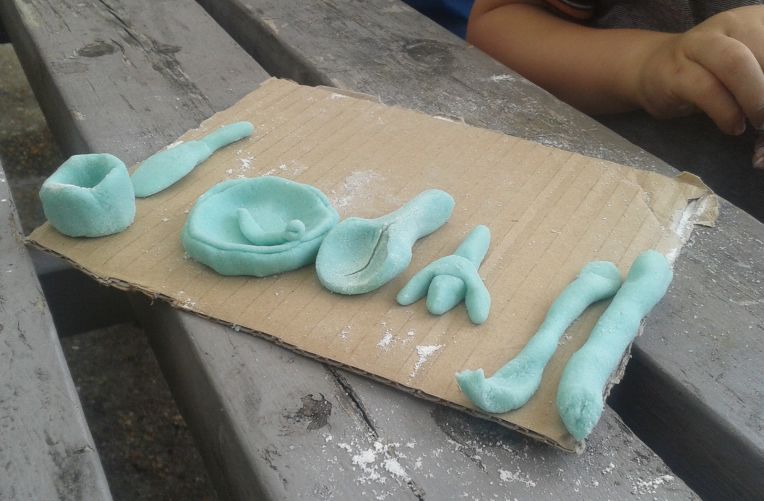
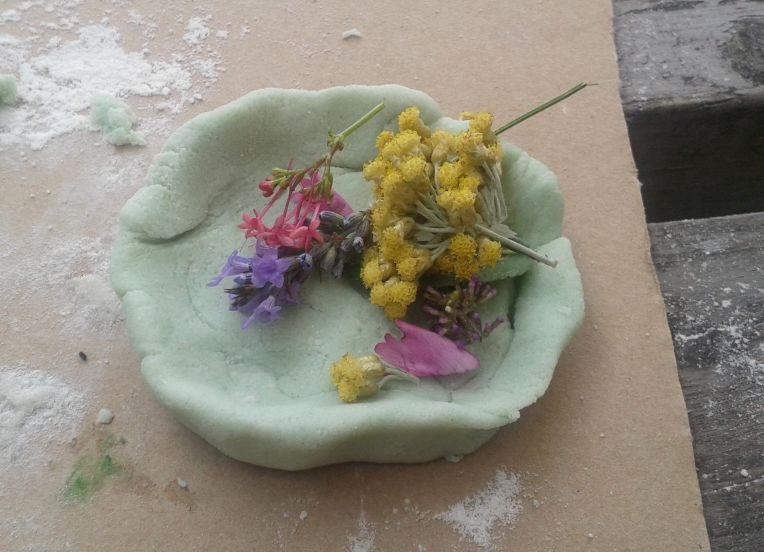
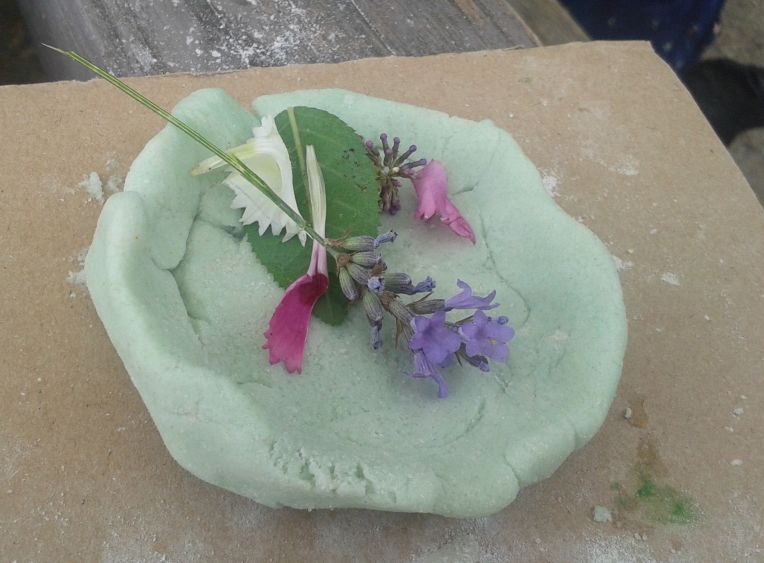
And grown-ups too can play… salt dough is perfect for making quick and simple items for doll houses and props for Woodland Puppet shows, such as bowls and vases:
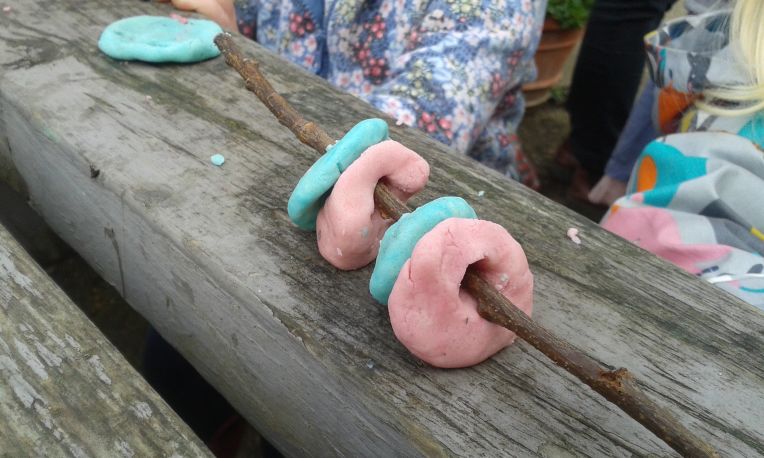
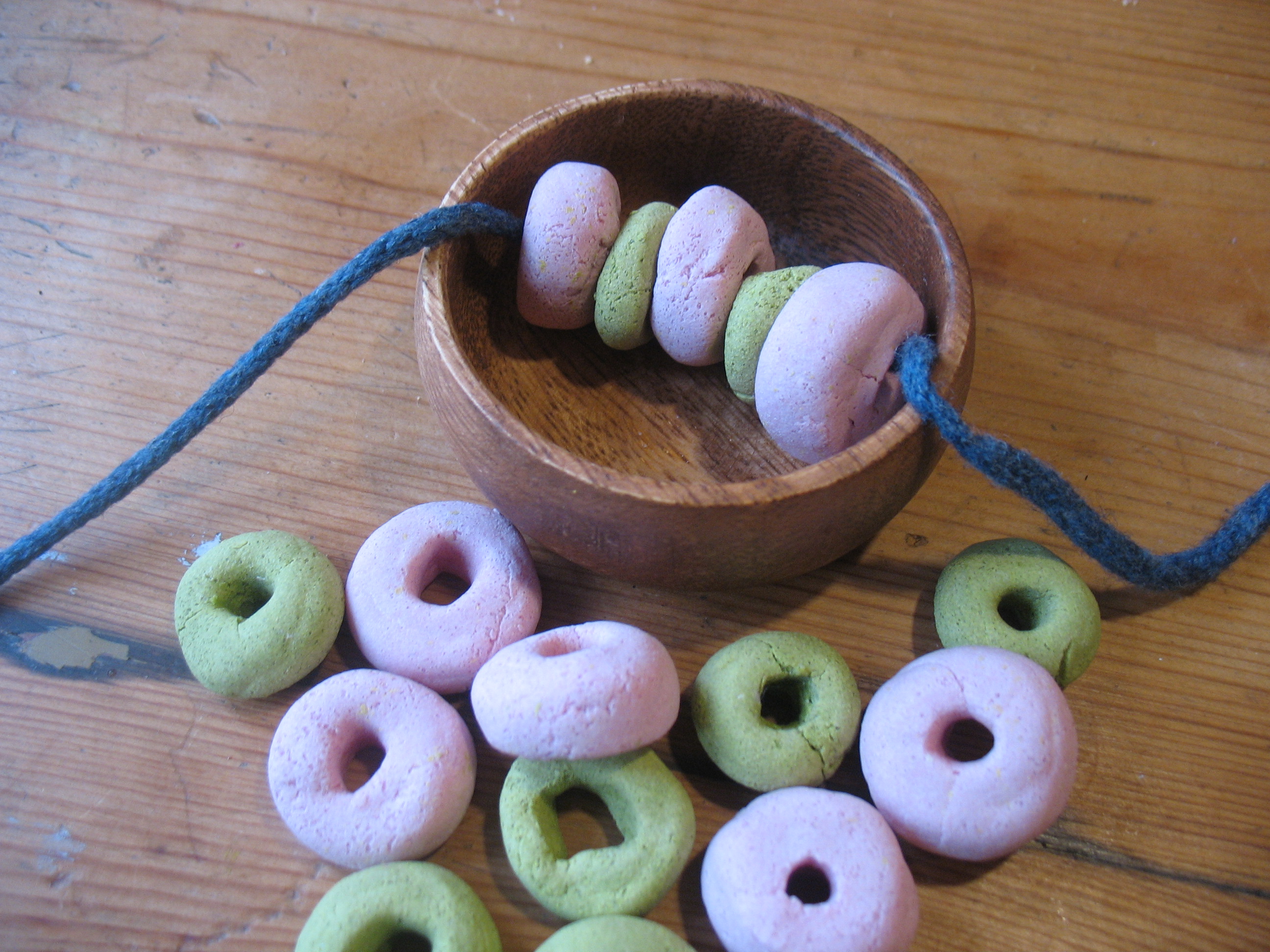
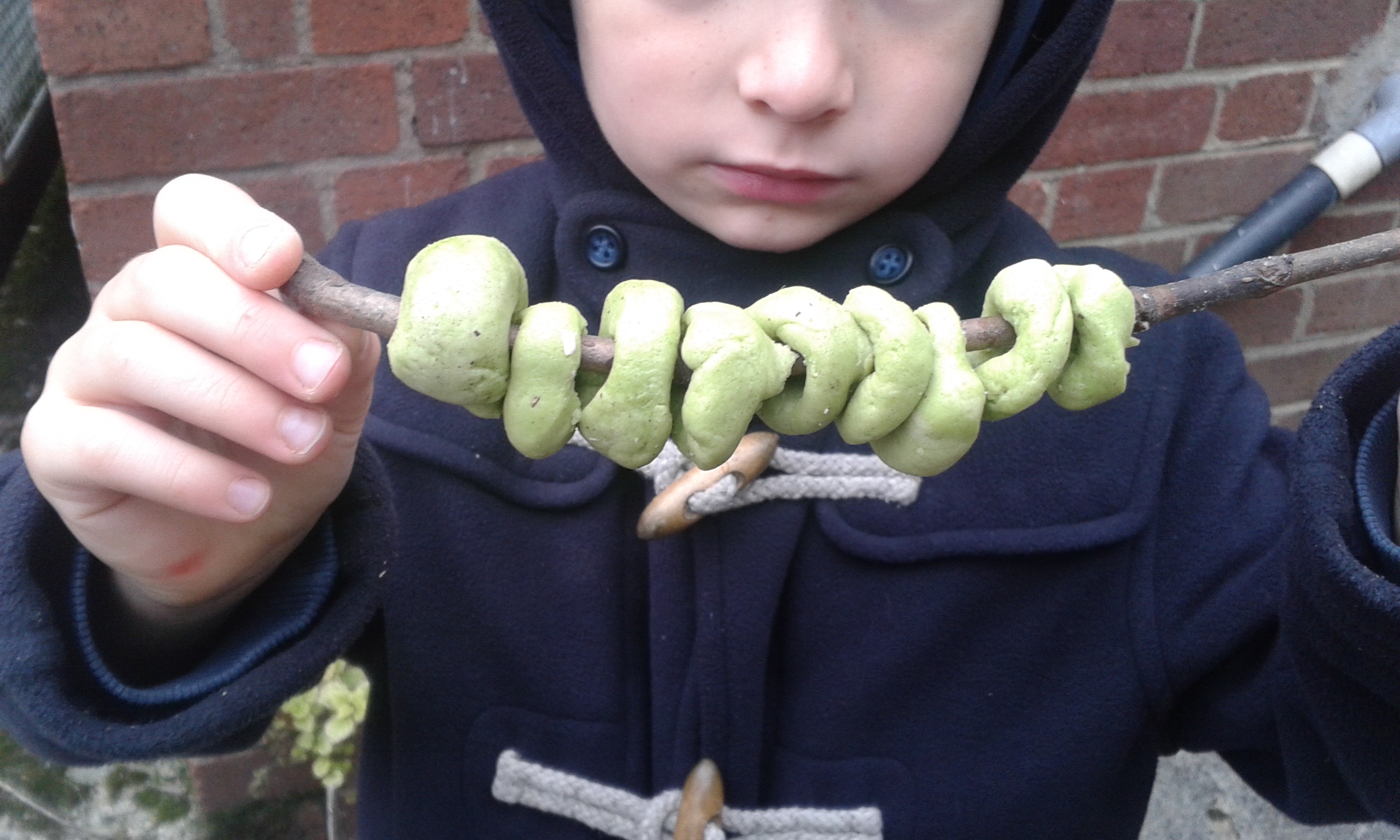
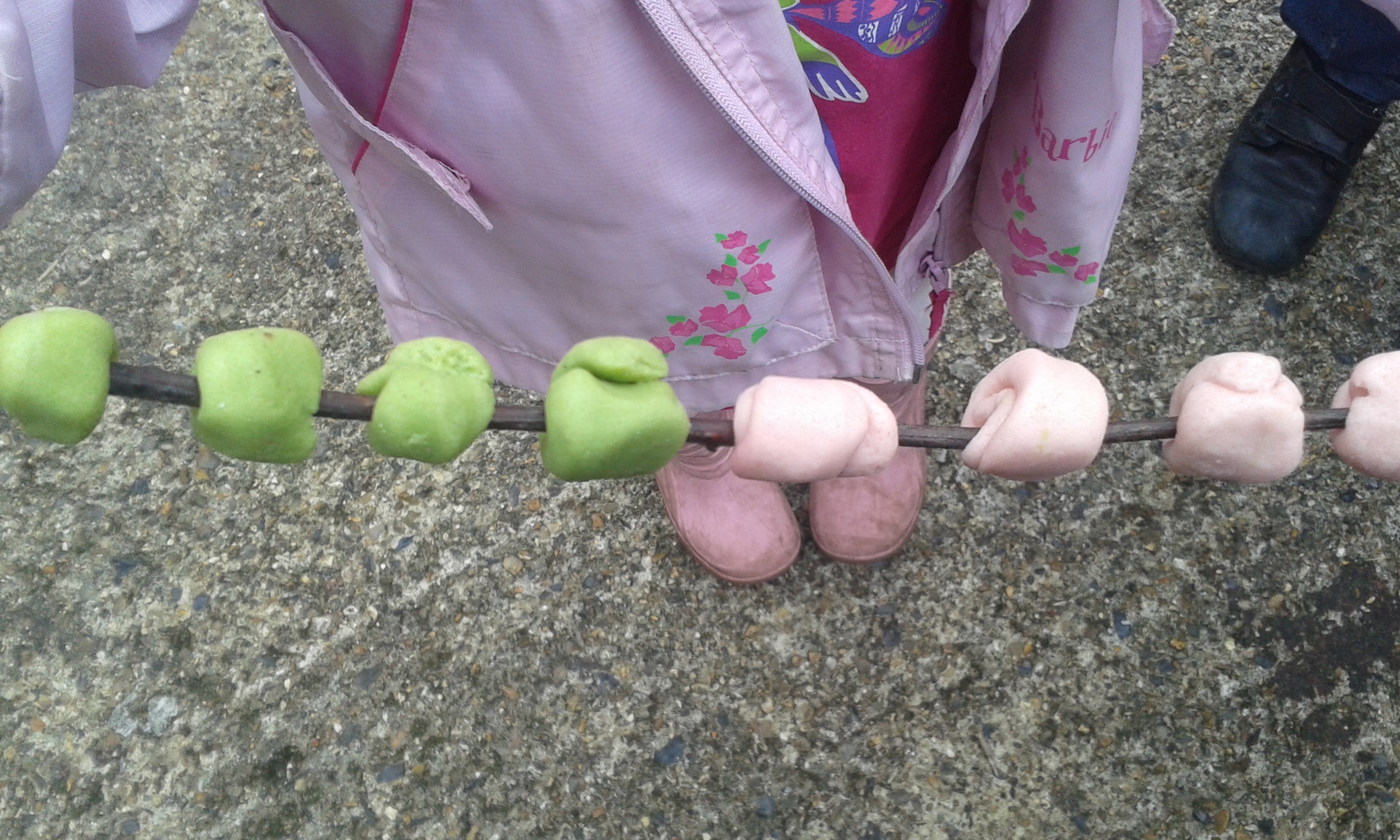
Salt dough beads (when hard) can be strung to form magical necklaces…
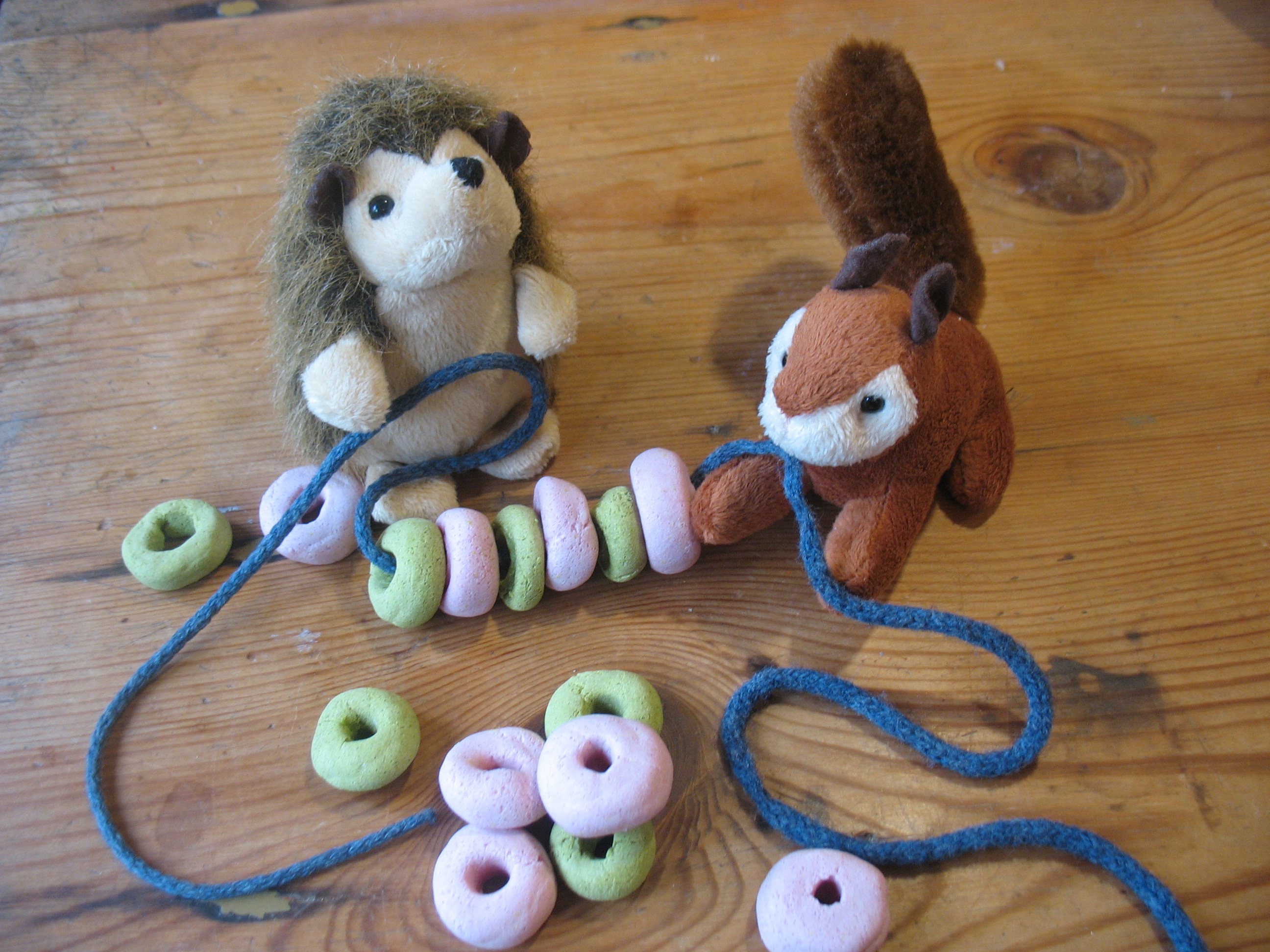
…for a puppet show perhaps (here two woodland characters make a necklace for a doll princess!), or they can be used when dressing up by children…
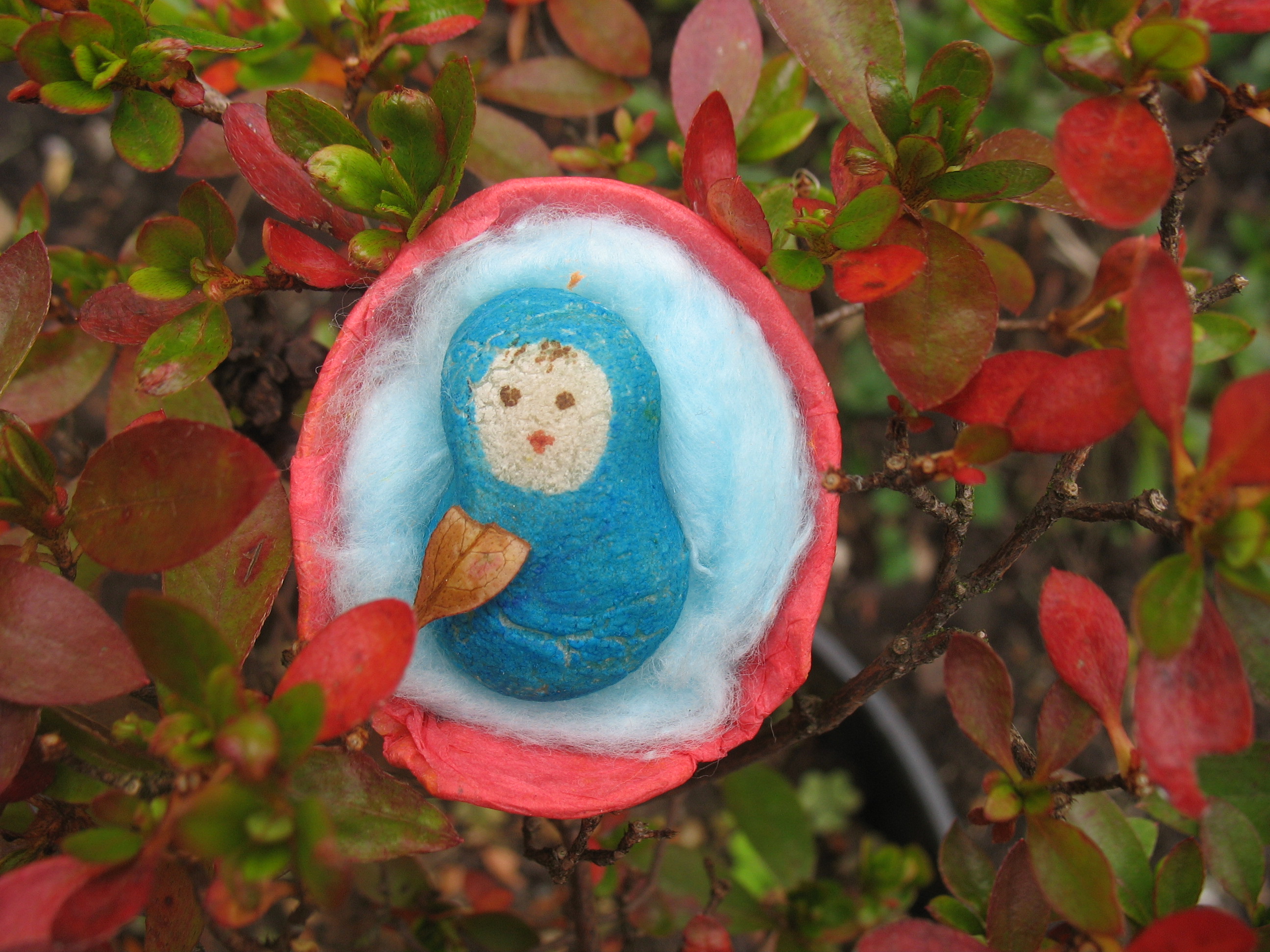
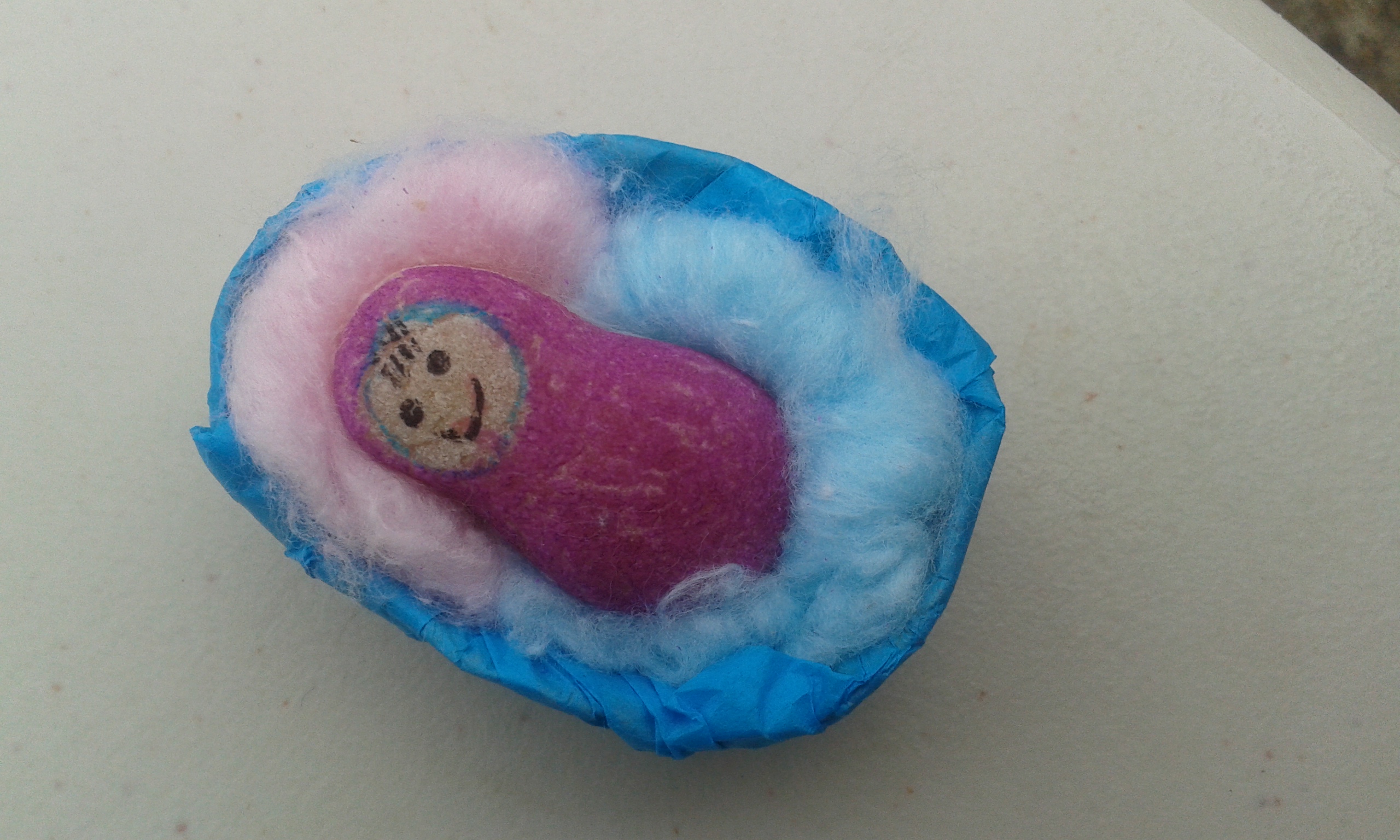
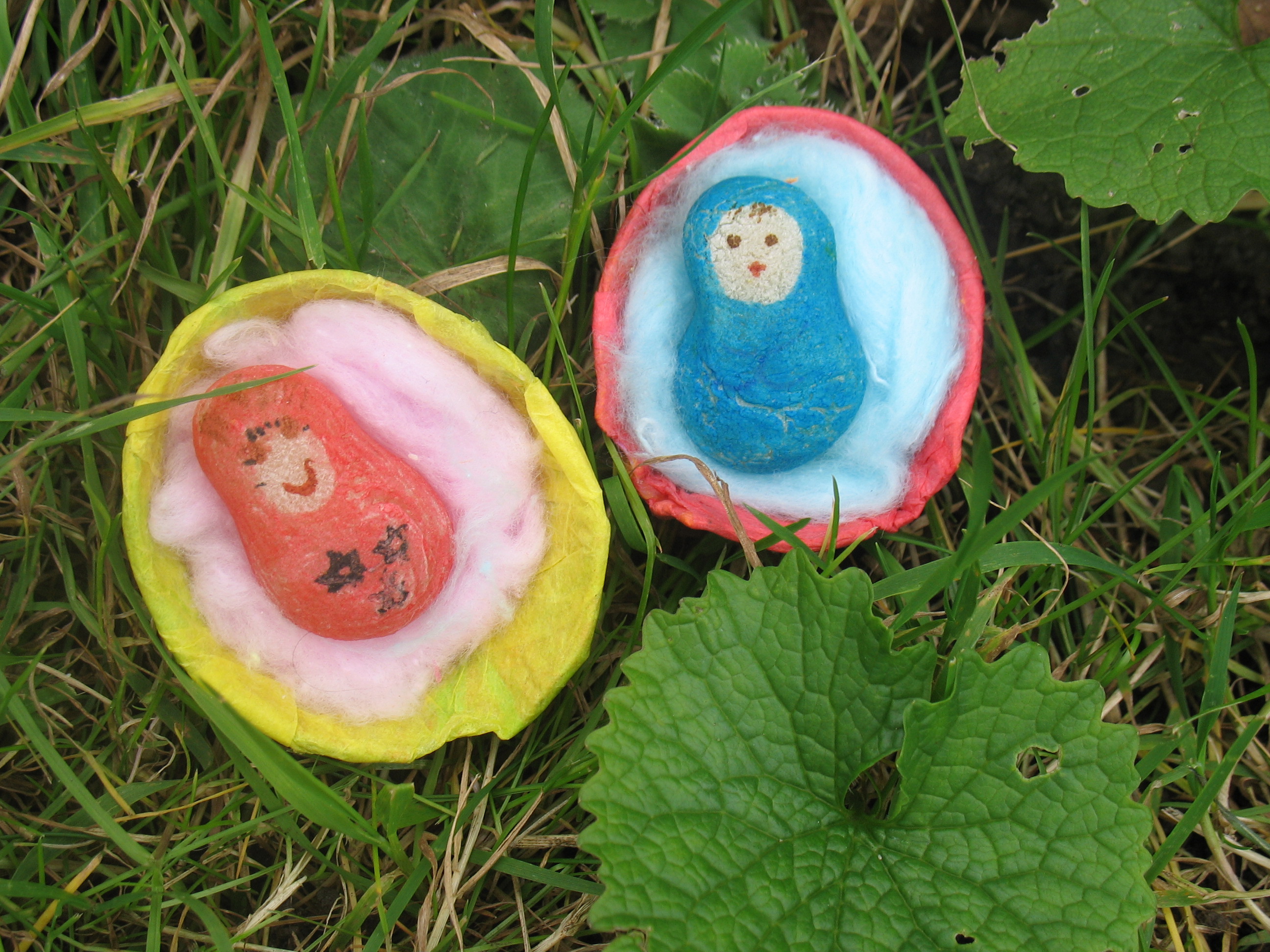
Of course Fairy Babies can be made of salt dough too!
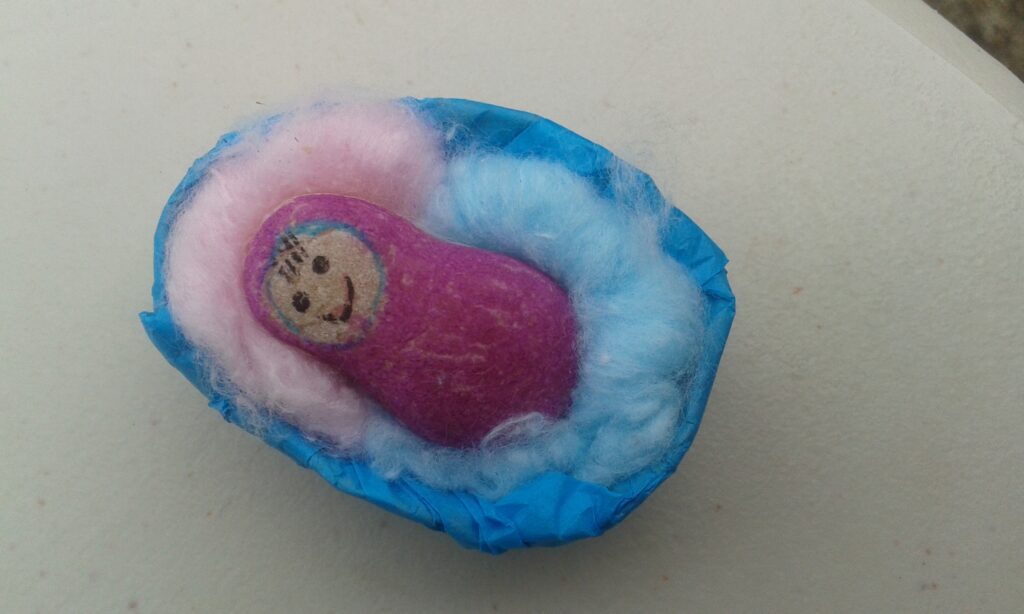
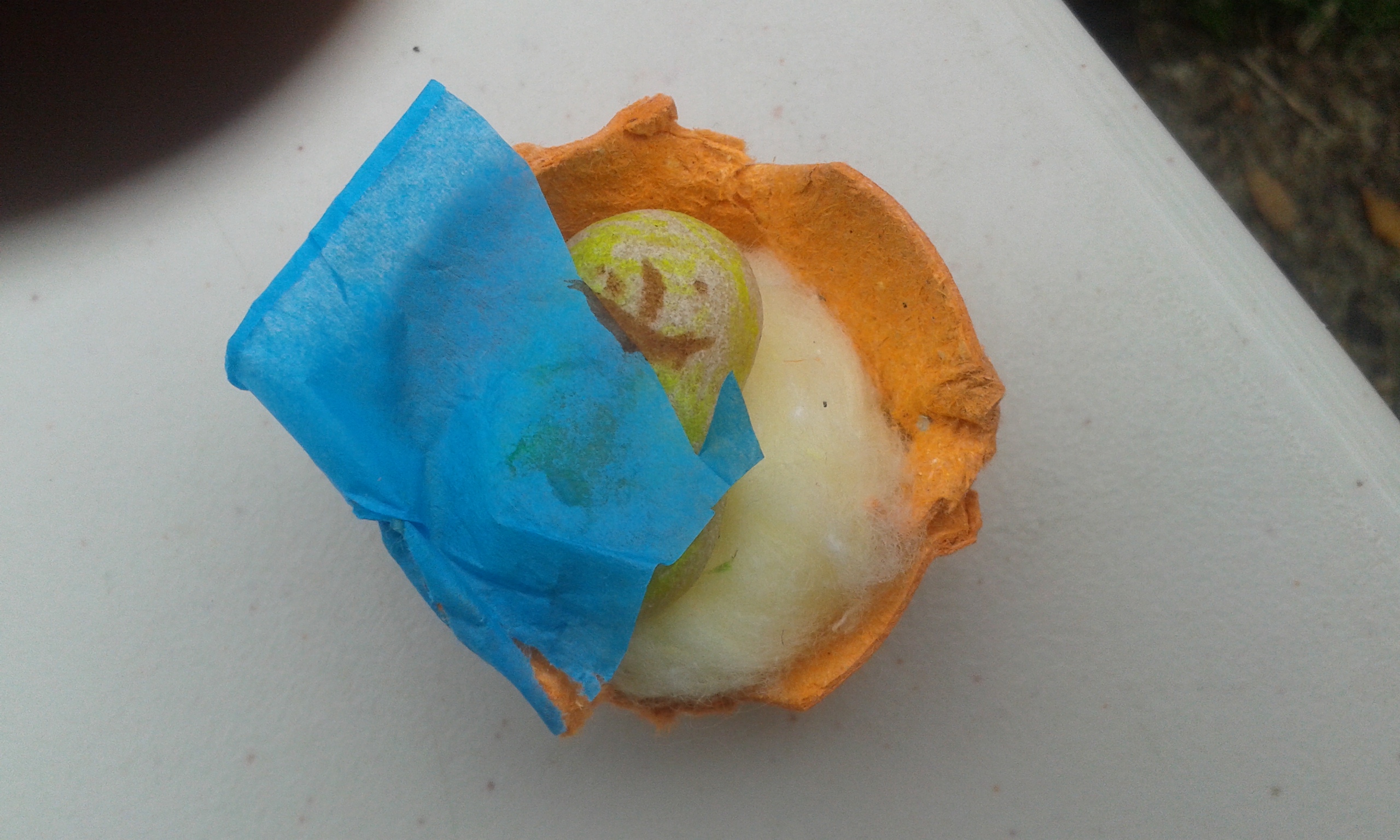
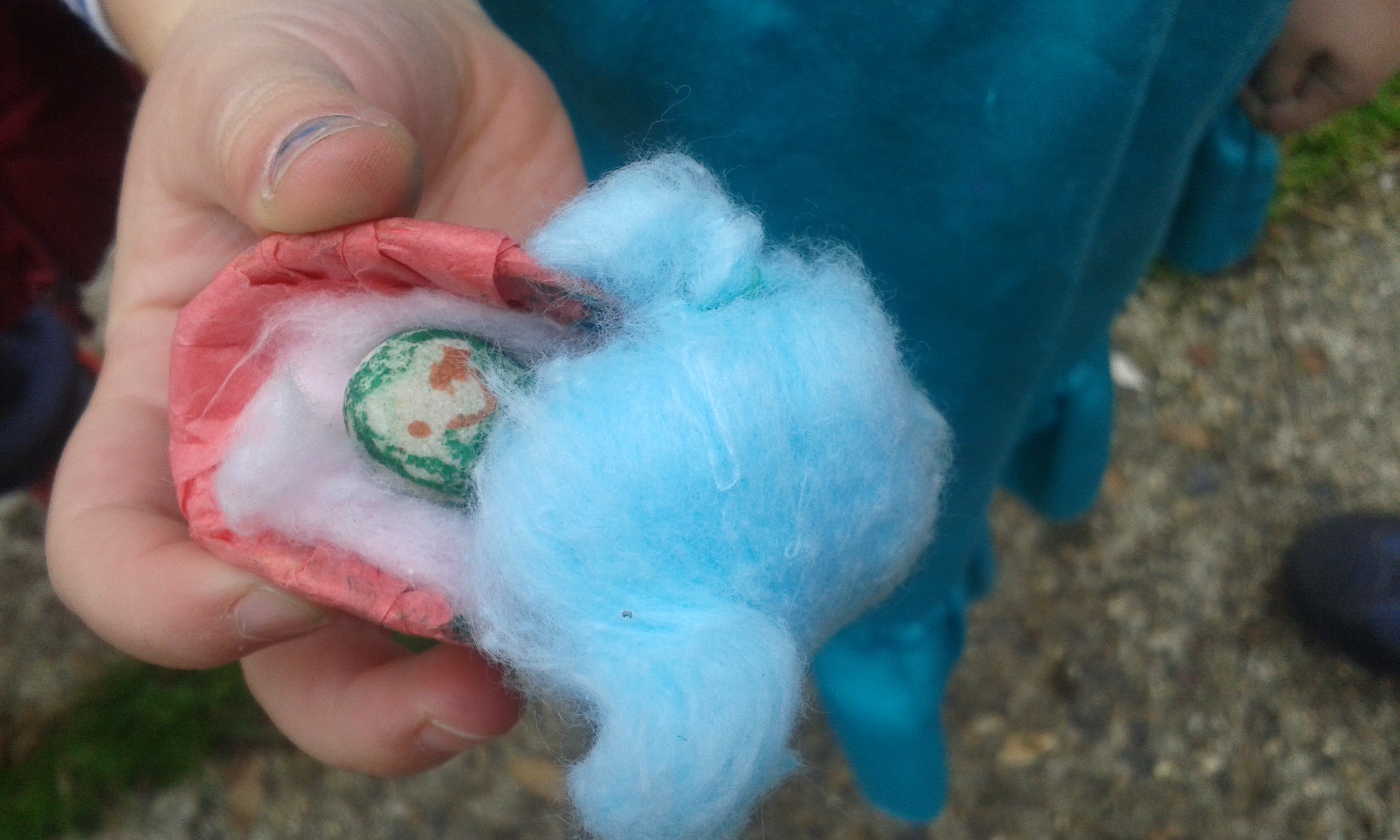
The dolls are made in advance, and left plain and unpainted so that the children can colour in faces, hair and clothes with felt-tip pens. The cradles are made from egg-boxes and covered by the children with torn strips of bright tissue paper glued on with PVA glue which dries harder and makes the cradles feel more solid – or glue stick for less mess! Then we add pastel-coloured cotton wool balls for soft bedding:
Making people is the best beginning for making new worlds: homemade dolls always feel more alive than bought ones!
Plain wooden PEG DOLLS bought from a craft shop can be coloured in with felt tips and given felt clothes attached with a glue such as Copydex glue:
…and given homes of boxes decorated in origami papers and scraps of fabric:
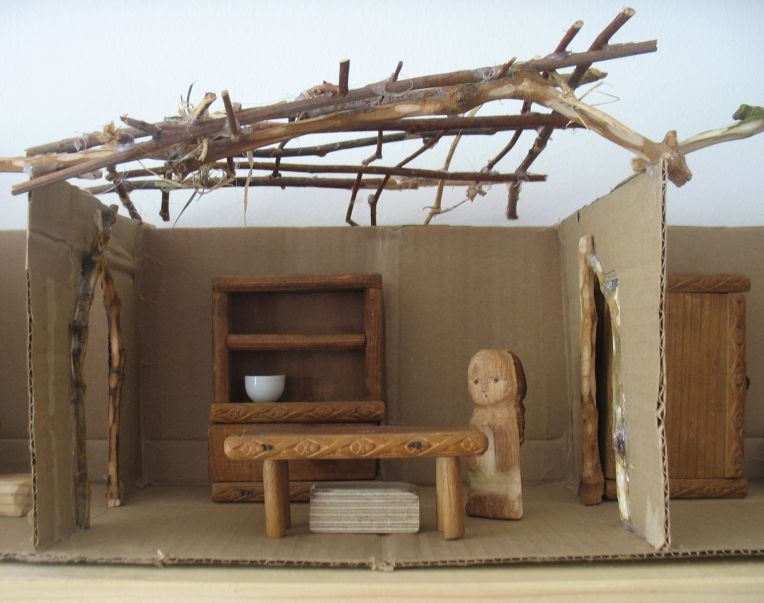
Miniature houses are always of interest – and, it seems the more handmade and (ahem) quirky they are, the more they inspire children to enter into the lives of inhabitants.
This is a cardboard house I made for a simple wooden doll I carved, with a few items of ‘rustic’ dolls house furniture found on eBay:
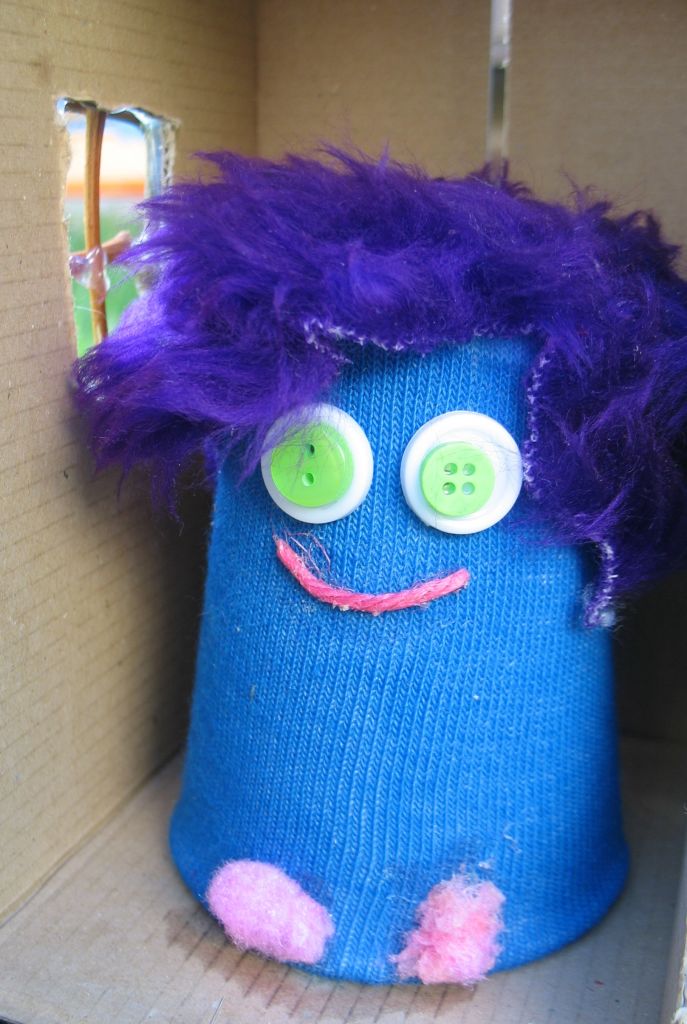
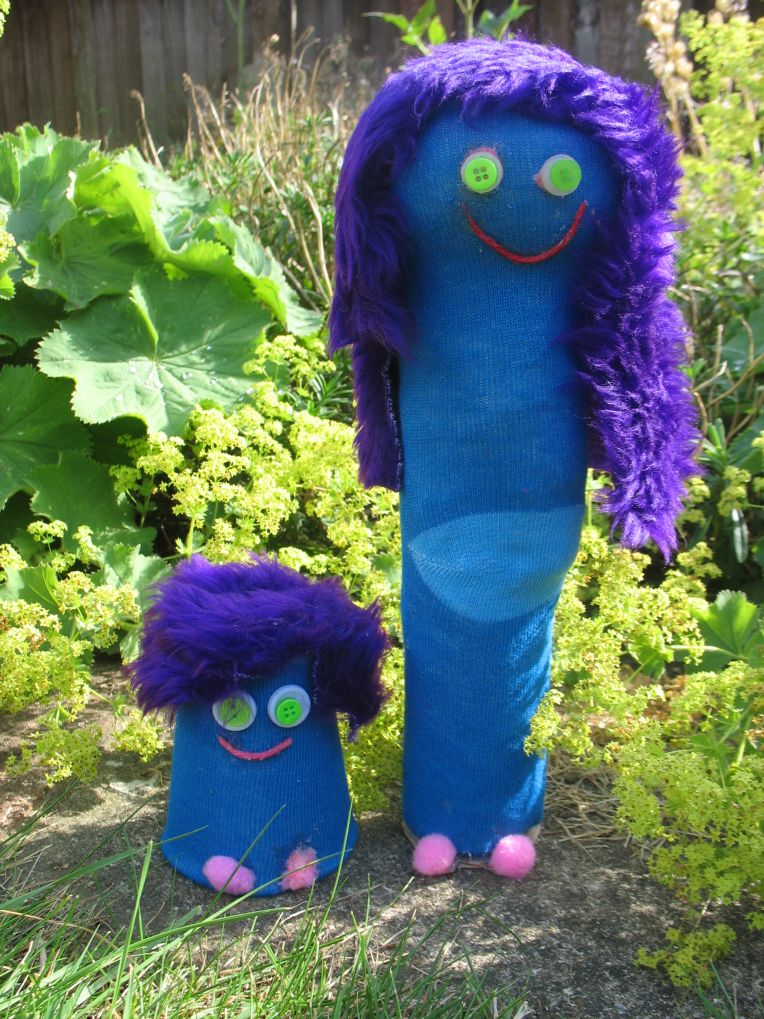
‘People’, of course, come in all shapes and sizes… these were made with scrunched up newspaper , old socks and furry fabric and buttons by my eight-year old assistant:
All combinations of materials can be used:
Here Plasticine and conkers:
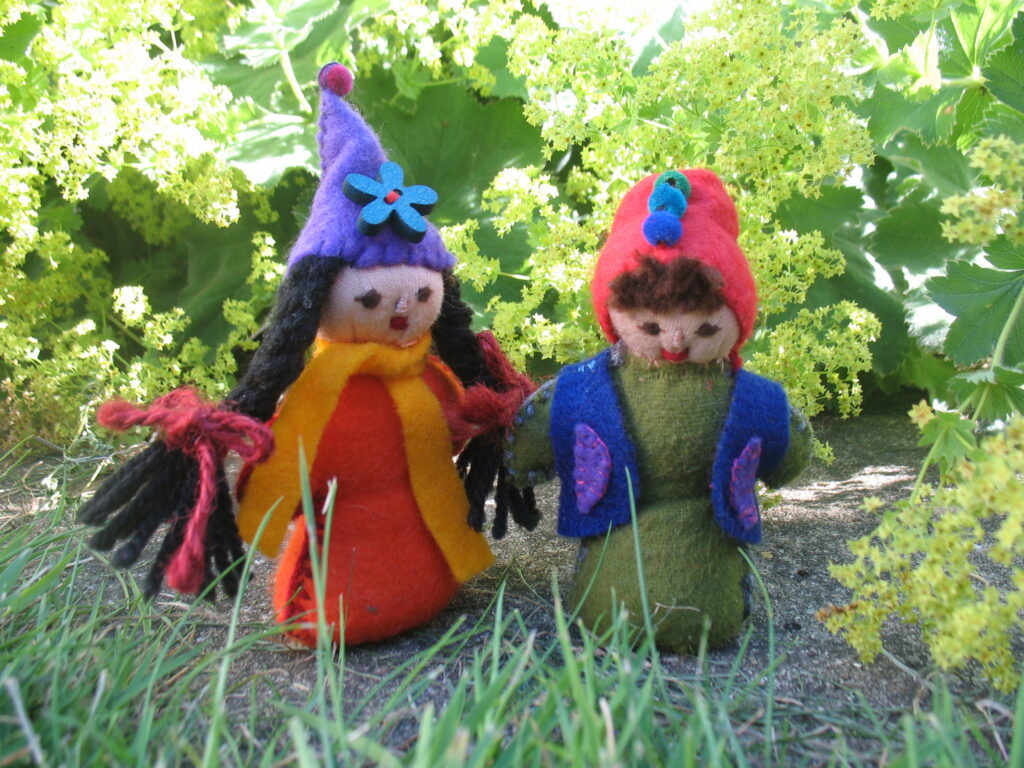
FELT is easy to sew into simple little people with wool hair and minimal expressive features:
Even in 2D making ‘people’ can result in the most intricate characters:
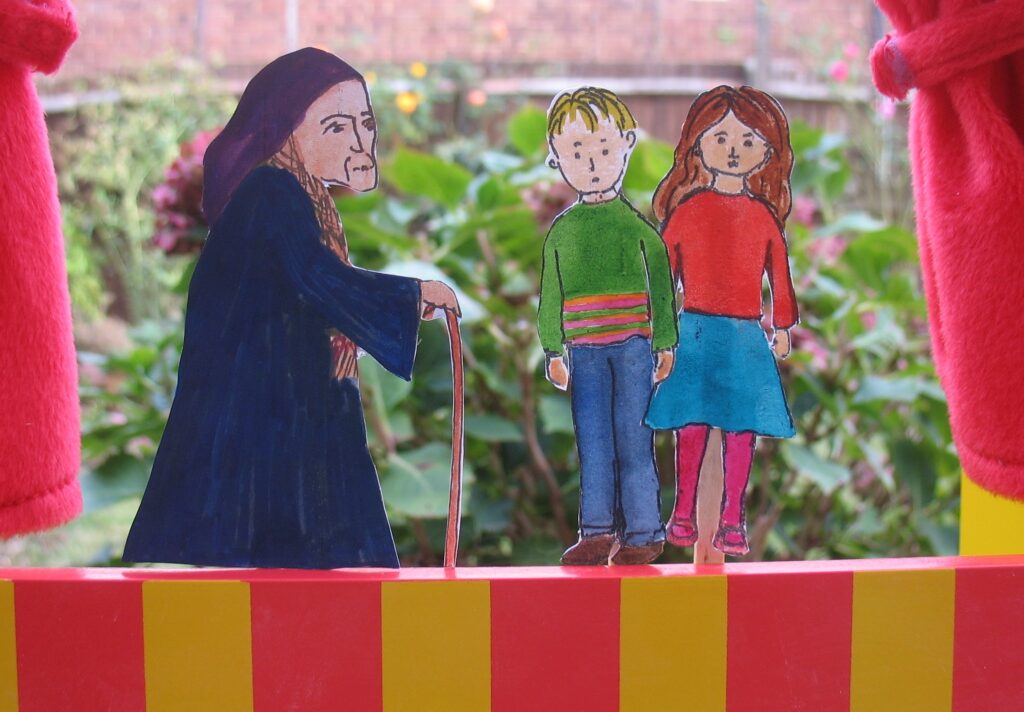
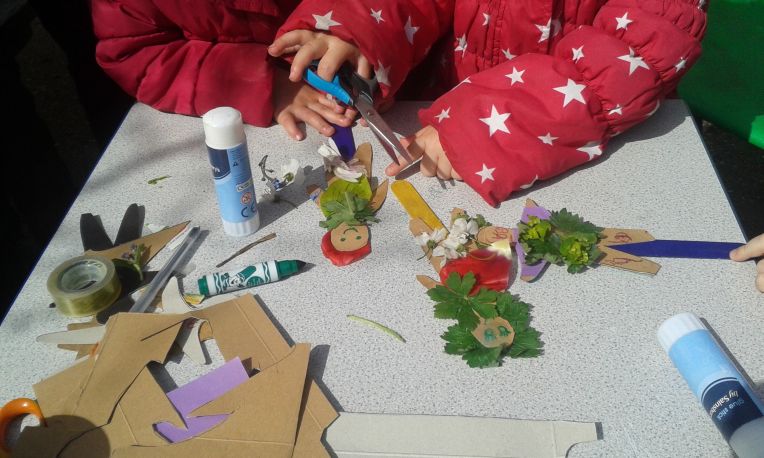
CARDBOARD puppets can be drawn simply and quickly in pen old packaging or onto white printer paper then stuck on, or traced out of books, and coloured-in with felt-tips. The puppets will come alive in stories when stuck with glue stick onto wooden lolly sticks or coffee stirrers…
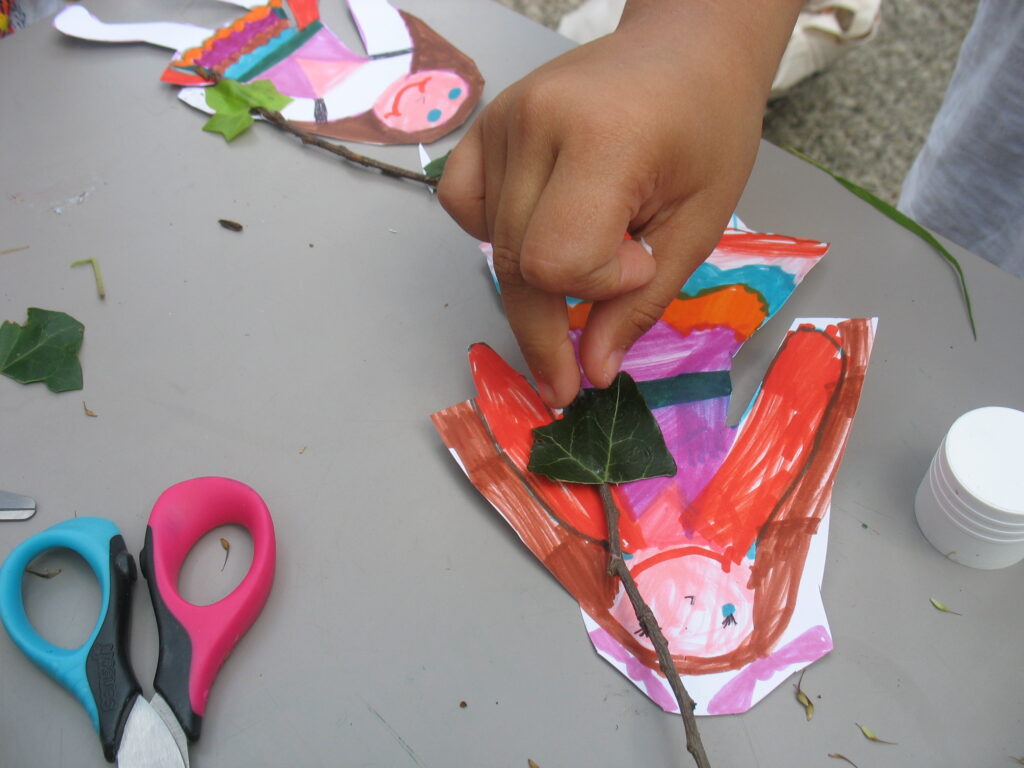
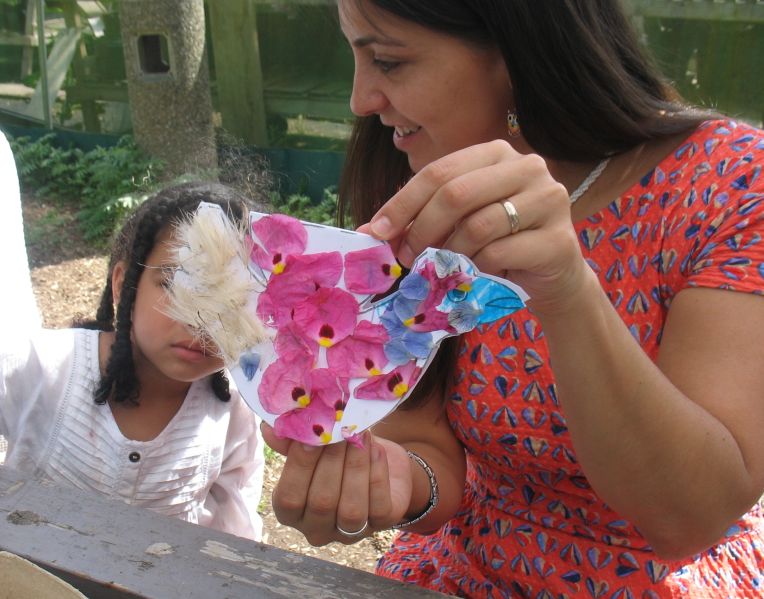
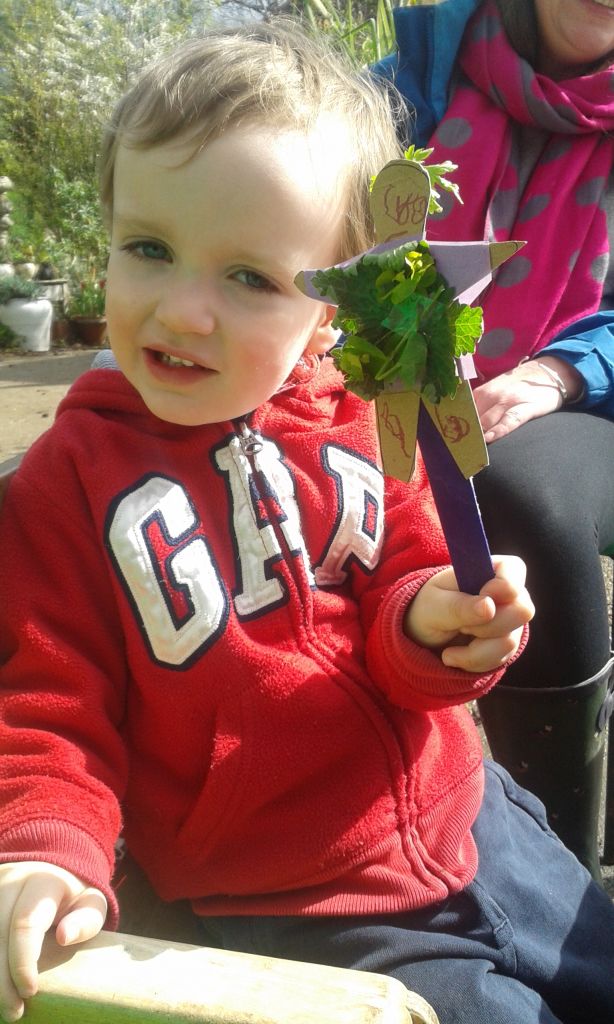
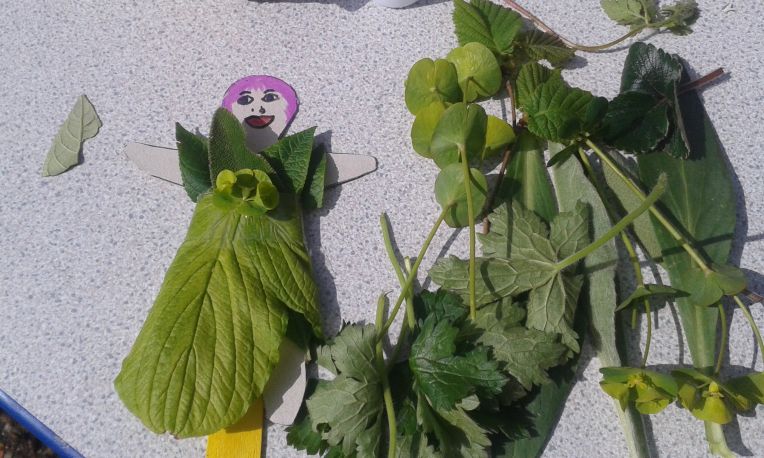
Cardboard puppets can also be collaged with leaves and petals and grasses…
Collaging with natural materials leads to highly original responses as new characters are defined by the unique shapes and colours of the leaves and petals.
For the Grimms’ tale of Jorinda and Joringel we made birds to hang on a string tied around the trees in a woodland corner:
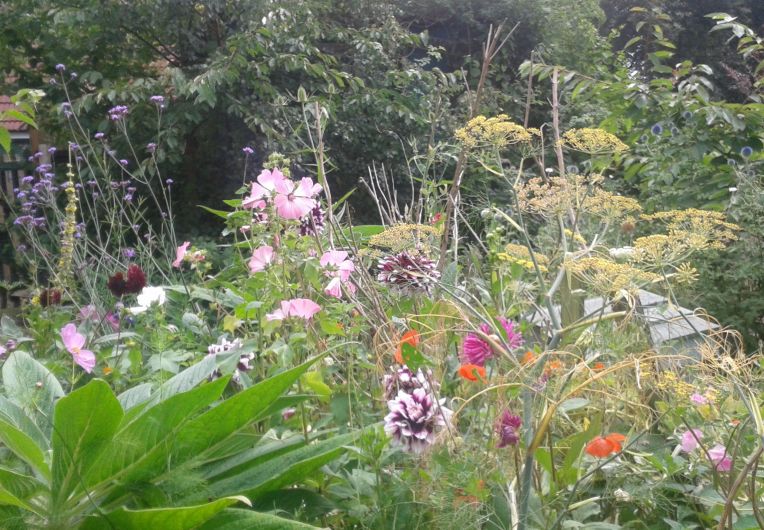
Responding to the organic natural forms of plant materials can lead to intriguing drawings: here are fabulous elves and fairies and strange sweet magical tree-people made by children who stood silent for a while, then wandered around a community garden finding their plant sources, glued them onto cardboard with total concentration then started to draw…
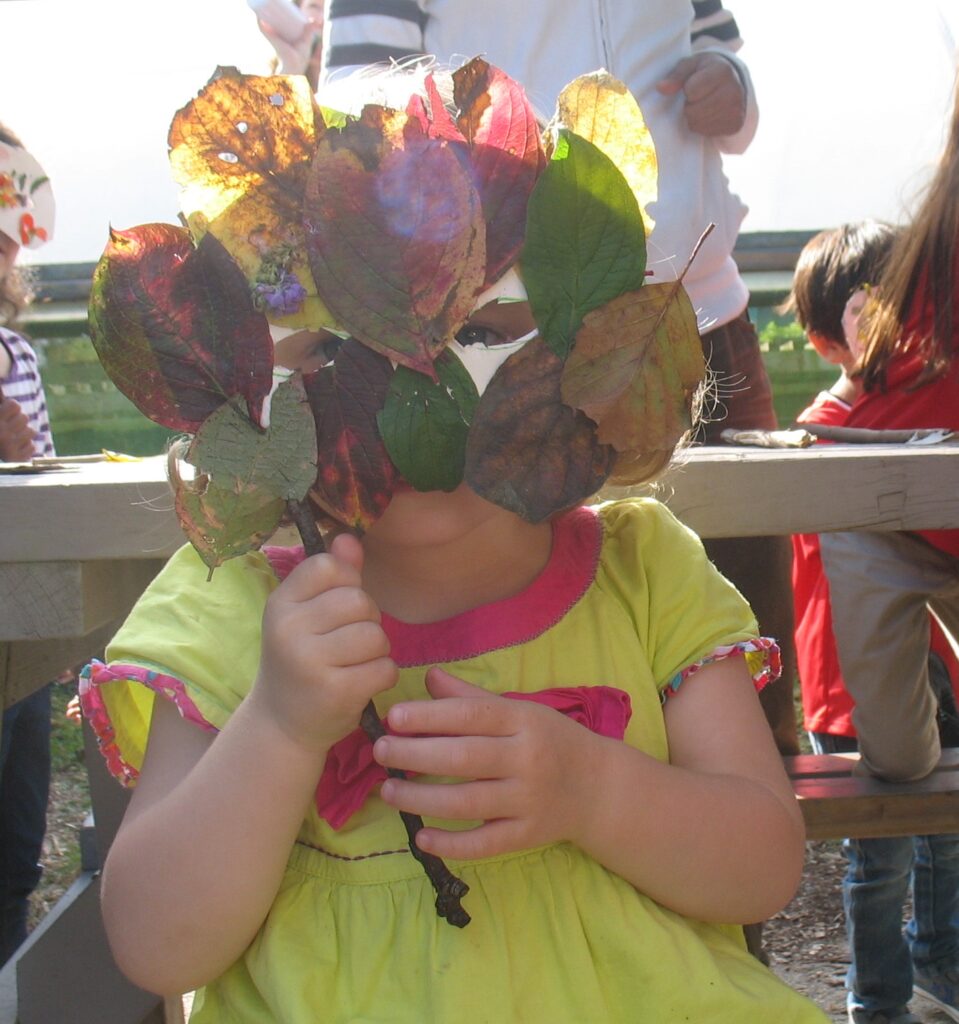
Here we collaged scrap cardboard to make masks:
Using the art we make in imaginative play and the making of stories brings a deepening engagement to the story circle at the end of the workshop where we make up a story together spontaneously before I perform a short table top puppet play with the same story elements. Here, with the beautiful masks, we recreated a Palace Ball where a thief finds himself transformed by his own goodness and finds love with a wise princess. Throughout the telling of the story, my (mostly) involved and highly attentive audience held on to those masks, listening with new understanding!
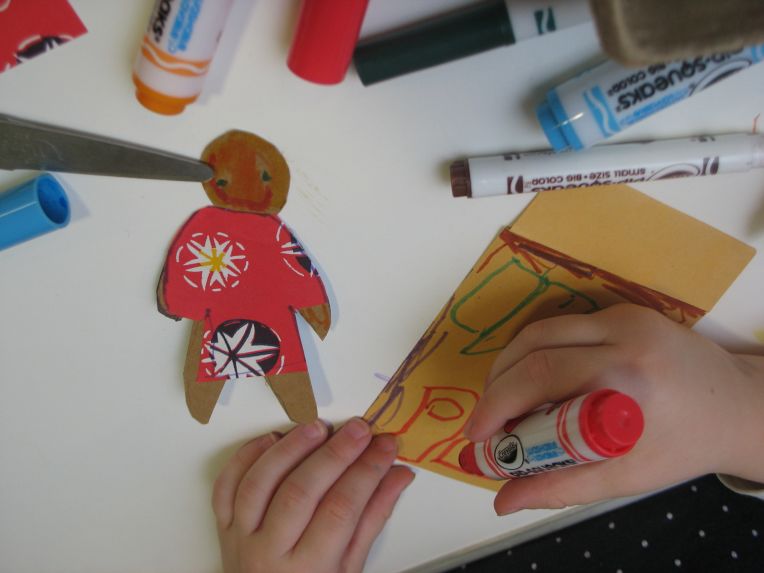
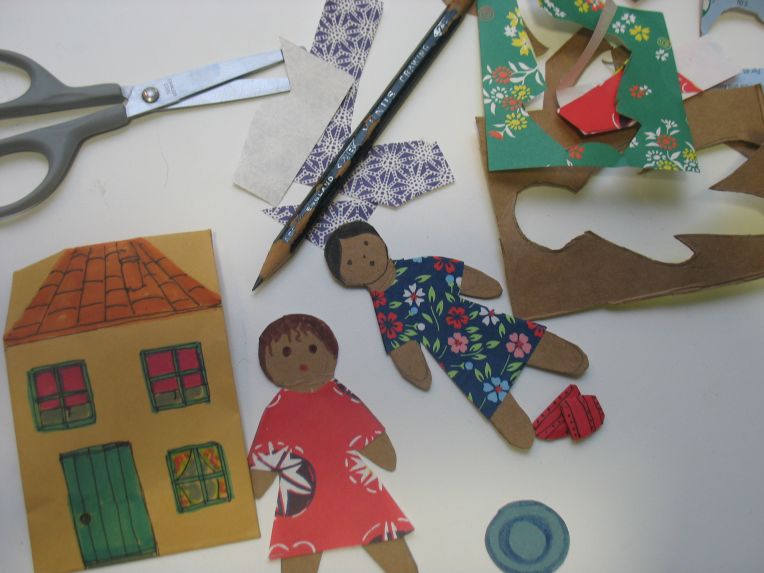
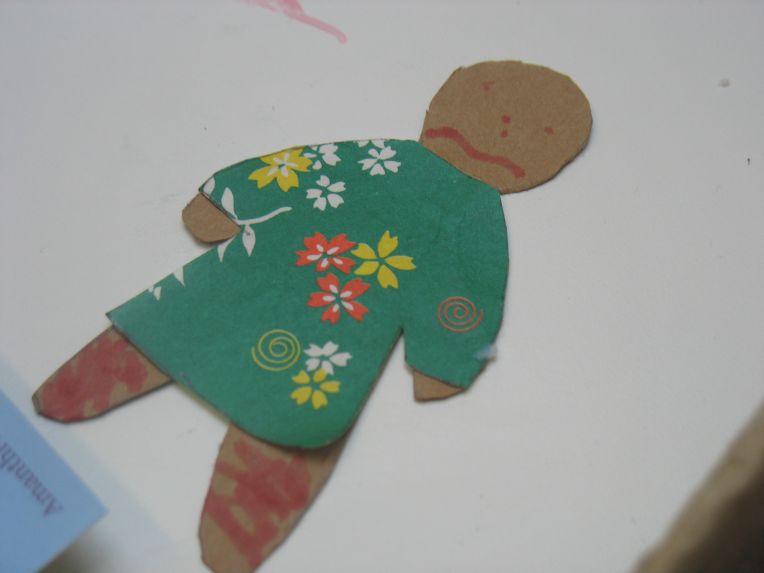
We made paper dolls for a story, with an envelope house where they could live, secret and out of sight, living the quiet mysterious magical life of dolls.
StoryHug workshop
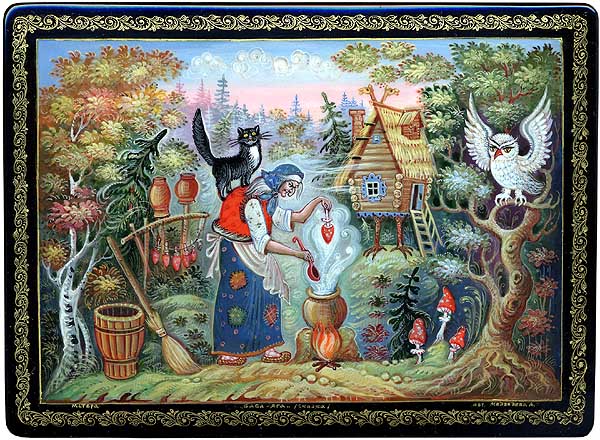
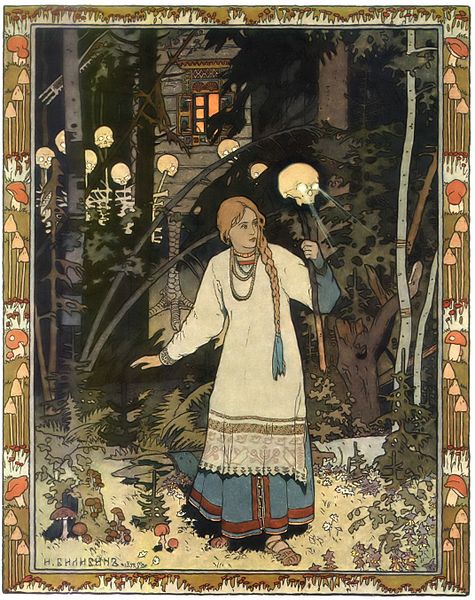
Baba Yaga and her Hut in the Woods from the story of Vasalisa The Beautiful- (source unknown)
Using story prompts: a girl, an old woman, a doll – the same prompts that might give us Vasalisa the Beautiful…
we made up the following fantastical tale, just me and the fantastic little storytellers in our story circle:
Once upon a time there was a doll who lived in a castle. She had been left in a cupboard long ago, in one of the many forgotten rooms of the castle and no one knew that she was there. All day long the doll talked. She talked and talked but nobody heard her – except for an old woman who came to sweep the floor of the room.
“Fairy party! Fairy party!” The old woman stopped her work and listened to the tiny voice.
‘I wonder where that sound is coming from – I think it’s coming from that cupboard over there,” the old woman said and opened the cupboard door.
She peered into the darkness, but her old eyes saw nothing. But as she stood listening to the voice go on talking, a little girl who lived in the palace went past and the old woman called her into the room.
“Can you hear that noise?” the old woman asked.
The little girl listened.
“It’s coming from that cupboard,” she said and they opened the cupboard door again and looked inside.
Well, the little girl always ate her carrots so she had very good eyes.
“There’s a doll in there,” she said at once and reached deep into the shadows at the back of the cupboard, bringing out an old doll.
“At last!” said the doll. “There’s a fairy party in the garden tonight! You’ll be allowed in if you take me with you.”
“Ooh let’s go!” the little girl cried.
“Yes, let’s!” The old woman grinned. She had always wanted to go to a fairy party, ever since she was a little girl.
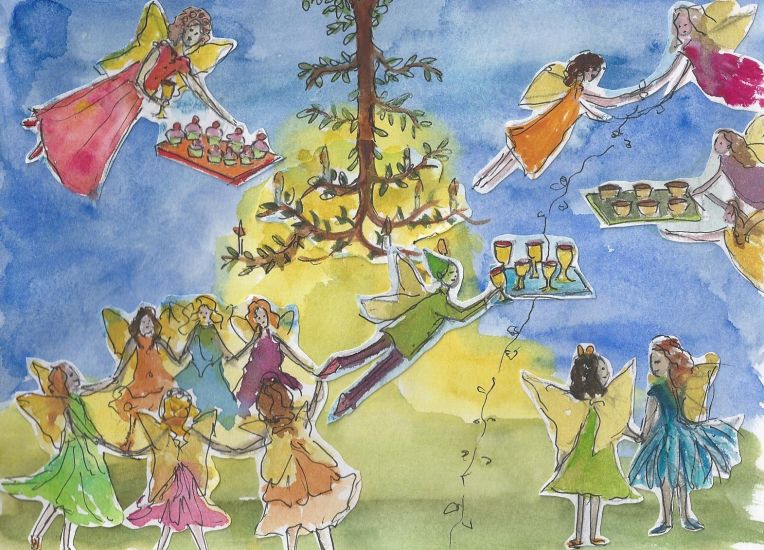
So that night, when everybody else was fast asleep, the old woman and the little girl holding the precious doll crept down the great stone stairs of the palace and the old woman opened the door to the garden. Far away, down at the bottom of the garden were sparkling coloured lights: pink, green, blue, yellow. They walked over the grass towards the lights and suddenly there were fairies fluttering around everywhere, beautiful fairies in floaty dresses, who they smiled at the old woman, the little girl and the doll and offered them lots of tiny delicious cakes and teeny biscuits.
Then they danced and sang and played games with the fairies until the sun rose and the little girl and the old woman went with the doll back to the castle, to bed and wonderful dreams.
After that the doll was never lonely. The little girl took very good care of her and every time the fairies had a party they told the doll and she told the girl and the old woman and all three would go down to the bottom of the garden again to join their fairy friends. Each time they had a wonderful time, singing, dancing and eating fairy cakes all night long until the sun rose up in the sky.
Salt dough bowls and platters for Ena and Tib and our tabletop puppet plays!
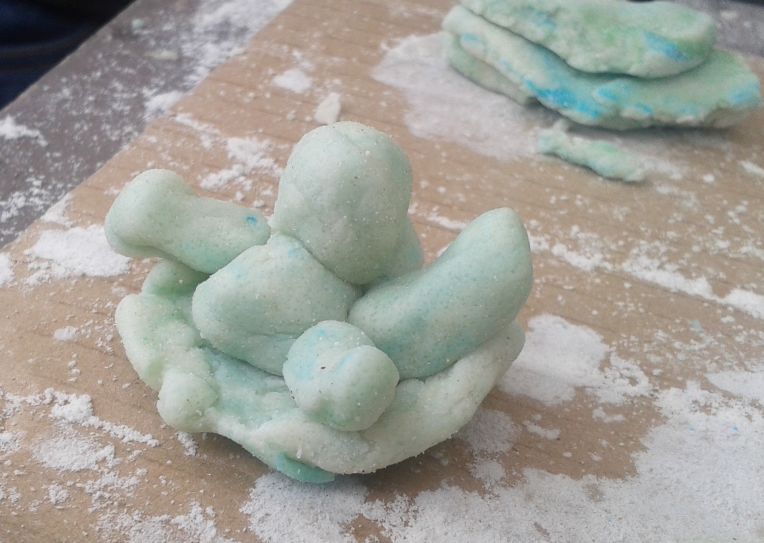
We often make props for our puppet plays using salt dough which is non-toxic, easy to prepare – no cooking required (recipe in my ‘beads’ post here), immensely tactile and can be dried very hard to create items for dolls houses, pretend play and, of course, puppet plays.
The most detailed objects can be made with salt dough :
In play therapy, clay is often used because:
[it] is malleable and three dimensional and it can become anything a child wants it to become. It can embody a representational form or an abstract one… once form has emerged … it may become fixed and permanent, or be crushed and rolled back up into a ball. Creating different forms can help a child find a way of expressing their inner emotions and thoughts.
As with clay, playing with soft mouldable matter such as salt dough can benefit children in many ways:
For young children, the many varied actions of moulding eg rolling, squeezing, pinching help develop fine motor skills and dexterity.
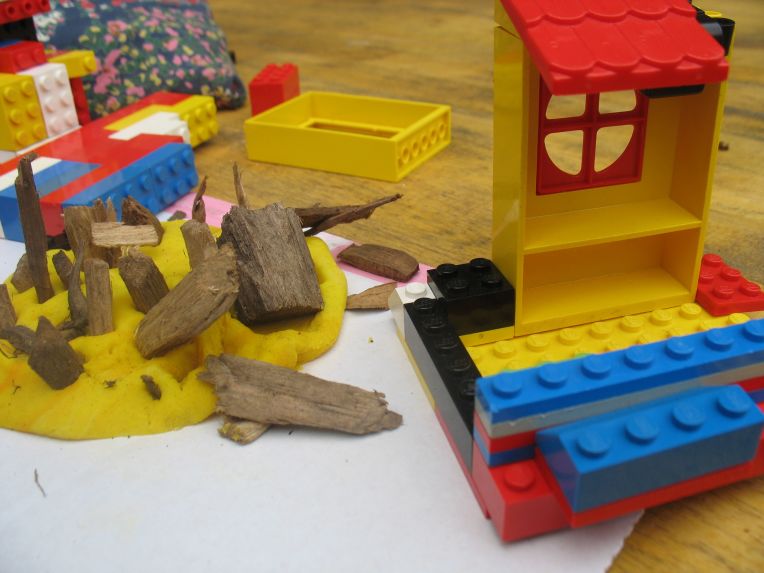
The simple malleability of the dough allows self-expression through mark-making and by adding new materials such as soil, sticks, petals, food colour.
In our StoryHug workshops, we are usually creating props for our puppet play and there is great focus throughout the session, with each child able to give form to their ideas. Often children talk through their plans, enjoying the freedom within the brief to make whatever they envision.
Play is a vital part of being yourself, of making space for ideas and the need to make, to imagine freely, and connect. This little poem says it well:
Play Therapy Poem
I tried to teach my child from books
He gave me only puzzled looks
I tried to teach my child from words
They passed him by, often unheard
Despairingly, I turned aside
“How shall I teach this child?” I cried
Into my hand he placed a key,
“Come,” he said, “And play with me.” Anonymous
In these StoryHug workshops we made favourite foods to feed a hungry tiger – the villain in my re-telling of The Three Little Pigs and their encounter with Ena and Tib, two little children who live in the woods!
There was much discussion and many ideas tried, re-tried, abandoned, new ones begun and expanded as items were prepared for the play. There was improvisation using materials to hand: in beautiful Grow Mayow Community Garden there was ‘salad’:
…and, through the magic of a little boy’s imagination: ‘dumplings and noodles’:
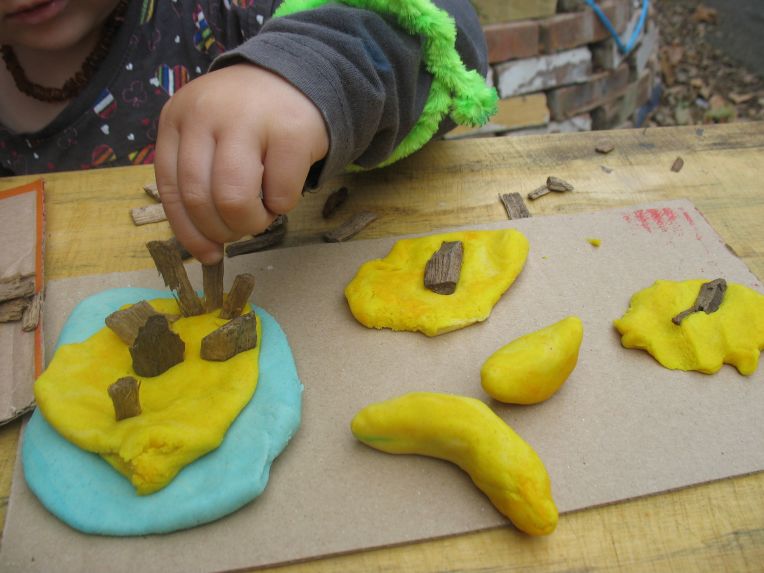
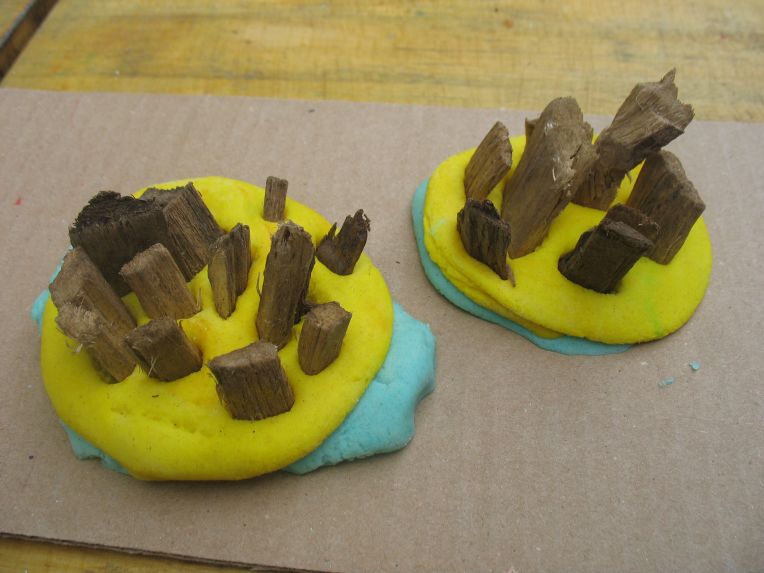
At the Mother House artist project , there were bananas and lemons and “chocolate cookies” made with woodchip gathered from around Paradise Yard:
Making props for storytelling ensures a sense of ownership of the story and I can luxuriate in the rapt engagement of my audience as our play unfolds – especially when the tiger is discovered to prefer eating the delicacies offered by the children to gobbling up the Three Little Pigs!
My studio is my nest, my hut, my secret woodland clearing; it’s my place for dreaming, playing, rearranging objects, for making stories, pictures, things: nests, huts, secrets…
What happens in a room of your own? What do you do there, what do you make inside it?
Imagination in miniature is natural imagination… one could say, in the manner of Schopenhauer: ‘The world is my imagination’. The cleverer I am at miniaturizing the world, the better I possess it.
Gaston Bachelard, ‘The Poetics of Space’
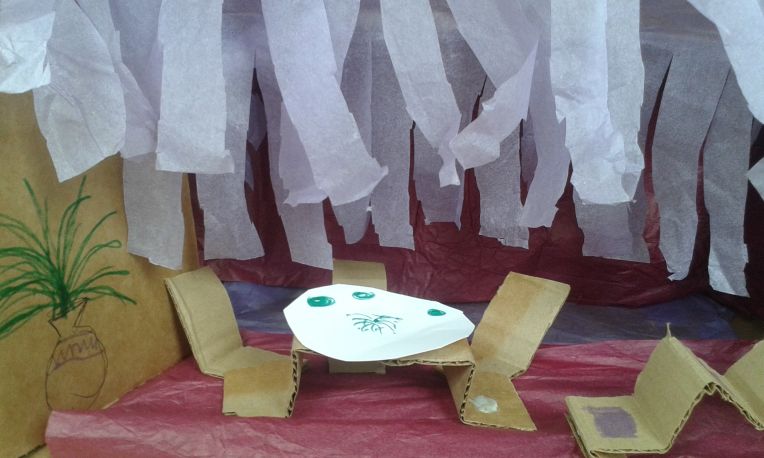
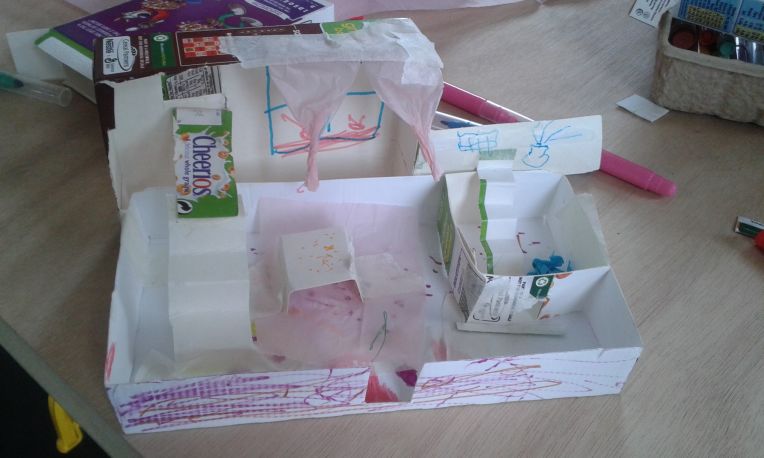
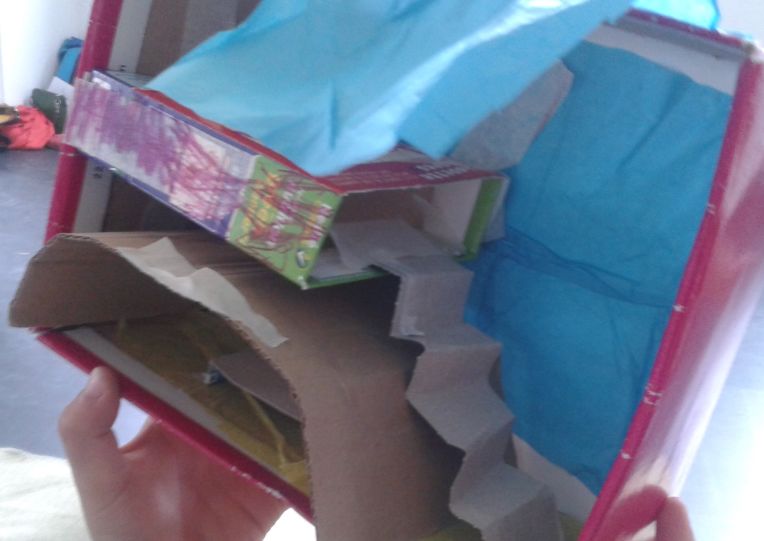
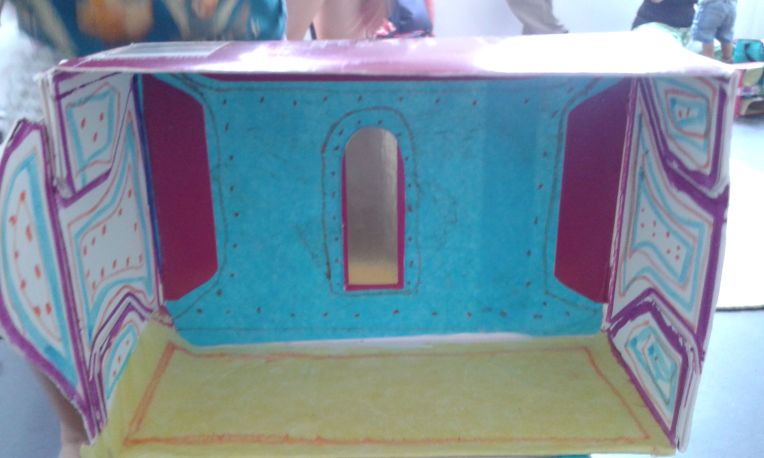
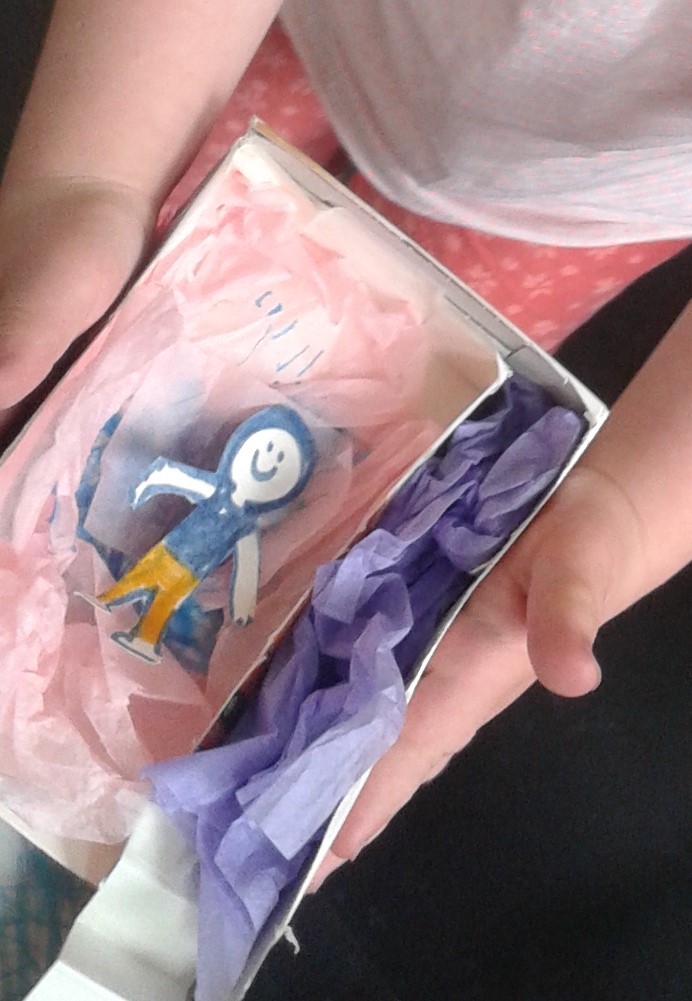
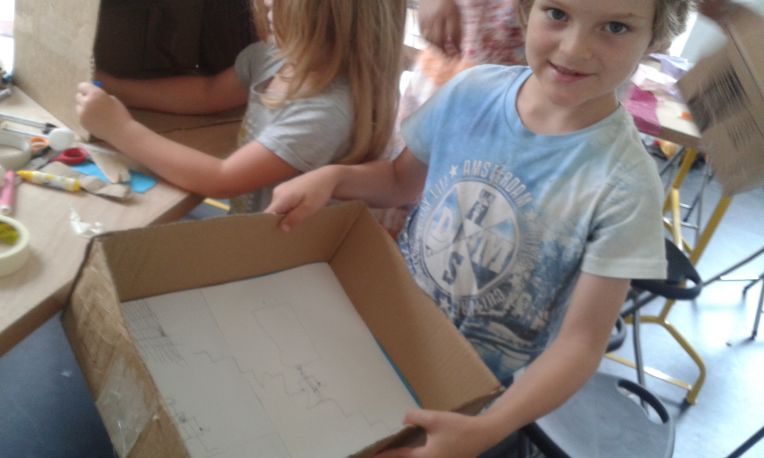
From empty boxes, card, pens, tissue paper whole worlds emerged, with drapes and pull-out panels to screen an occupant:
A shrine, a place for reflection:
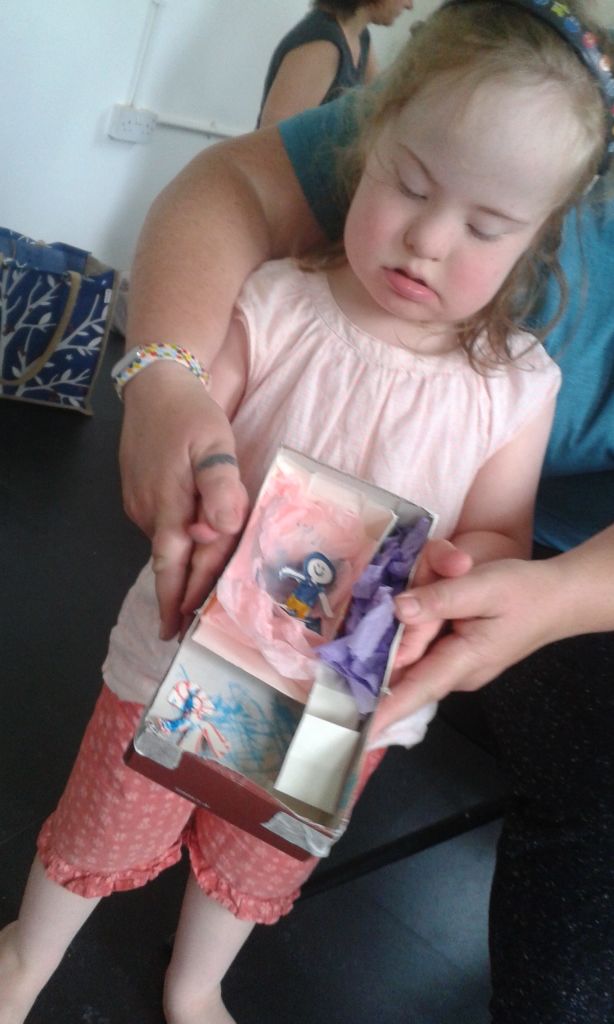
Peopled…
… by lovingly crafted characters:
One must go beyond logic in order to experience what is large in what is small
Gaston Bachelard, ‘The Poetics of Space’
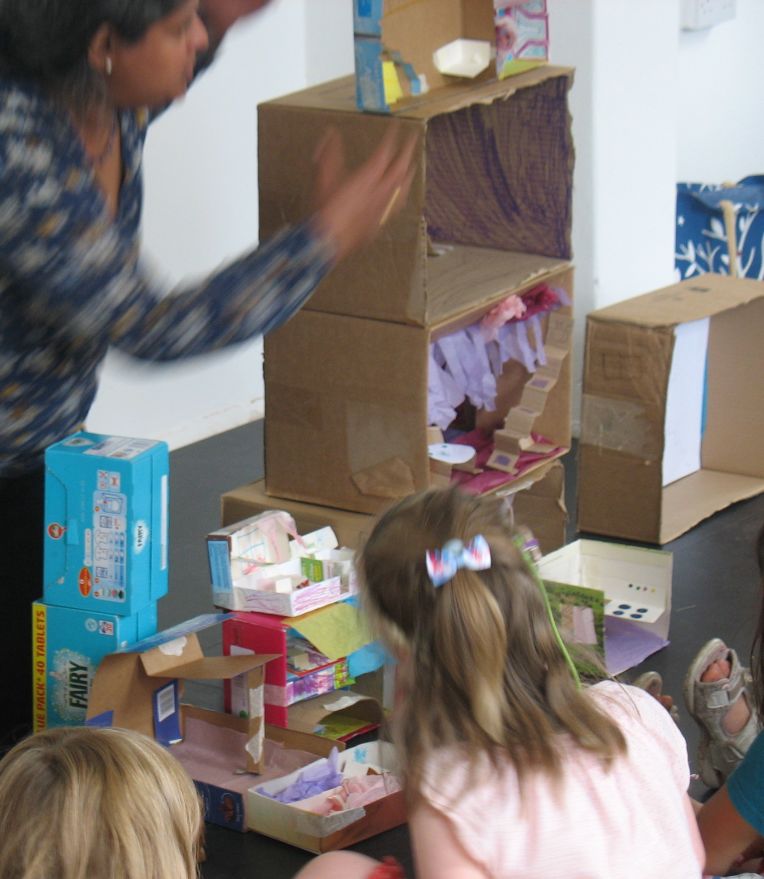
Stacked, these fantastical rooms created a house of many lives, of reverie and work and creativity…
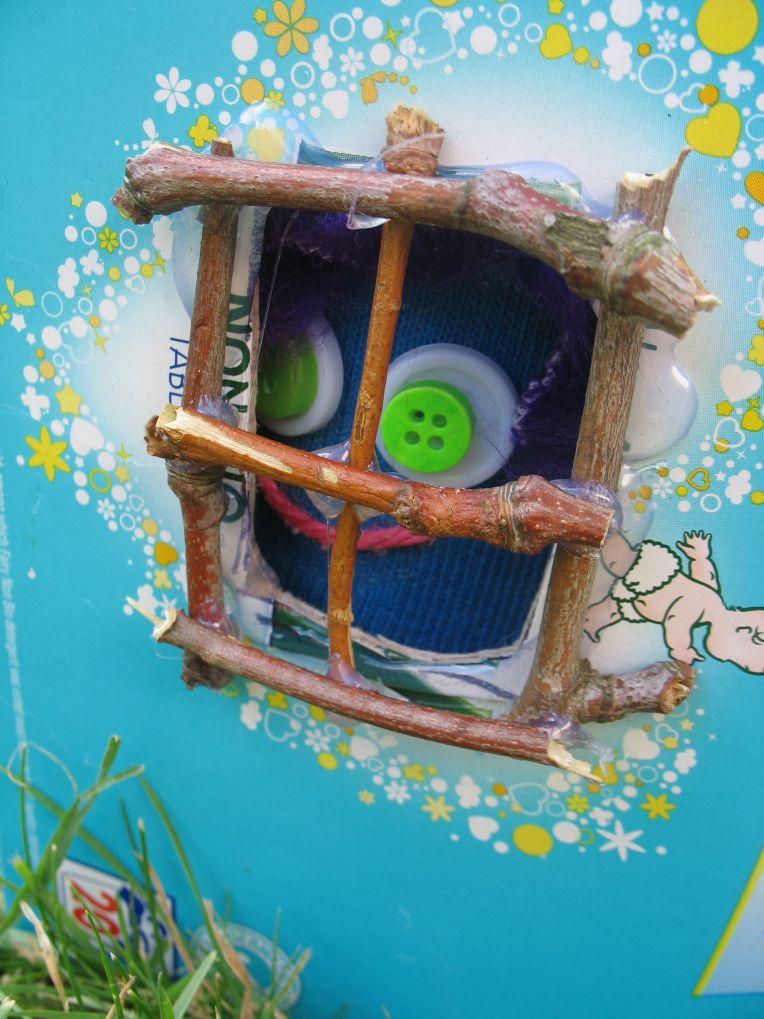
…where a monster girl (made by my fabulous assistant, my daughter aged 8!) lurked,
disrupting the peace.
But the story ended happily: the lonely wooden girl found a friend; the monster was found by her mother…
…and order was restored to the house of fantastical rooms where people could dream and play and make stories again!
“Imagination is everything. It is the preview of life’s coming attractions.” Albert Einstein
Making things in StoryHug workshops is all about story – an art with intent, purpose. We make props for our puppet shows:
… and create characters from the wonders of our imagination…
…to present themselves in the stories we make and tell.
“Creativity takes courage.” Henri Matisse
Art is a way into other worlds, into the minds of other people, and when making our characters speak we find our own voice, our own story and show ourselves. It is terrifying and freeing. But children are not afraid; in acts of the imagination children are trusting and fearless.
Whenever I show my story prompt dolls and animals and ask: “whom shall we have as the main character?” there is always the shout, sometimes several: ME! How gladly they declare it!
We are all at the heart of our stories. Art offers us a way in to that place of playfulness and safety where true good stories begin.
“Stories can conquer fear, you know. They can make the heart bigger.” Ben Okri
The babies were made from salt dough (see this post for recipe) and dried fully – in the oven for an hour then left for a couple of days on a radiator.
The children (with a little help from the adults!) drew in faces and coloured in clothes with felt-tips.
The cradles were made from egg-boxes covered in tissue paper and lots of glue-stick which dries very hard.
A coloured cotton wool ball was added for each baby to snuggle into!
It was very sweet to see the great care and tenderness with which the babies were handled and carried around the woods.
Later all the babies made an appearance on the puppet stage for a grand fairy party!
“…imagination in miniature is natural imagination which appears at all ages in the daydreams of born dreamers… the cleverer I am at miniaturizing the world, the better I possess it.”
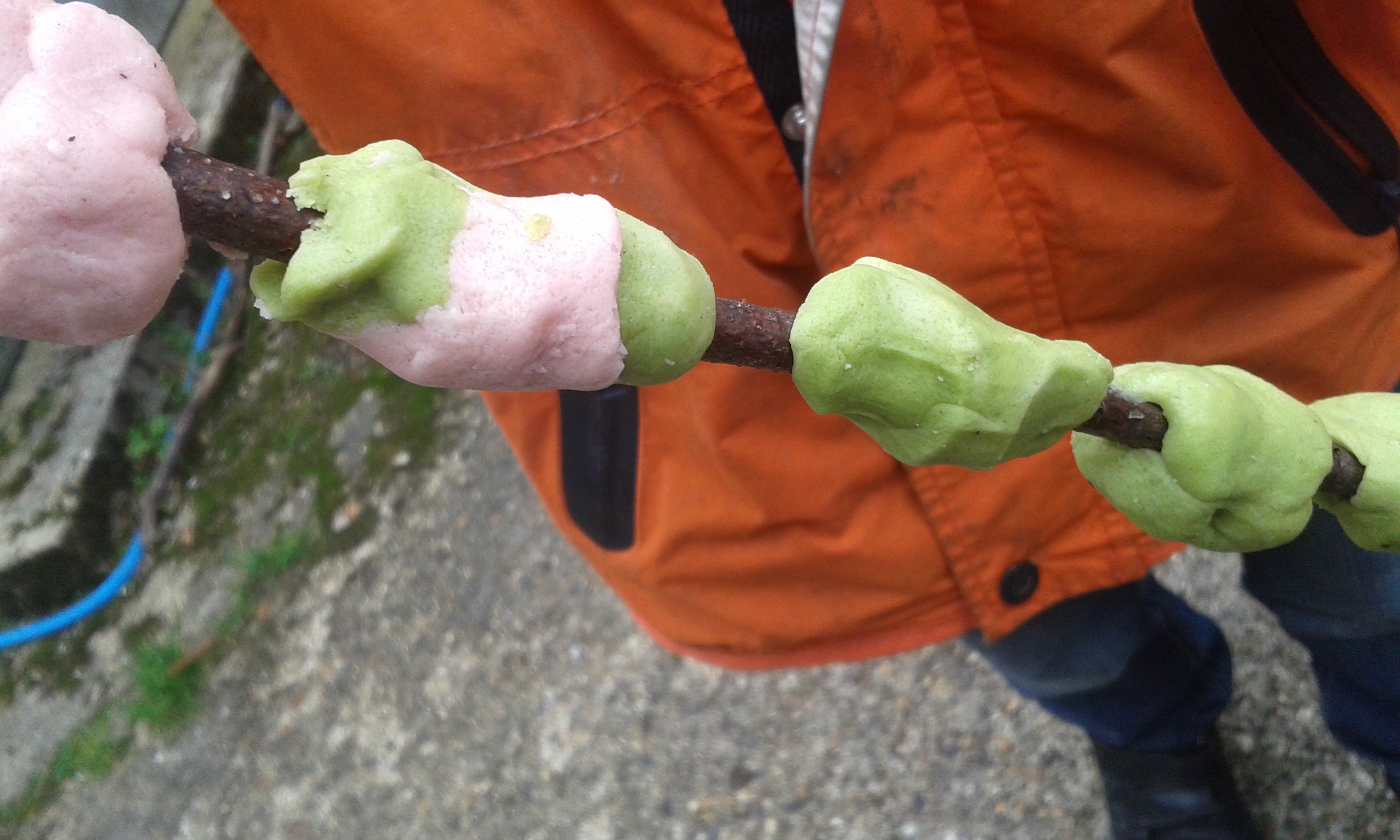
In our StoryHug Woodland Workshop we made salt-dough beads.
Then, into the woods we went….
…to where some very similar beads had been found by an old elf. With the help of Hedgehog, Squirrel, Little Owl, the Two Tiny Children who live in the woods and all the lovely StoryHug children, the beads were strung into a necklace for a princess!
If you would like to make your own here is the recipe:
For Salt-dough:
2 cups plain flour
1 cup salt
upto 1 cup water
Method:
1. Mix flour and salt.
2. Add water gradually.
3. Add food colouring or poster paint to the dough, if you would like it coloured.
4. Bake the beads at 75-100C for 30mins-1hour and leave to finish drying on a radiator. Or simply leave to dry without baking.