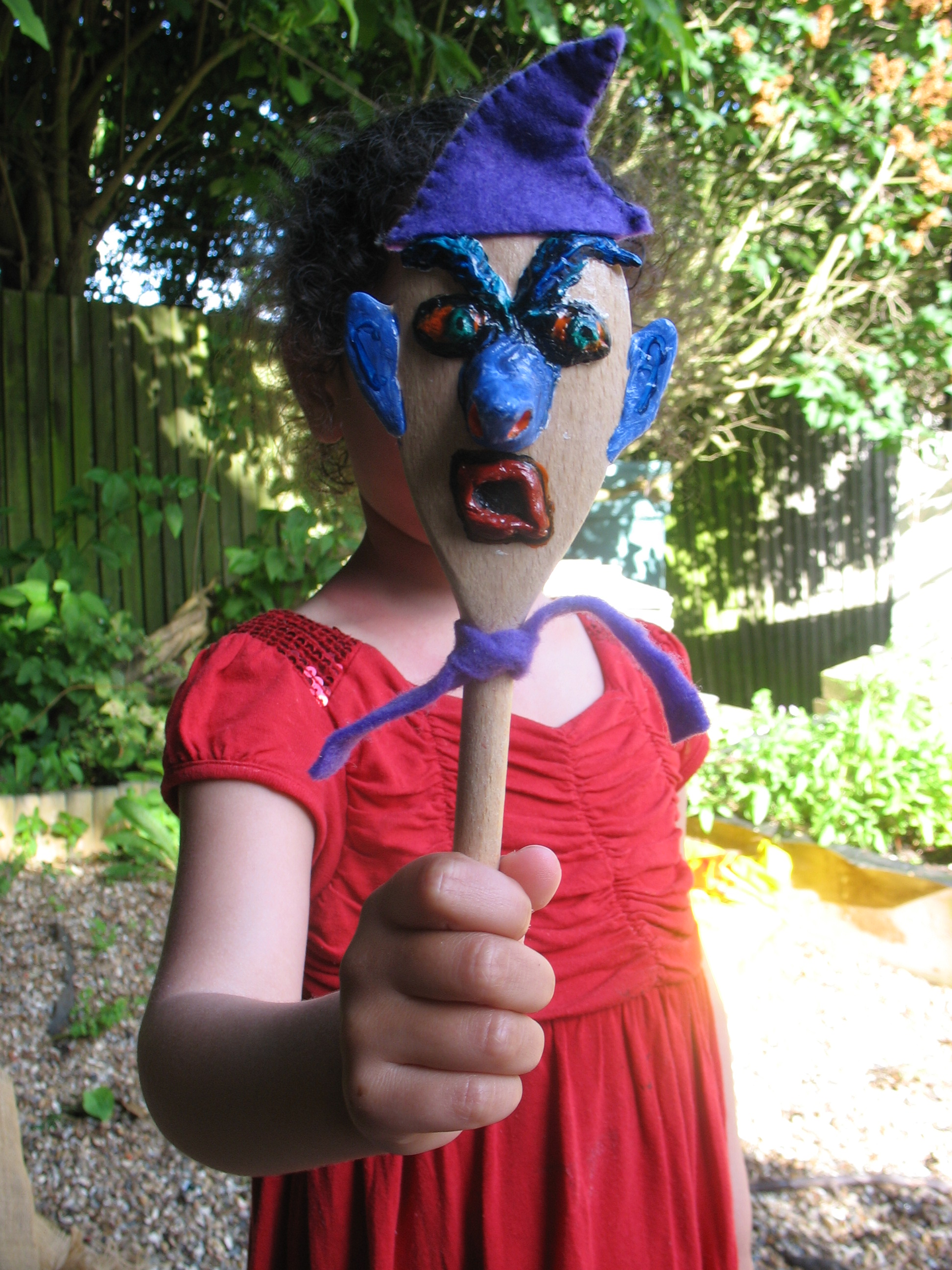
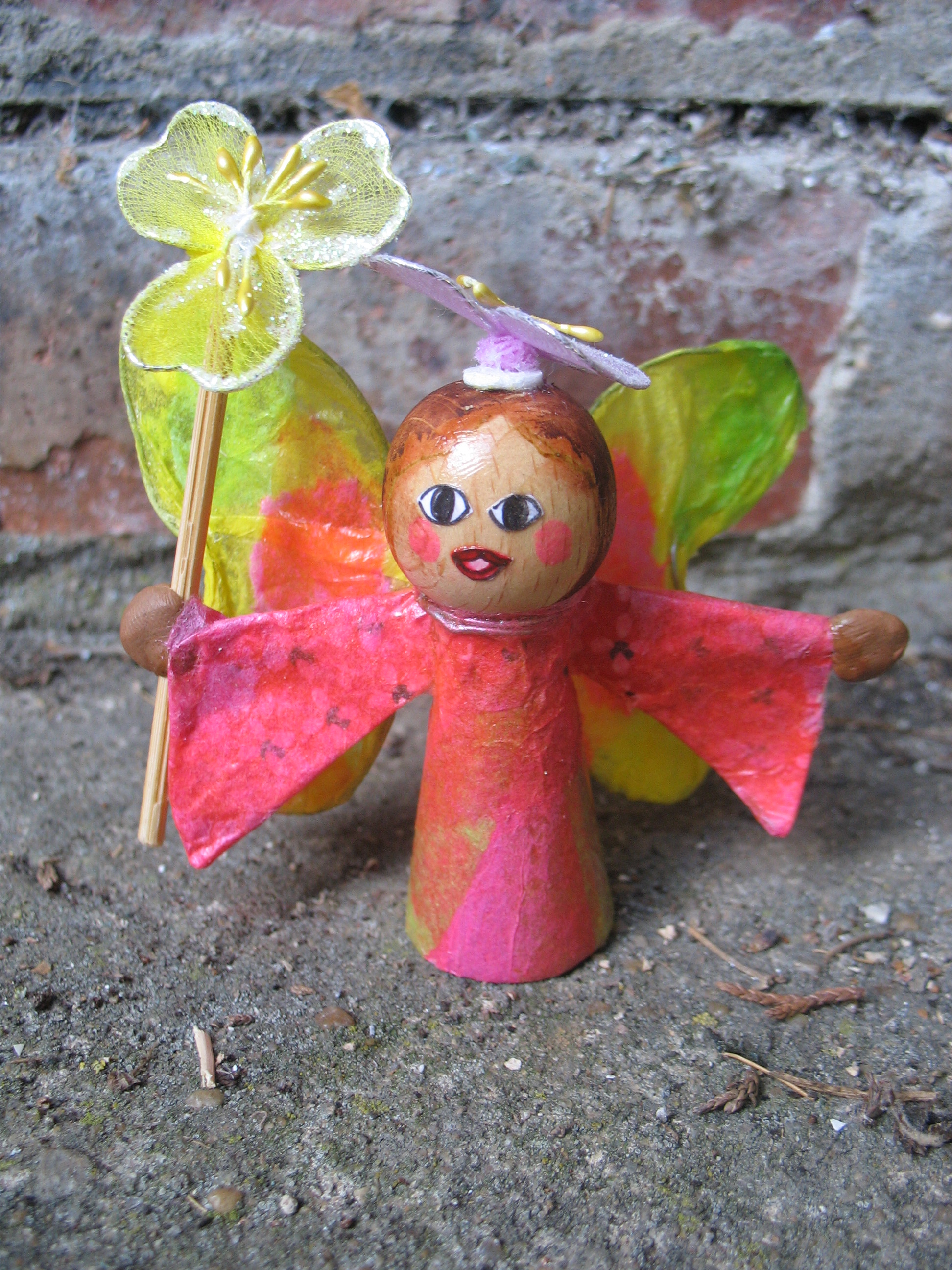
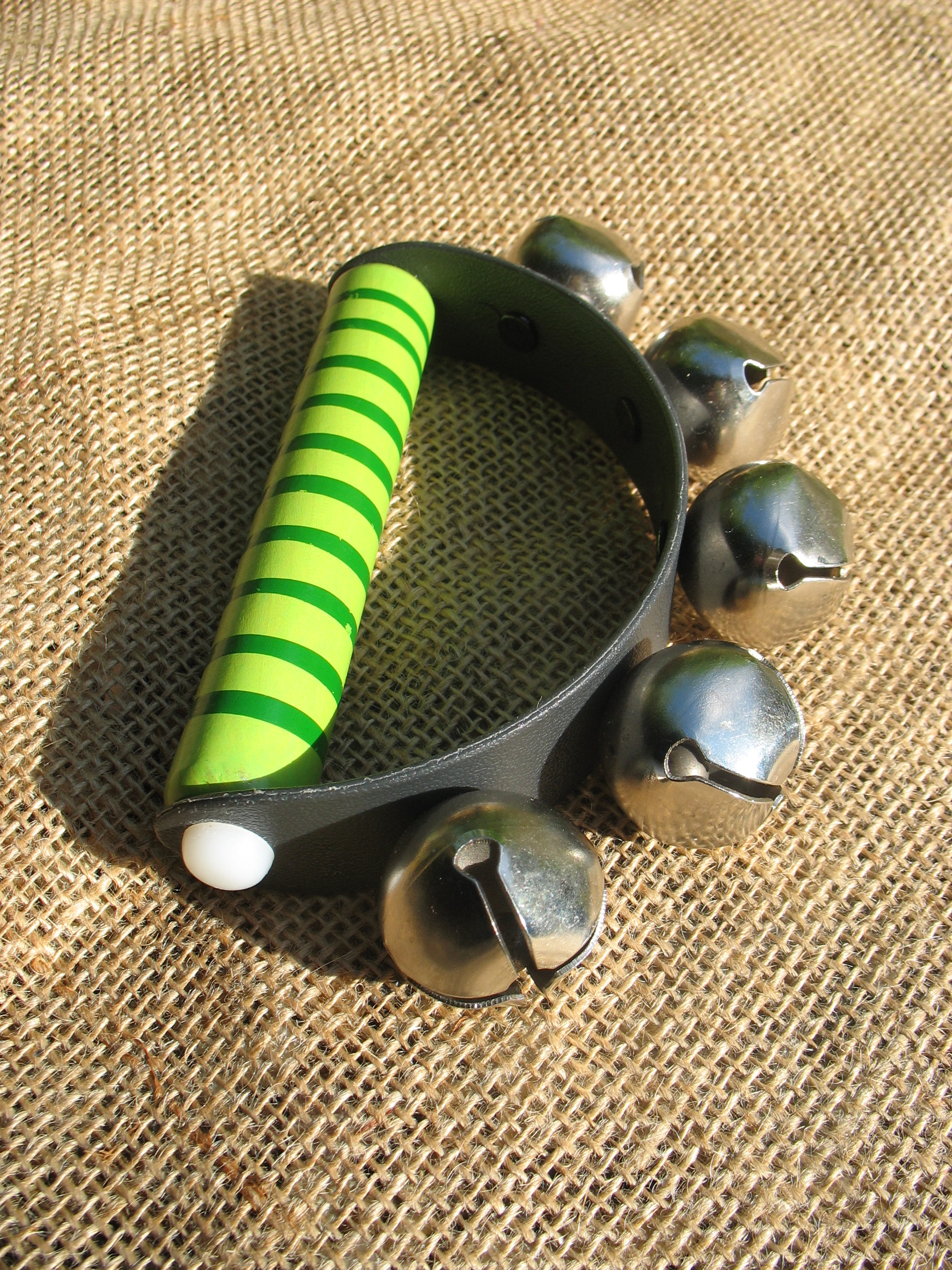
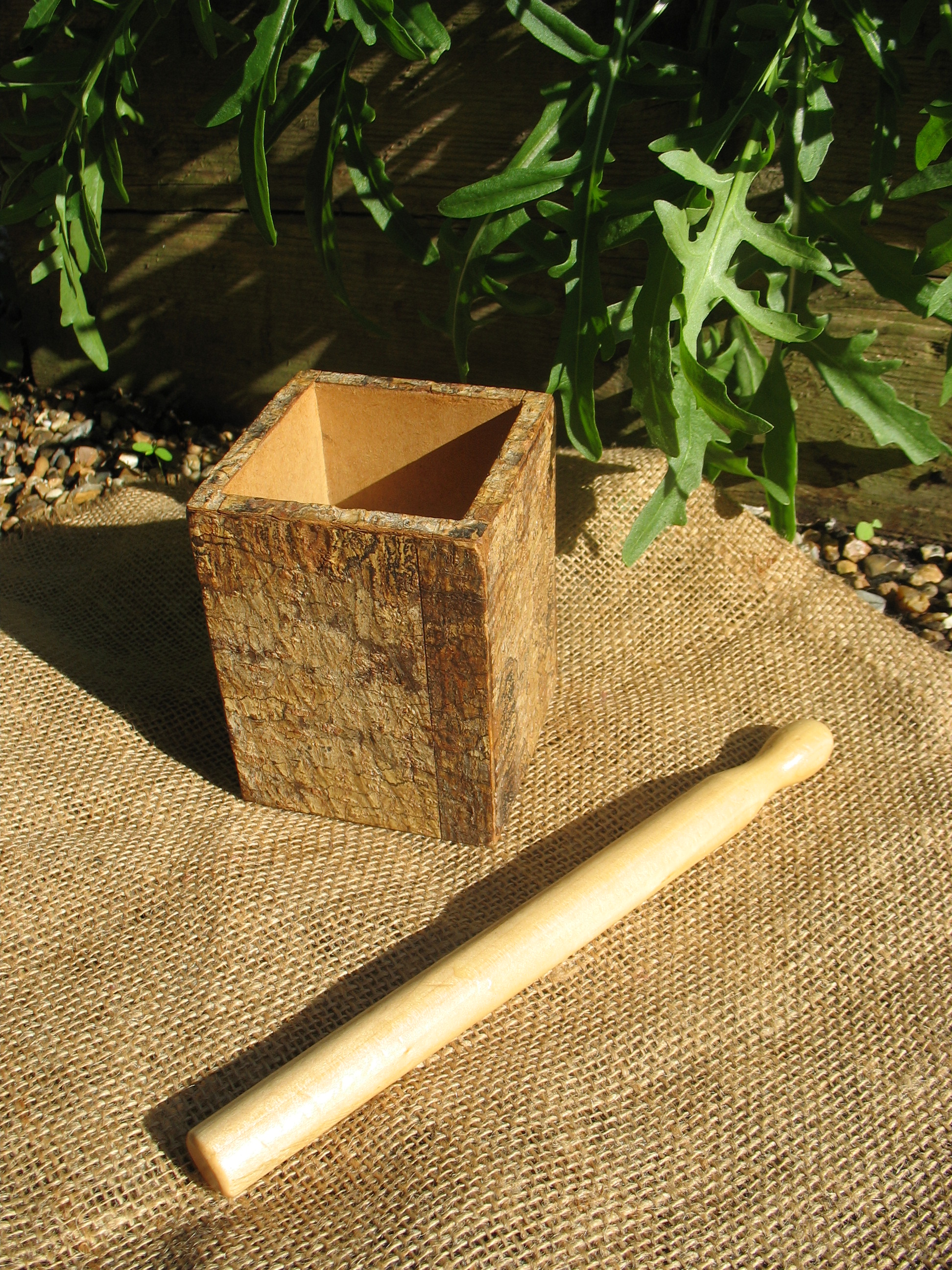
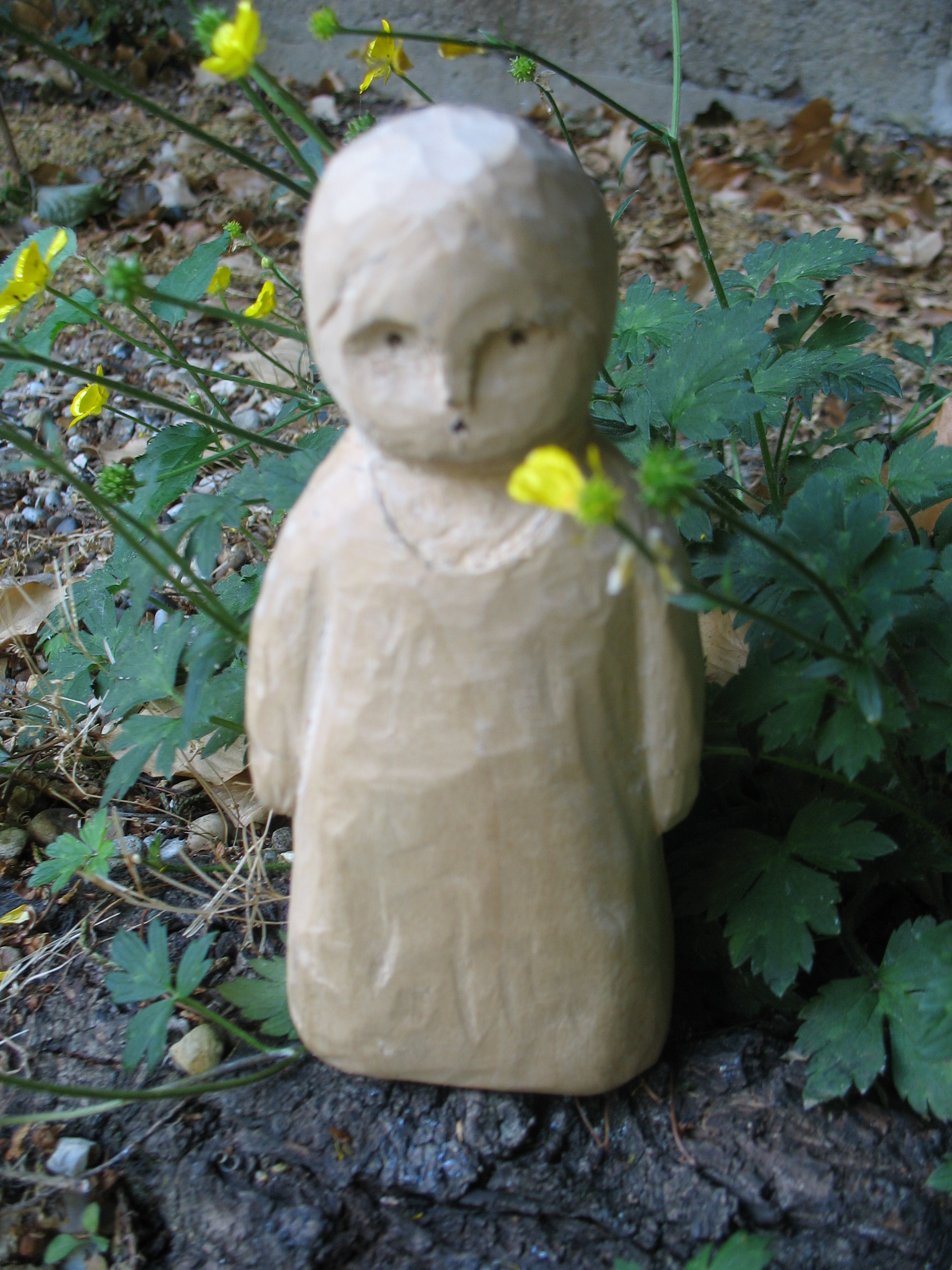
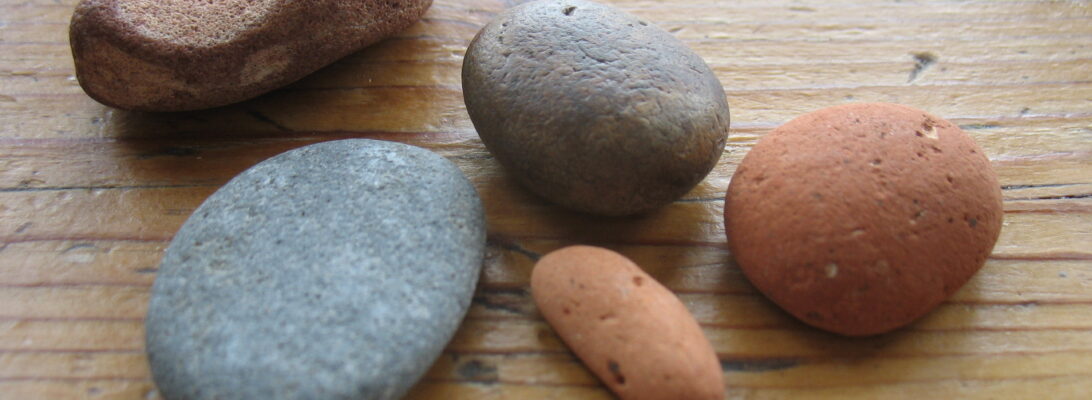
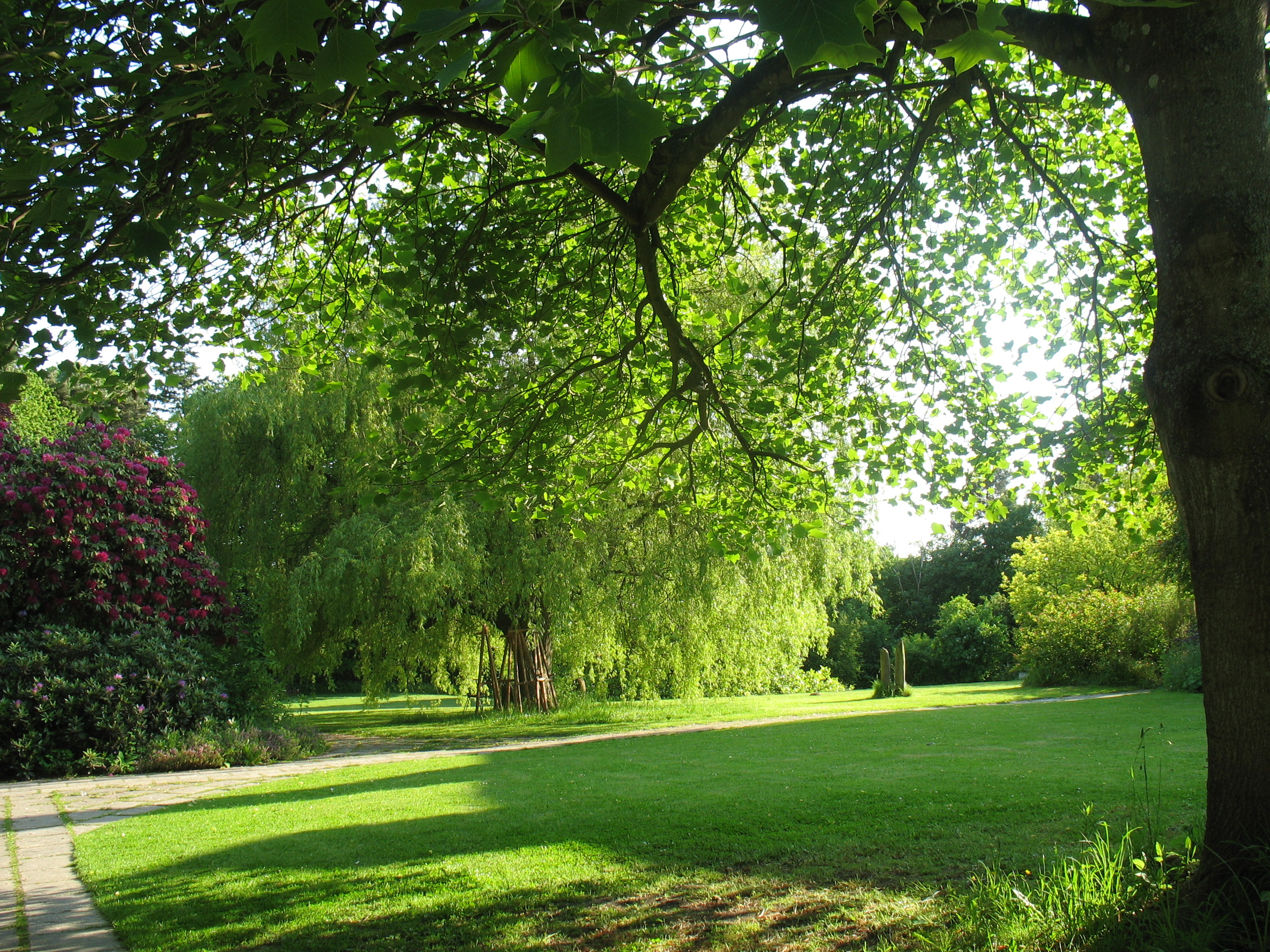
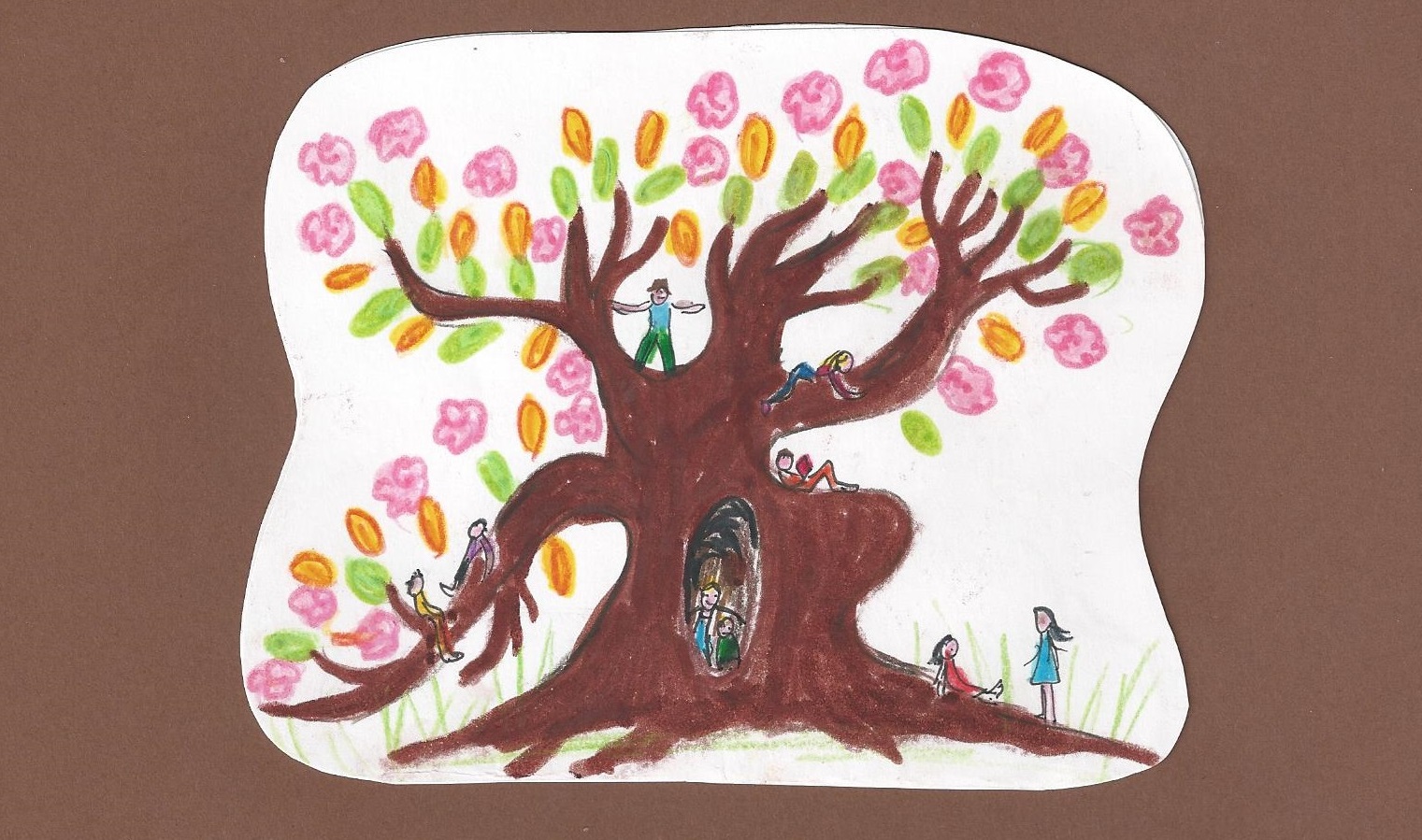
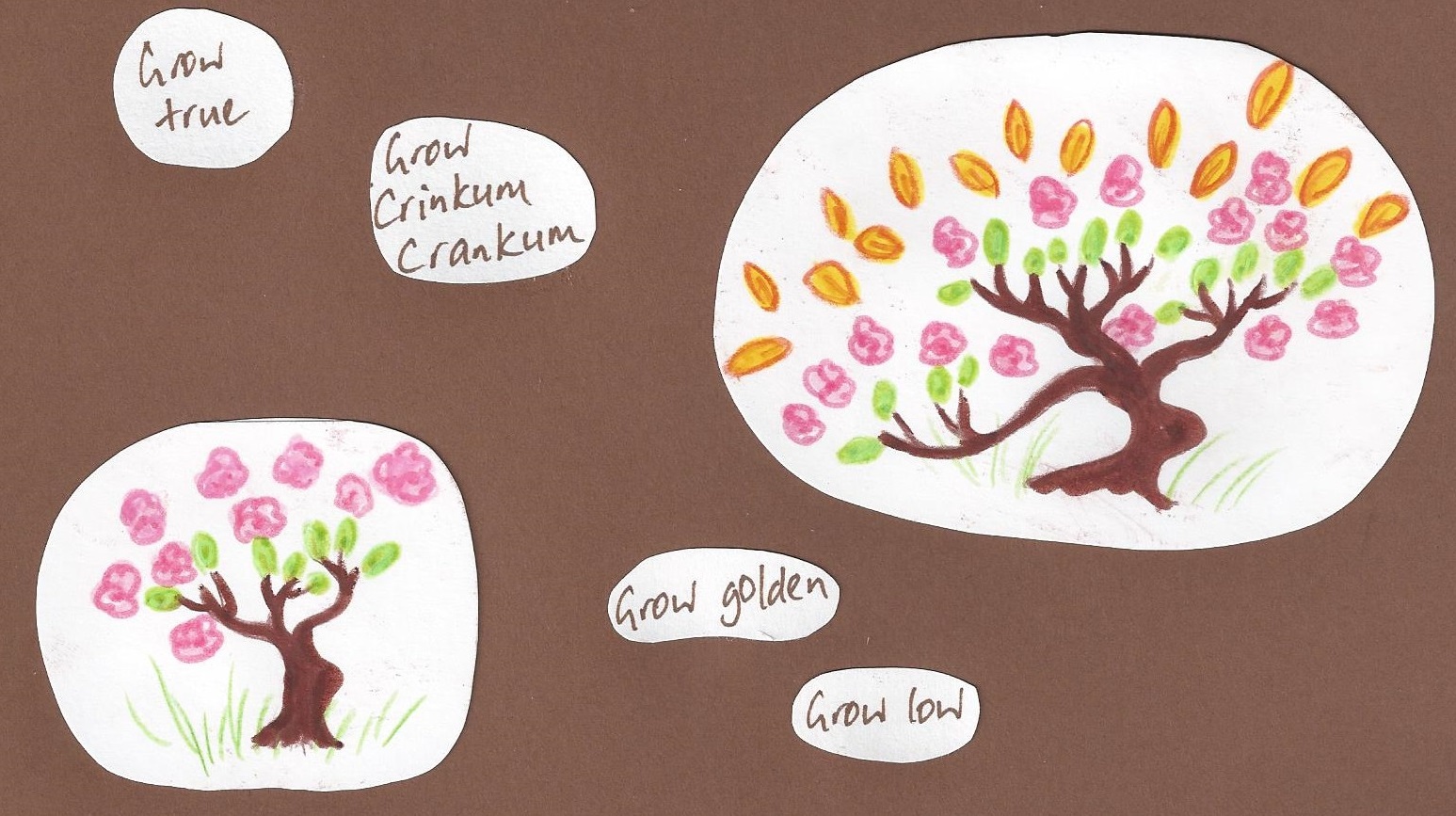
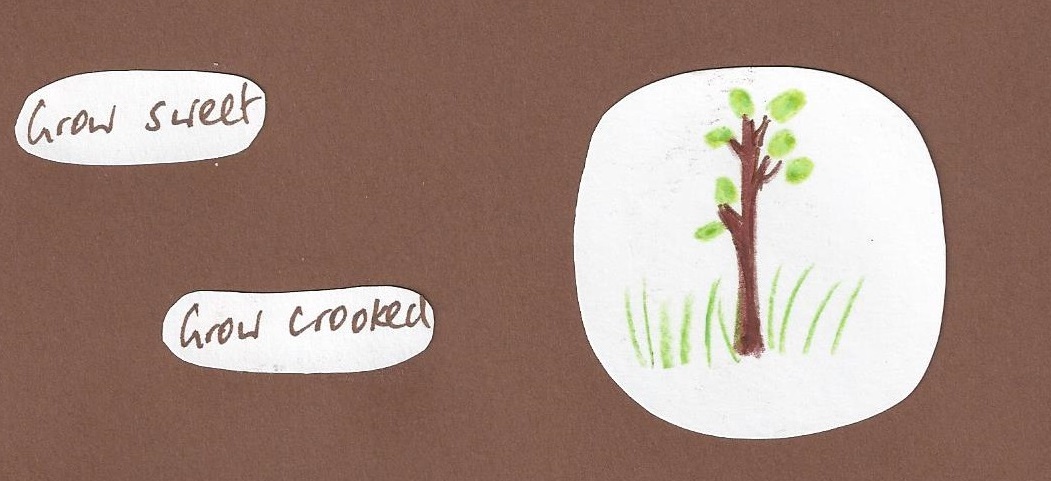
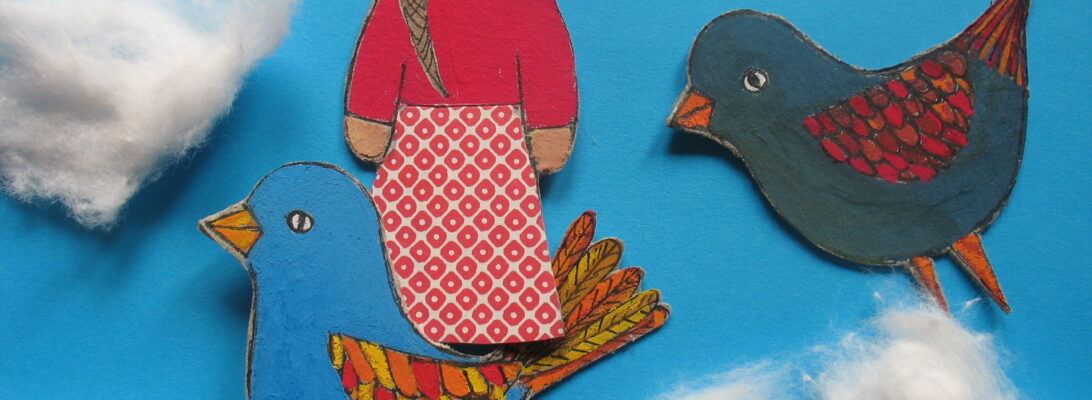
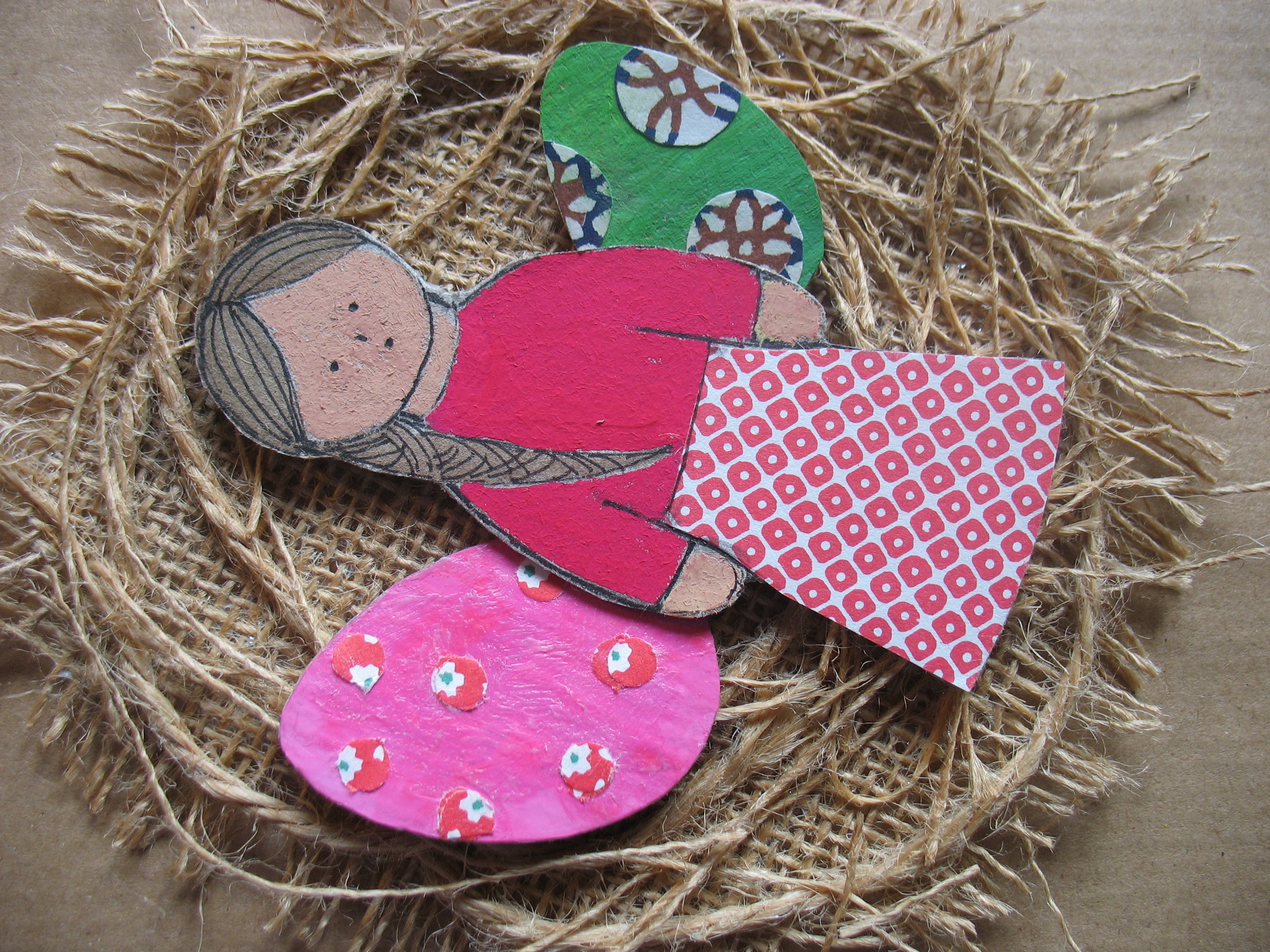
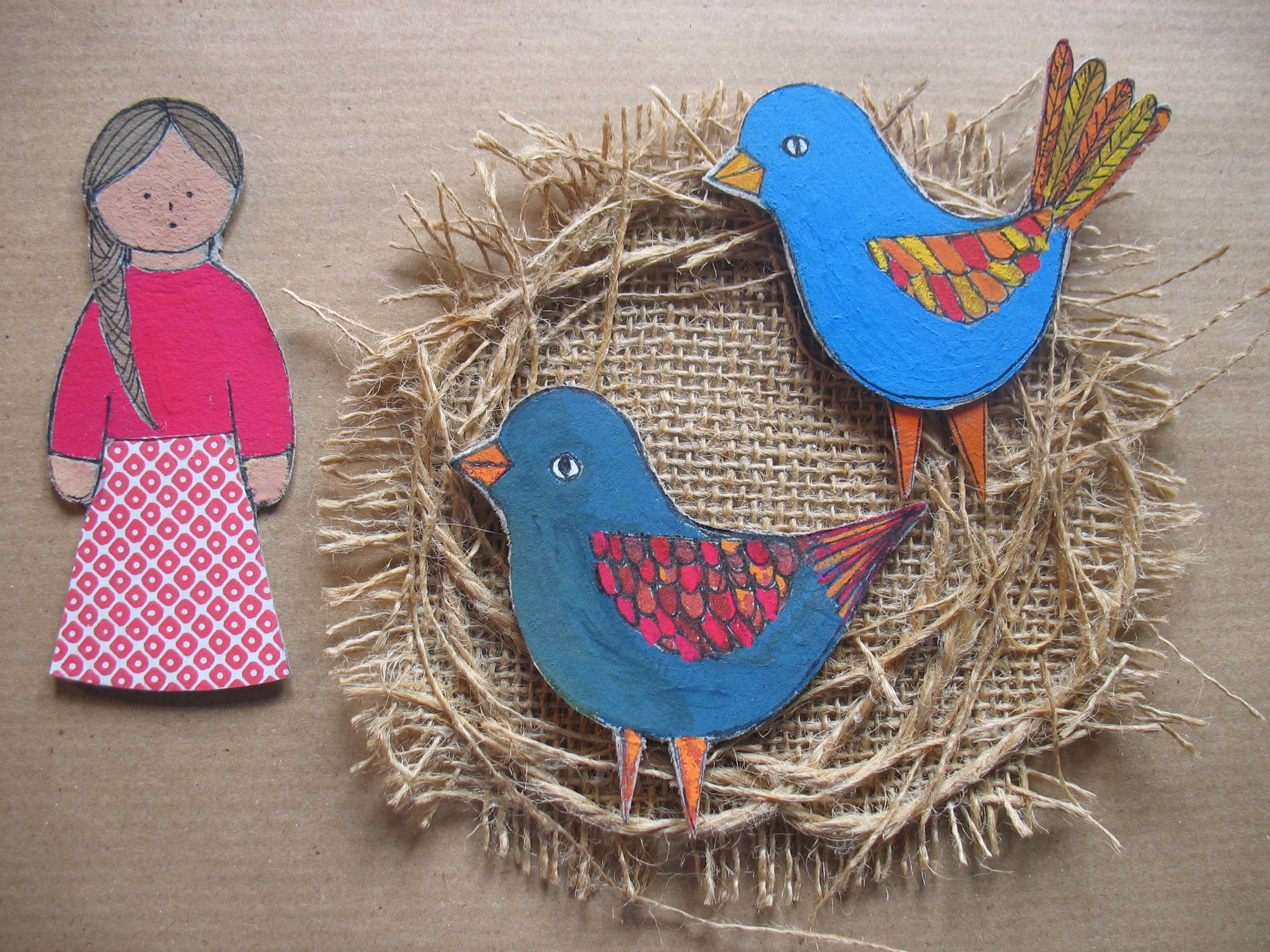
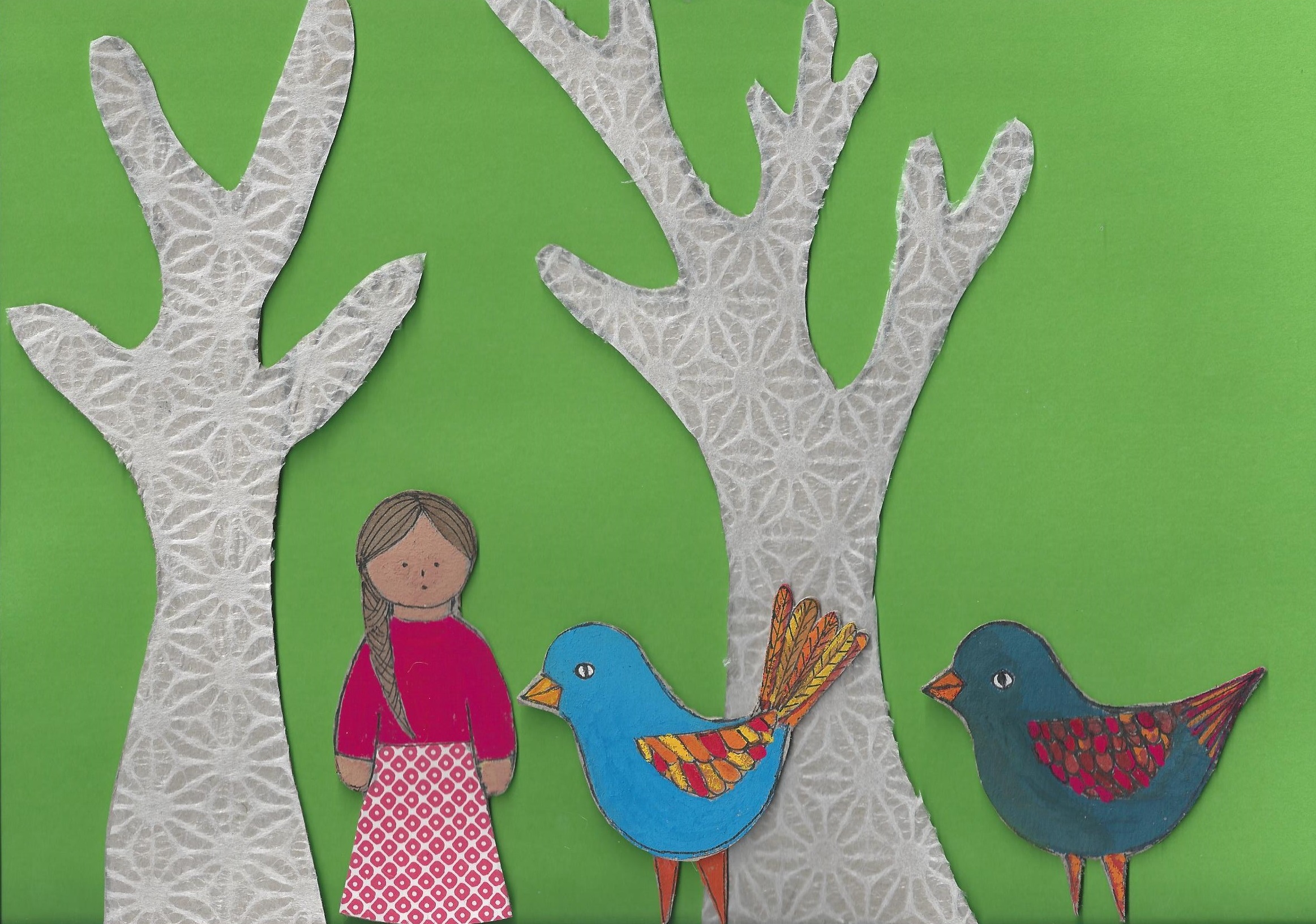
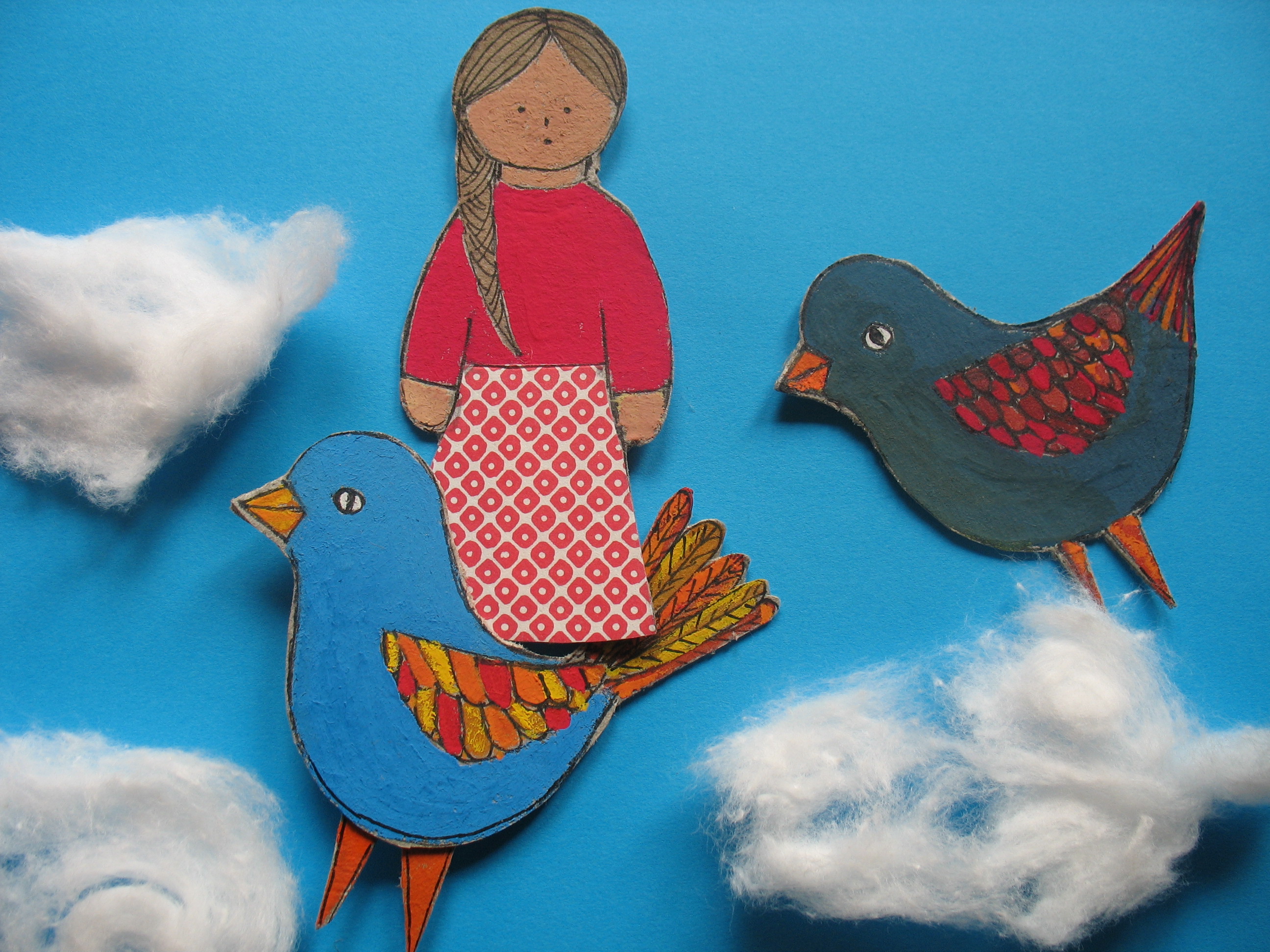
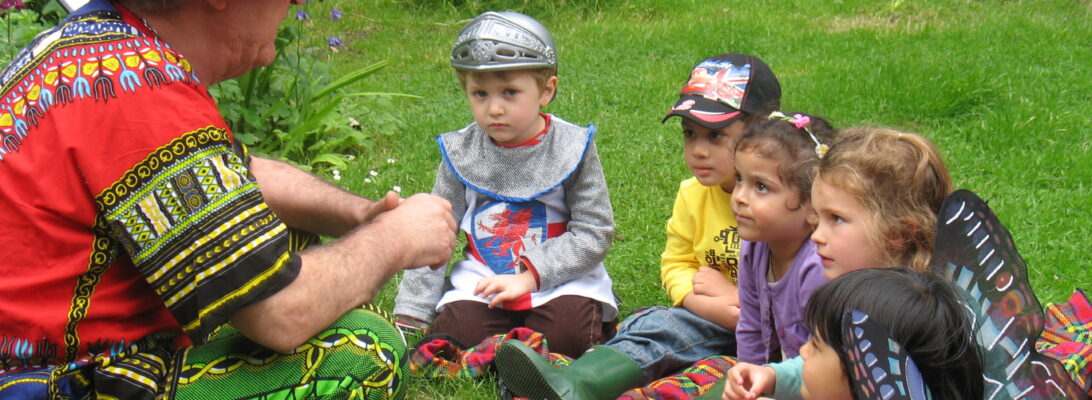
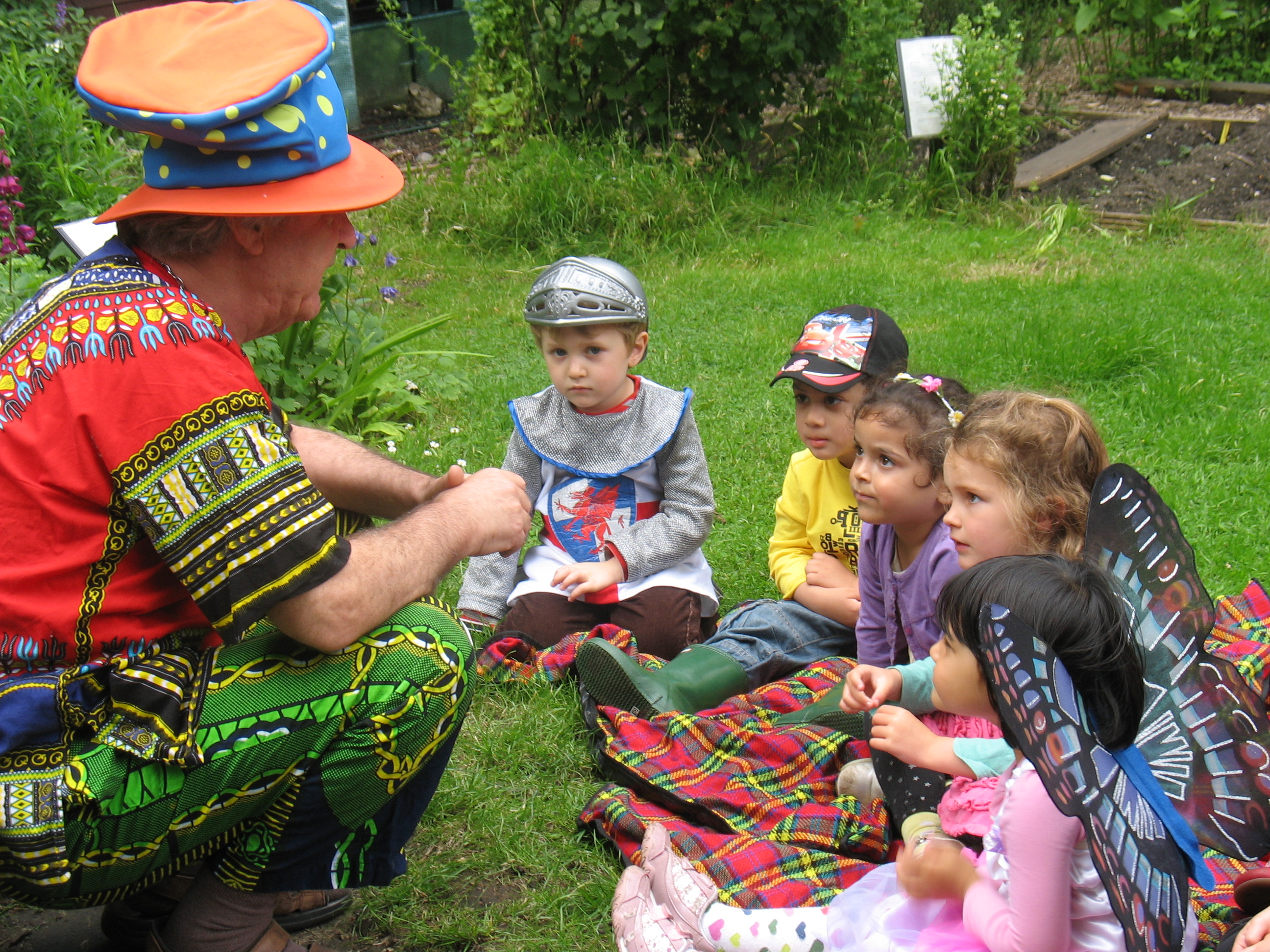
Re-telling the tale of The Crinkum Crankum Tree to a group of 5-8 year olds: a tree, a loving fairy, a naughty imp who makes the tree grow crooked and low and crinkum crankum; bells for when the fairy appears, a drumstick rattled in a pencil tidy for the imp, and a girl who goes walking in the woods and finds… the perfect tree for climbing!
Learning about storytelling for children with the amazing Danyah Miller at the School of Storytelling, we learned songs and rhymes and simple games. When I returned home I coaxed my daughter and husband to play.
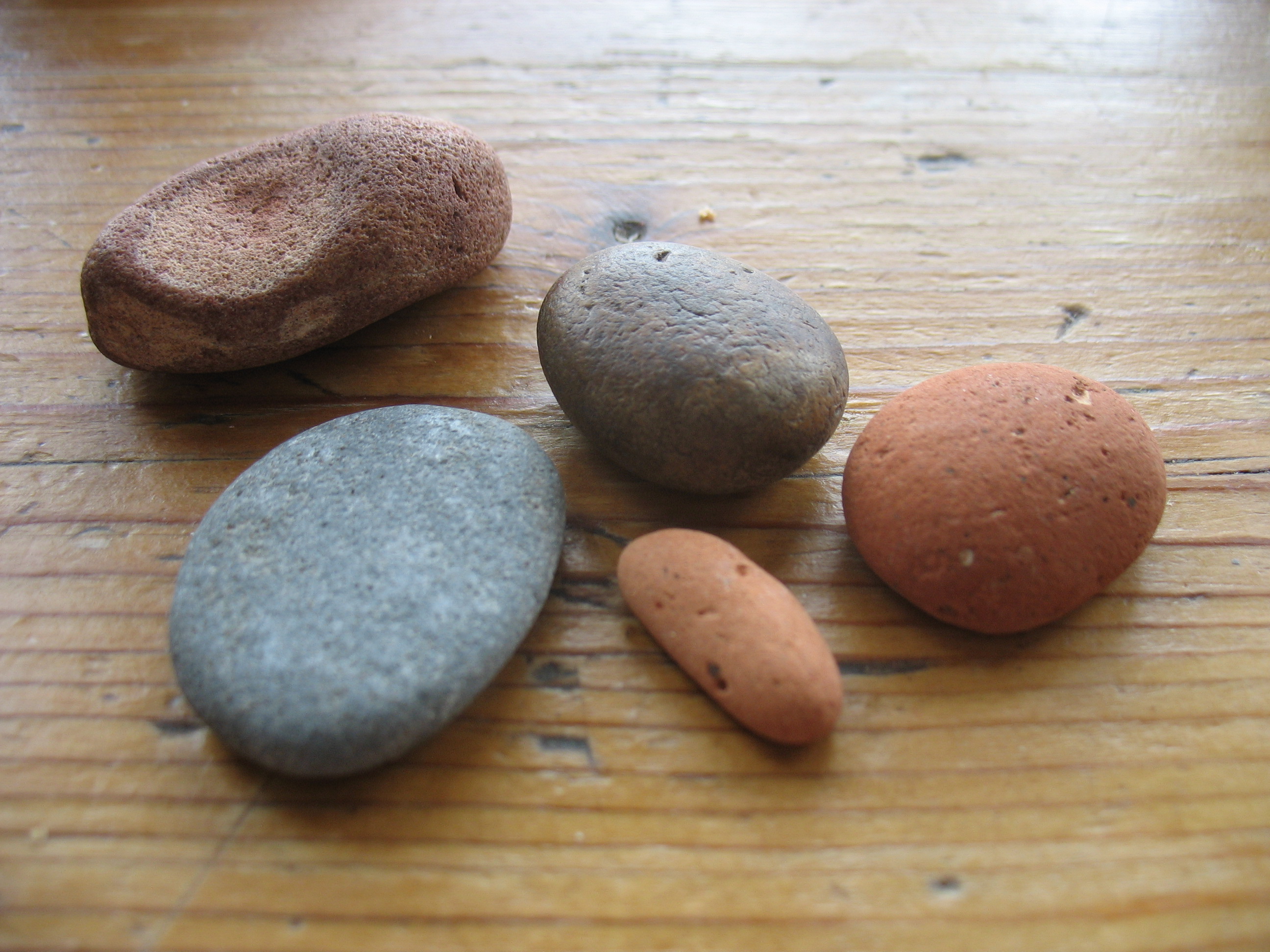
Andy, spandy, sugardy-candy,
Where’s my little stone gone?
Pooh!
(A stone is concealed in cupped hands and moved in time to the rhyme, the others copying the actions and singing the rhyme with you. Then the clenched fists are held out to the person next to you who must guess which hand the stone is in. When they guess correctly the stone passes to them and the game continues.)
I was surprised by my daughter’s instant delight in this little game. It was immediate, there was a sudden quickening of interest, a smile, an eagerness to join in. So satisfying!
Sometimes it’s hard to trust that something so simple, so easy to do can make someone happy; to know to pick up your stone and start to sing!
It was my first time on a storytelling course. My first time at Emerson College.
“I don’t mean to be rude,” the taxi driver said. “But they’re all weird there.”
But oh for such weirdness! Every day of my life! Such playfulness and kindness and warmth for each other. And for stories.
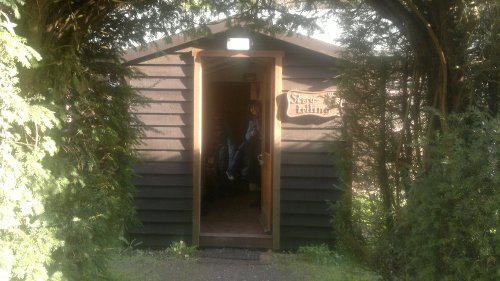
In the magical Story Hut, hidden behind a green archway in the garden, we learnt to embrace the bones of a story, to cherish it and be emboldened by it to draw on our responses and experiences to make its flesh. Old spent feelings were transformed in their fresh disguises, reaching out in surprising new ways. The story I learned to tell, I am still learning from: The Crinkum Crankum Tree, a tale of growth and change and self-acceptance.
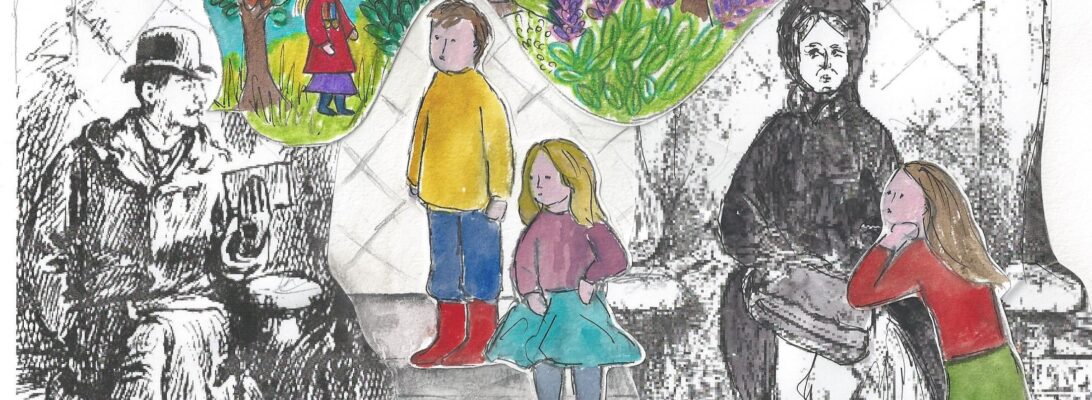
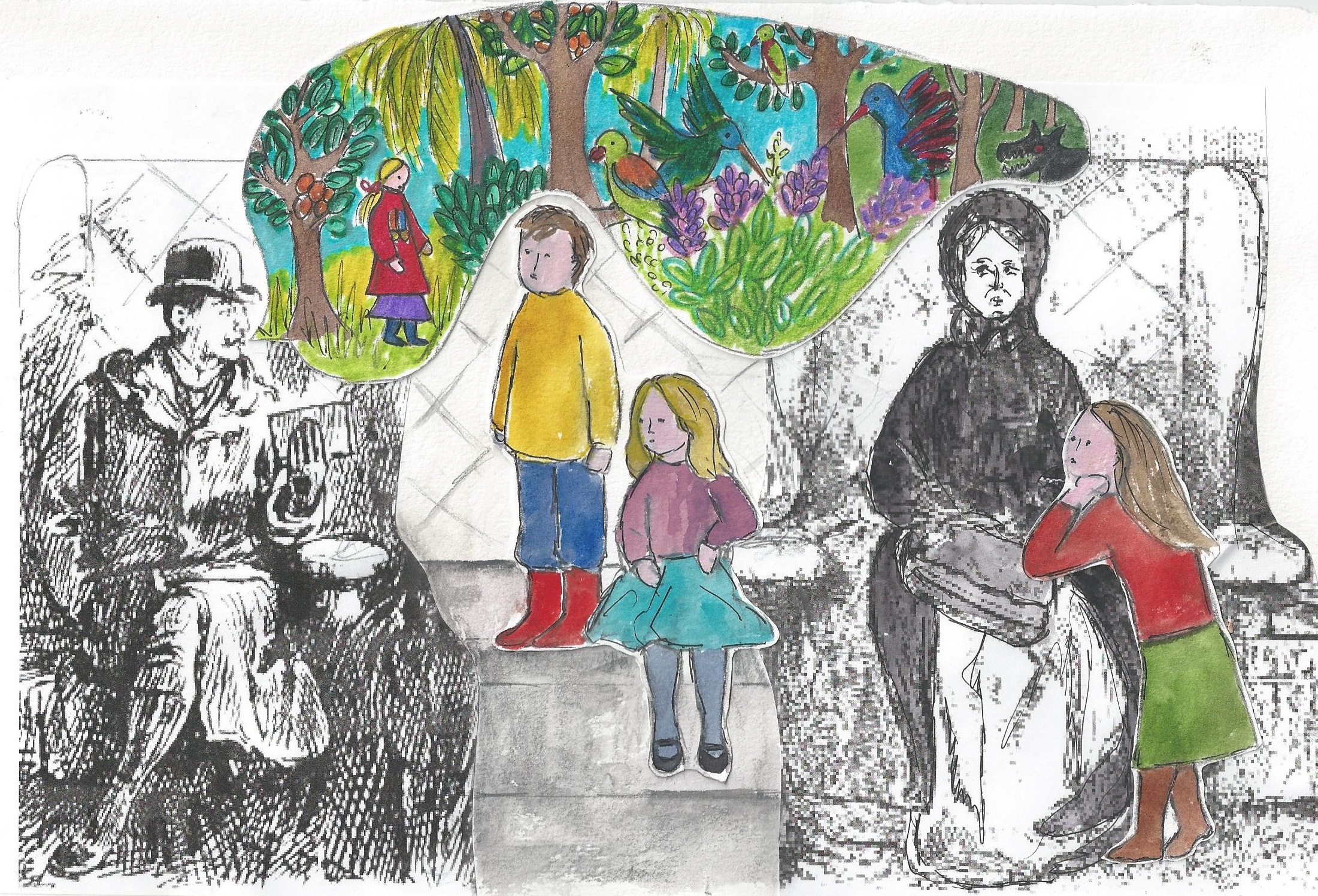
“You don’t seem to be a success as a story-teller,” said the bachelor suddenly from his corner.
The aunt bristled in instant defence at this unexpected attack.
“It’s a very difficult thing to tell stories that children can both understand and appreciate,” she said stiffly.
“I don’t agree with you,” said the bachelor.
There are some essential tips for storytelling contained in this short funny story about a passenger in a train carriage forced to endure three bored, noisy children. He does so by making up a story that is far more engaging than the story made for them by their harassed and weary aunt! The following can be learnt from the tale:
1.Be original but never moral:
“Was she pretty?” asked the bigger of the small girls.
“Not as pretty as any of you,” said the bachelor, “but she was horribly good.”
There was a wave of reaction in favour of the story; the word horrible in connection with goodness was a novelty that commended itself. It seemed to introduce a ring of truth that was absent from the aunt’s tales.
2.Be aware of your listener’s reactions; allow them time to absorb the details of your story and to create its world for themselves:
The storyteller paused to let a full idea of the park’s treasures sink into the children’s imaginations.
3.Introduce a dramatic event to hook your listeners:
Just then an enormous wolf came prowling into the park…
“What colour was it?” asked the children, amid an immediate quickening of interest.
4. Find an unusual or unexpected ending (Saki was the master at this!):
[The wolf] dashed into the bush, his pale grey eyes gleaming with ferocity and triumph, and dragged Bertha out and devoured her to the last morsel. All that was left of her were her shoes, bits of clothing, and the three medals for goodness. …
“The story began badly,” said the smaller of the small girls, “but it had a beautiful ending.”
5. Don’t expect everyone to love your story:
“A most improper story to tell to young children! You have undermined the effect of years of careful teaching, [said the aunt].”
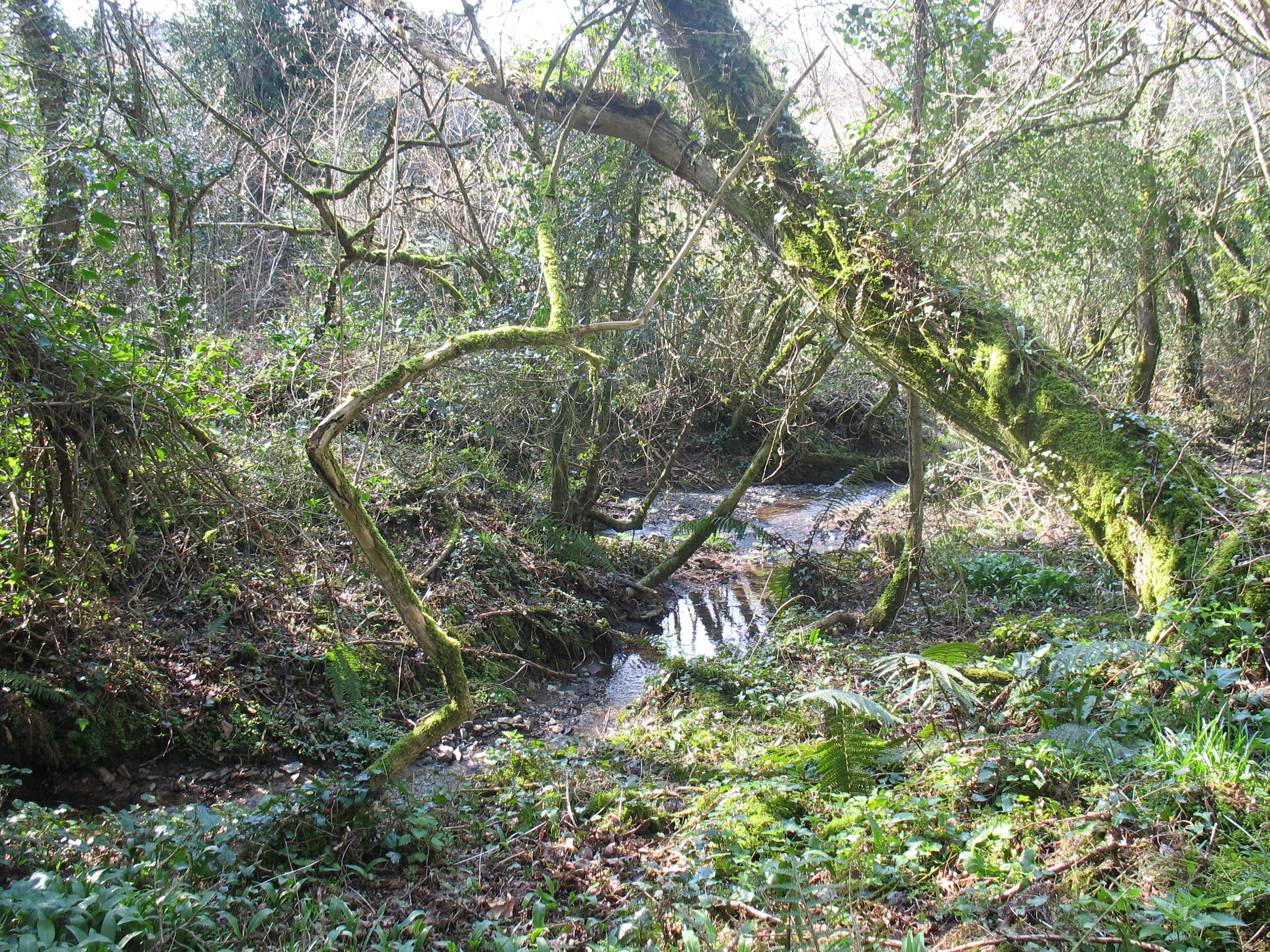
Yesterday we walked in the woods, my daughter and I, she talking of a princess who lived in a tree with her mother, me looking for sticks for making a dolls raft later. We were both busy with our ideas and impressions, each occupied in their own way, yet we were together.
We showed each other things we’d seen: she, a ‘door’ in a tree that led to the ‘tree palace’, me, a branch with good joins and curves for whittling. We were both stilled and calmer than we are indoors, surrounded by the tangled green of the woods, the sound of a stream, the singing of birds, and absorbed in carefully making our own way over the uneven ground, yet we walked hand in hand. I felt her small gloved hand in mine, her strong bony fingers curled tight around my hand, and we were perfectly lost in our own thoughts but never alone.
This is what good story making feels like, being in the woods together.
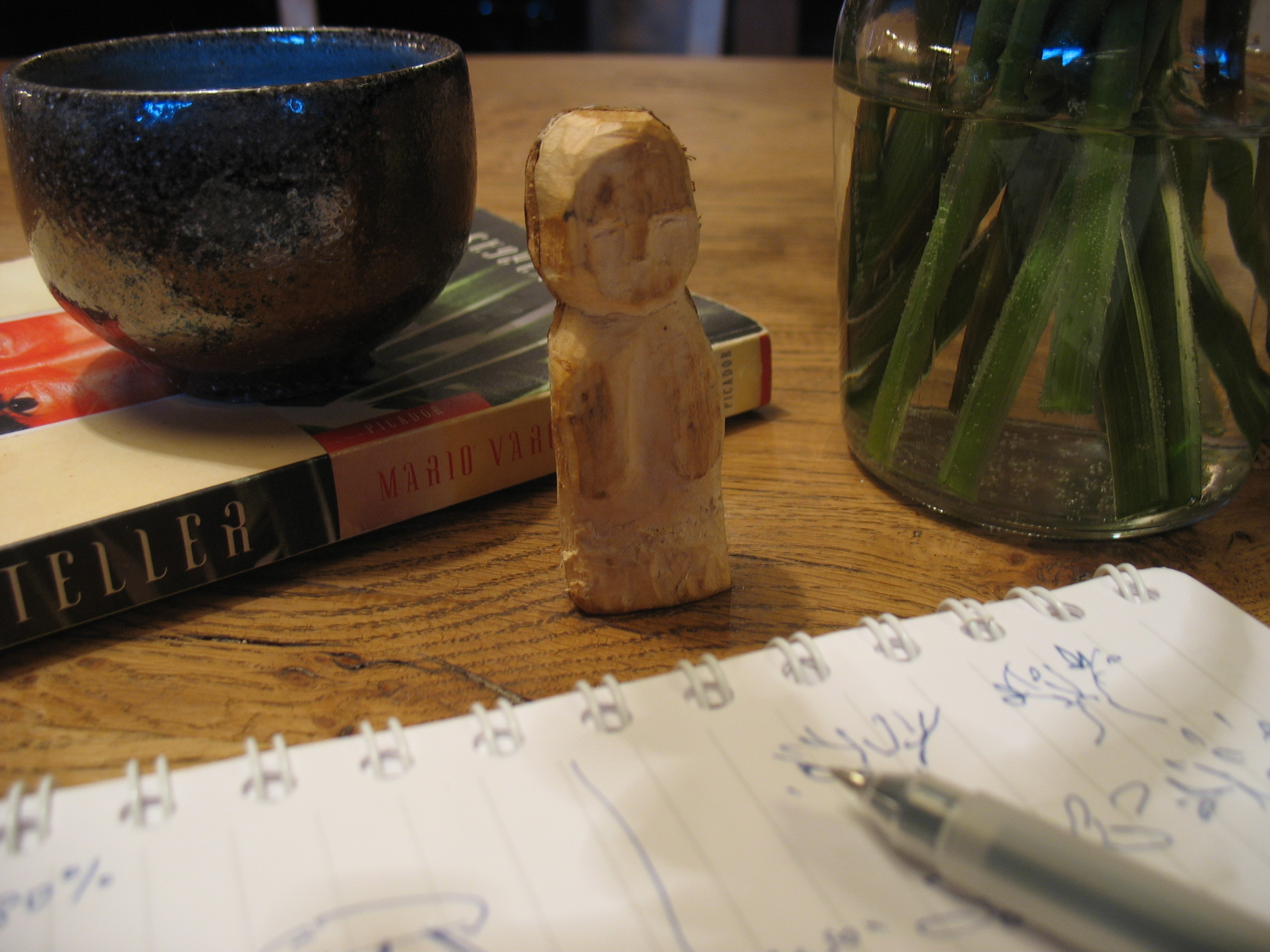
The wooden doll I made sits on my desk. I like seeing her there while I work, quiet, watchful… stories start up from her…
“Dolls stand for the self… The doll provides the best means for you to begin your story-making. Let her teach you…. All she needs is your full attention.”
Horst Kornberger ‘The Power of Stories’
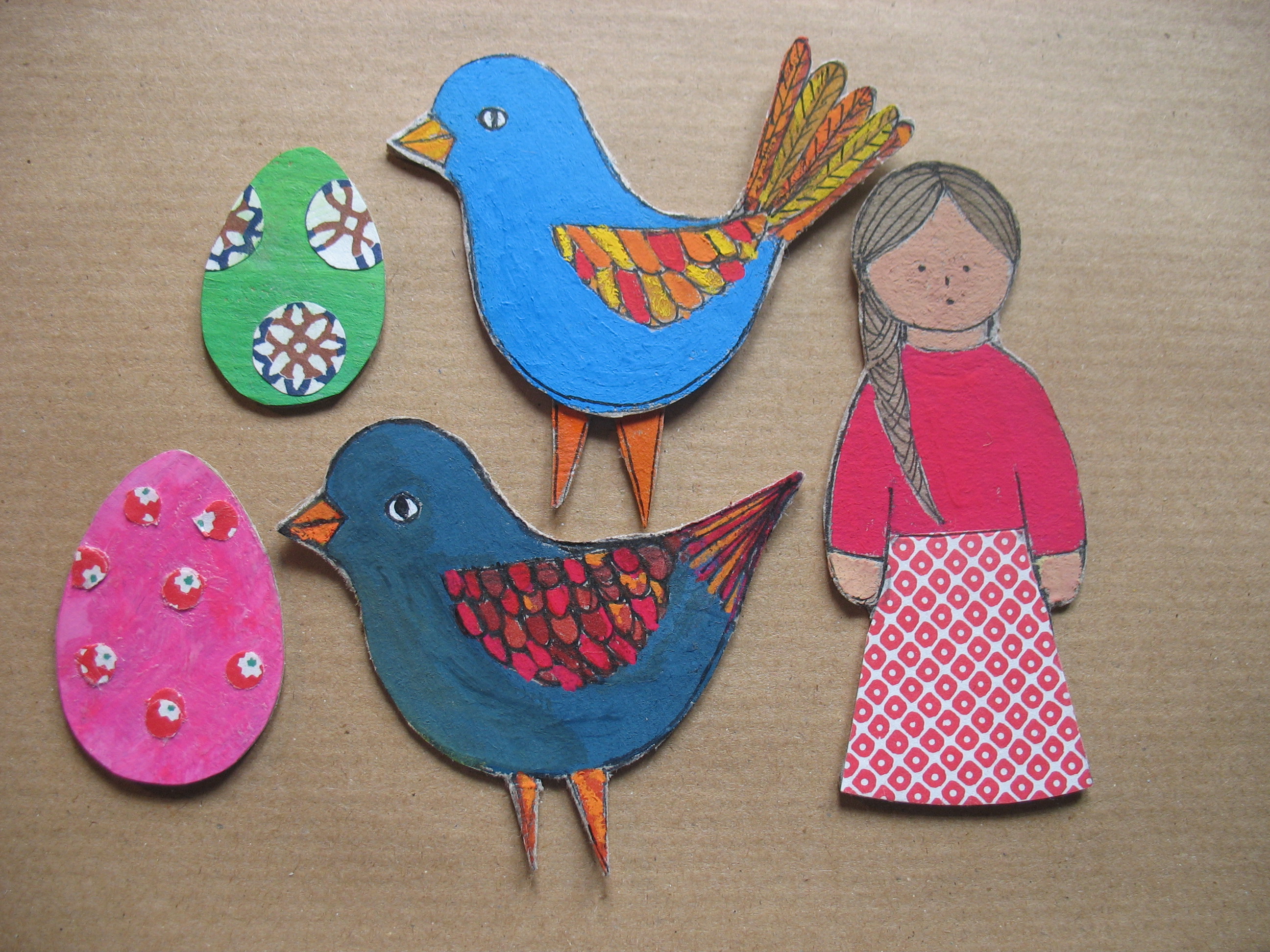
The wooden doll inspired a little cardboard girl.
Then I couldn’t stop… cardboard and paint and pen are addictive it seems! Soon I had the whole cast and props of ‘The Nest’ – this time in technicolour
2D!
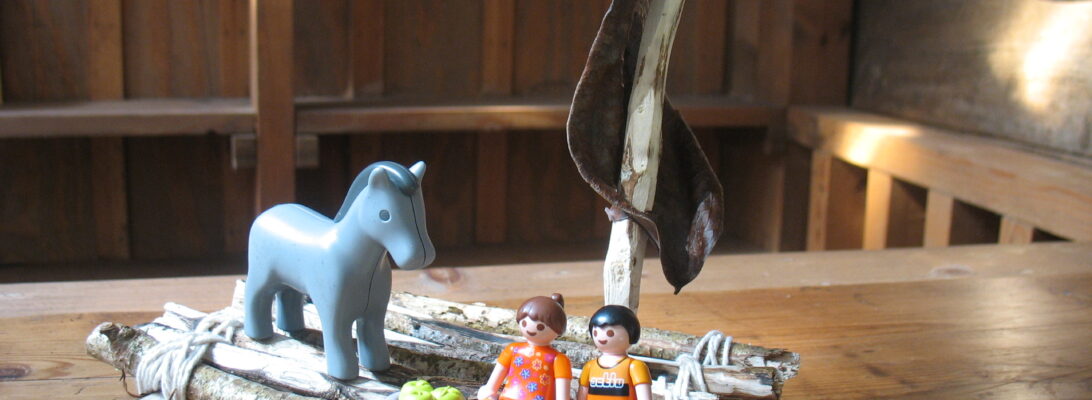
And we made the story again! Here are some scenes:
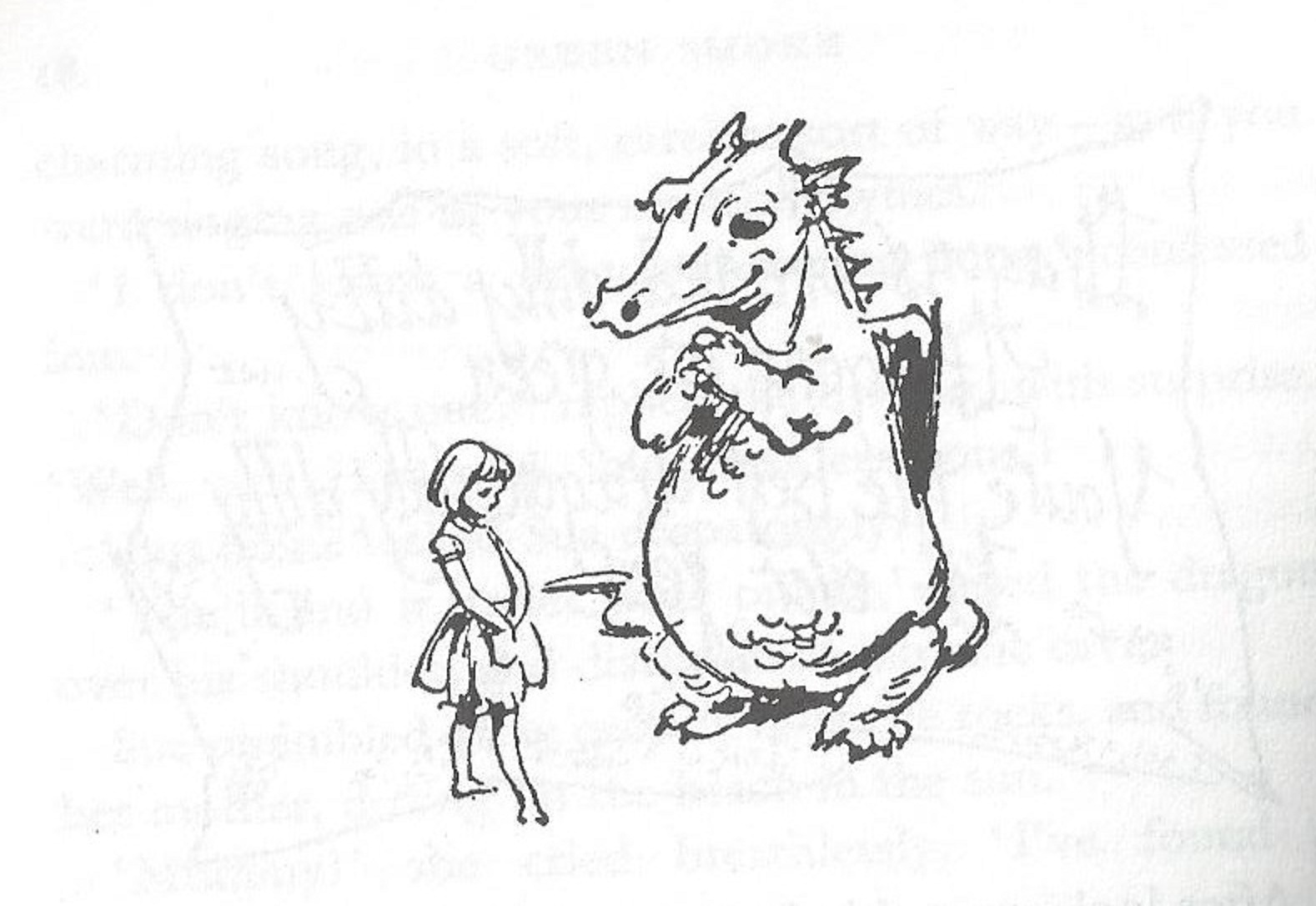
‘Is that what you did at your parties?’ asked Sue. ‘Told stories?’
‘Of course,’ answered the dragon. ‘What do you do at yours?’
‘Well, we play games, and sing, and eat buns, and jellies.’
‘Oh, we did those things as well,’ said the dragon. ‘But the story-telling was the most important. Don’t you tell stories at your parties?’
‘No,’ said Sue. ‘I don’t think we ever do.’
‘And your dear father and mother,’ went on the dragon. ‘Don’t they sit and tell each other stories in the long winter evenings?’
‘I don’t think so,’ said Sue. ‘I’ve never heard them.’
‘Extraordinary,’ said the dragon. ‘I suppose none of you know any. How sad. I’d better start teaching you some good stories at once.’
from Green Smoke by Rosemary Manning
This made me think of the parties we’ve had at Queens Wood Cafe, in North London.
(photo: Friends of Queens Wood)
The most memorable part of the afternoon for our daughter and her friends was always when Mr Mango, also known as Murray, the owner of the lovely cafe, led them into the magical woods, spinning a fantastical tale that ended with a picnic tea back in the café’s organic garden. Amazingly there never seemed to be any need for any other amusements, the kids were entranced by the stories and songs of those simple happy afternoons in the woods.